

GLP1R: A key regulator of metabolic homeostasis and its therapeutic intervention in obesity and diabetes

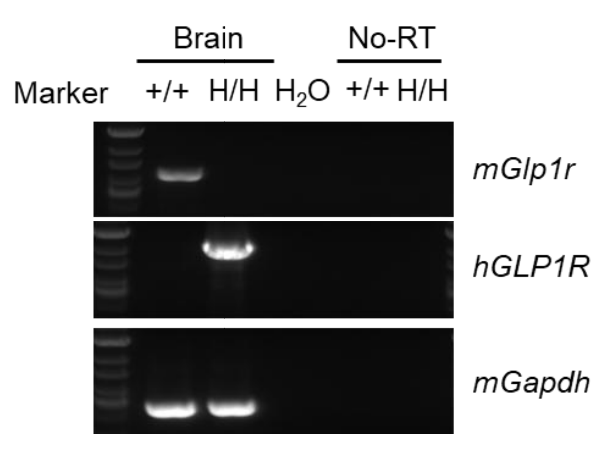
Strain-specific analysis of GLP1R mRNA expression in wild-type C57BL/6JNifdc mice and homozygous GLP1R humanized mice by RT-PCR. Brain tissue RNA was isolated from wild-type C57BL/6JNifdc mice (+/+) and homozygous B-hGLP1R mice plus (H/H), then cDNA libraries were synthesized by reverse transcription, followed by PCR with mouse or human GLP1R primers. Mouse Glp1r mRNA was detectable only in wild-type C57BL/6JNifdc mice. Human GLP1R mRNA was detectable only in homozygous B-hGLP1R mice plus but not in wild-type mice.
Human GLP1R was detected in homozygous GLP1R humanized mice, but not in wild-type mice.
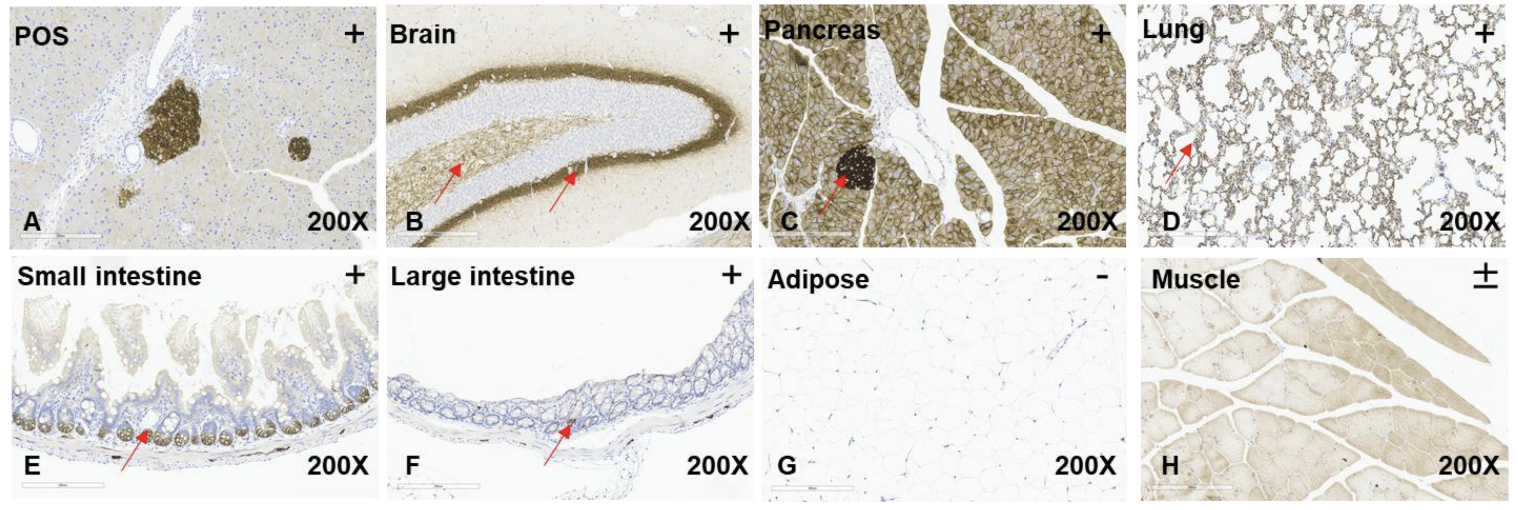
Representative human GLP1R expression in different tissues of GLP1R humanized mice by IHC. Tissues were stained with human-specific antibodies GLP1R (A-H). Brain, pancreas, lung, small intestine, and large intestine show human GLP1R positive. And adipose and muscle show human GLP1R negative. Original magnification ×200. Abbreviations: IHC, immunohistochemistry.
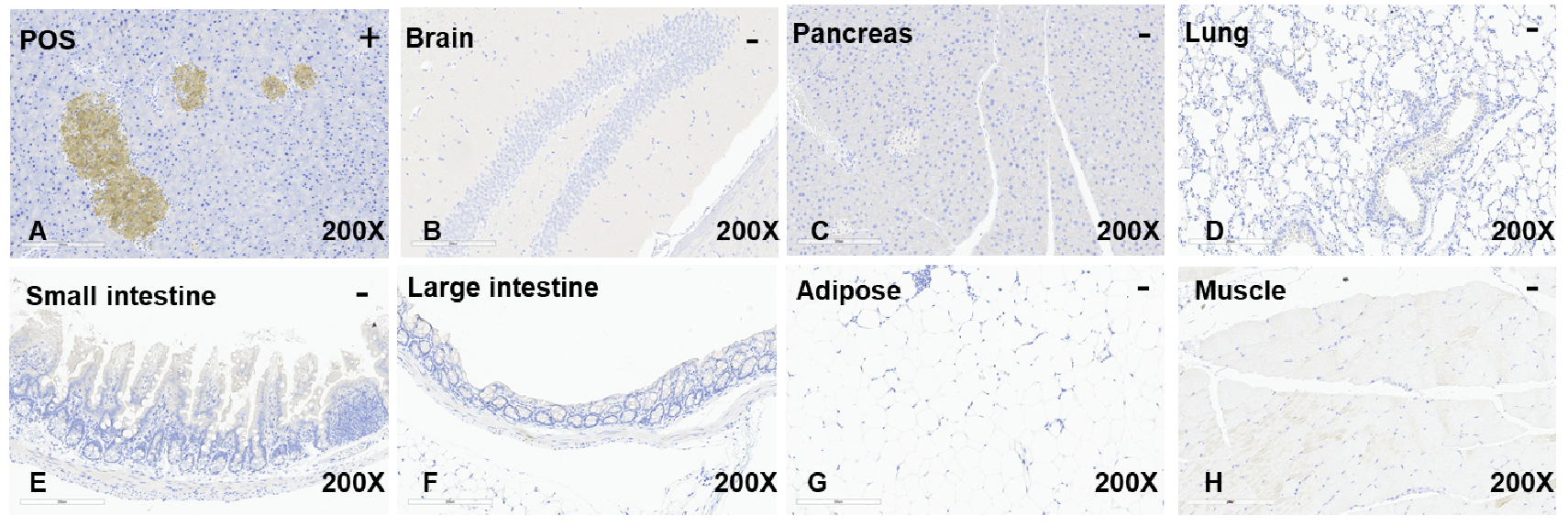
Representative mouse GLP1R expression in different tissues of GLP1R humanized mice by IHC. Tissues were stained with mouse-specific antibodies GLP1R (A-H). Mouse pancreas was the positive control . Brain, pancreas, lung, small intestine, adipose, large intestine, and muscle show mouse GLP1R negative in B-hGLP1R mice plus . Original magnification ×200. Abbreviations: IHC, immunohistochemistry.

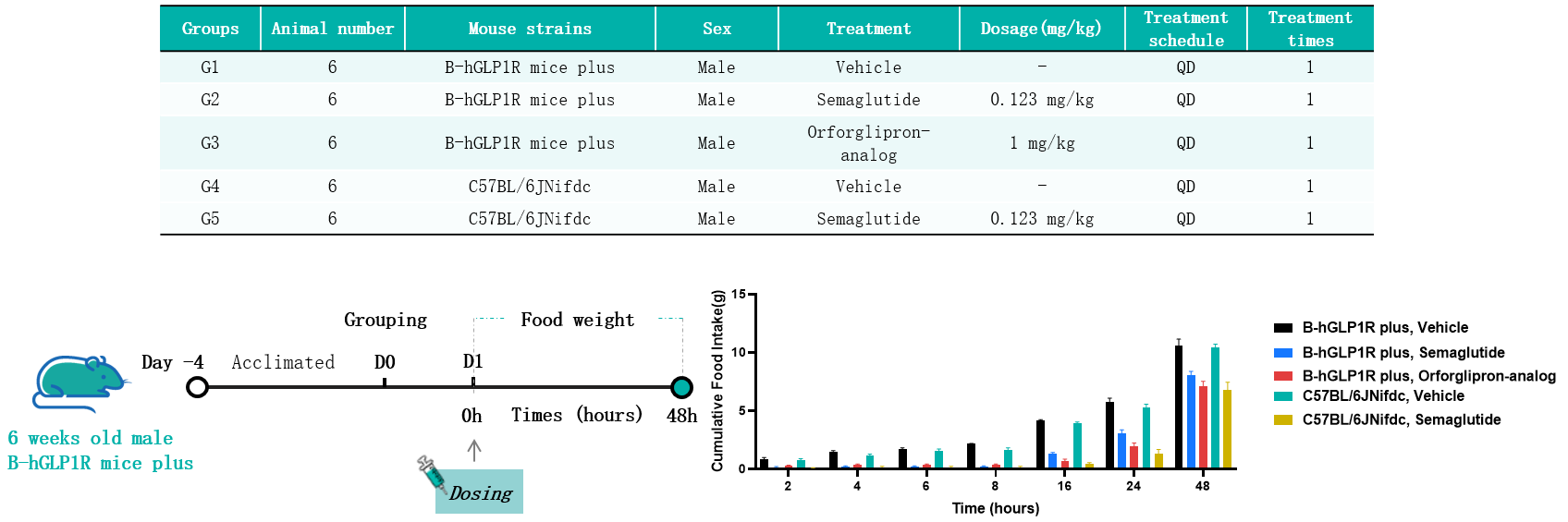
Study of Orforglipron and Semaglutide in GLP1R humanized mice food intake. B-hGLP1R mice plus (6 weeks old) and C57BL/6JNifdc were acclimated for QD PO dosing with vehicle for 4 days, and mice were grouped by body weight and daily food intake. All animals will be placed in clean cages and fasted over night, mice will be dosed with vehicle or test compound in the morning (before 10 AM). All group's food will be added 15 minutes post-dosing, and food remaining will be recorded at 2-, 4-, 6-, 8-, 16-, 24-, and 48 hours post-dosing. Values are expressed as mean ± SEM.
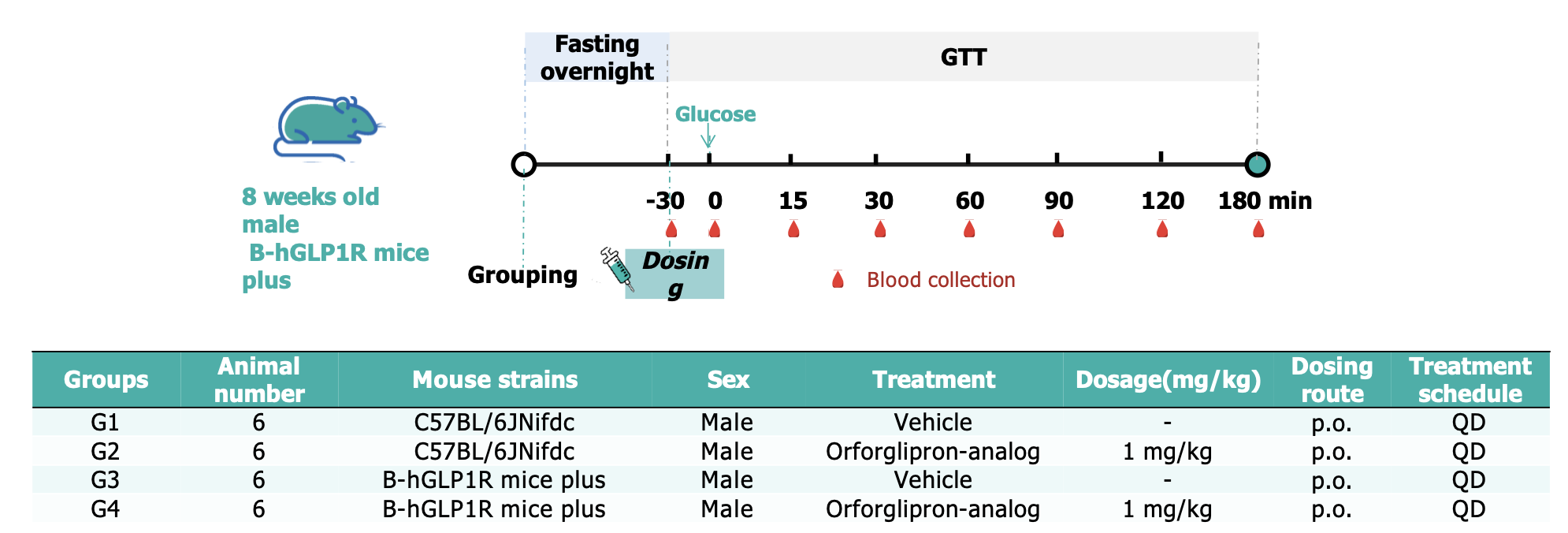
Orforglipron improved glucose tolerance and promoted insulin secretion in GLP1R humanized mice. B-hGLP1R mice plus (8 weeks old) were treated with Orforglipron-analog for 1 mg/kg, p.o. (-30 min). Then at 0 min, the glucose tolerance test was performed in C57BL/6JNifdc and B-hGLP1R mice plus for 2 g/kg D-Glucose was administered by intraperitoneal injection (IPGTT).
Orforglipron-analog improved glucose tolerance and promoted insulin secretion in GLP1R humanized mice but not in wild-type C57BL/6JNifdc mice.
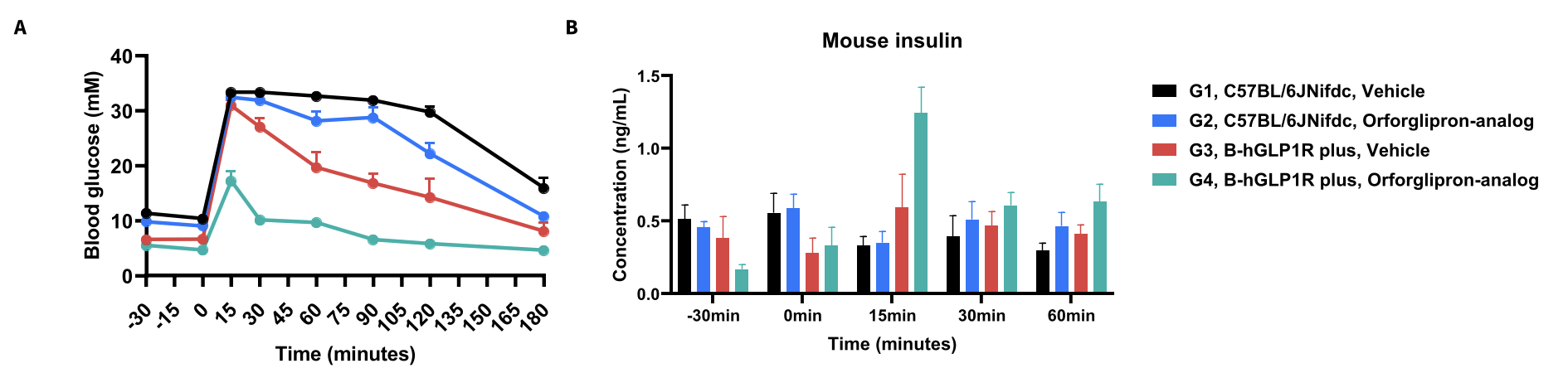
Orforglipron improved glucose tolerance and promoted insulin secretion in GLP1R humanized mice. B-hGLP1R mice plus (8 weeks old) were treated with Orforglipron-analog for 1 mg/kg, p.o. (-30 min). Then at 0 min, the glucose tolerance test was performed in C57BL/6JNifdc and B-hGLP1R mice plus for 2 g/kg D-Glucose was administered by intraperitoneal injection (IPGTT). (A) Blood glucose. (B) Plasma insulin. As shown, glucose tolerance was improved by Orforglipron-analog in B-hGLP1R mice plus but not in wild-type C57BL/6JNifdc mice, and promoted plasma insulin secretion in B-hGLP1R mice plus. Values are expressed as mean ± SEM.
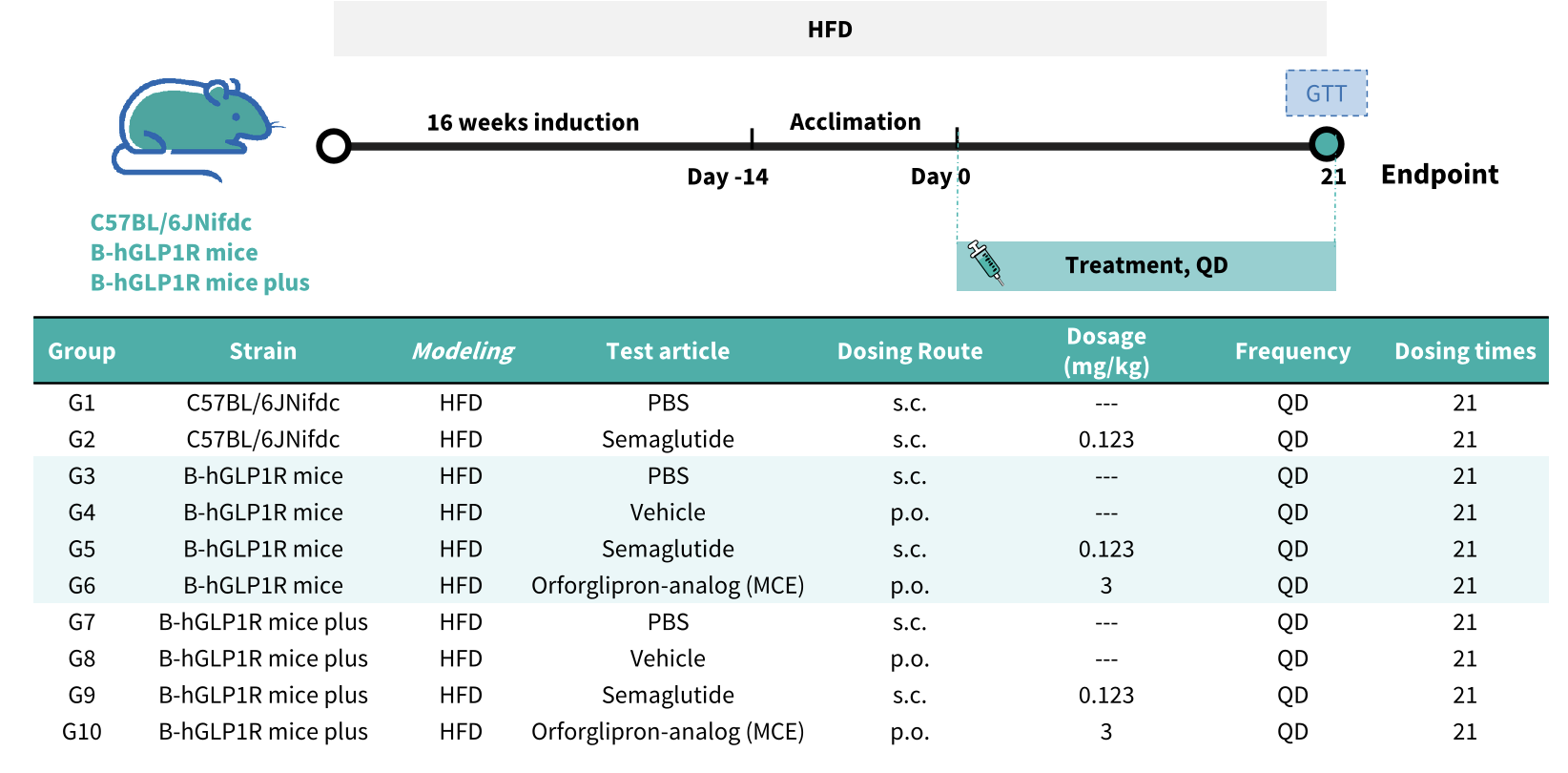
Efficacy in HFD-induced GLP1R Humanized Mice Model and GLP1R Humanized Mice. B-hGLP1R mice and B-hGLP1R mice plus were fed with a high-fat diet (HFD) for 16 weeks to induce obesity. Vehicle: 5% DMSO+ 10% Cremophor EL(BASF)+ 15% PEG400 + 70% 100 mM glycine-NaOH buffer (pH 10).
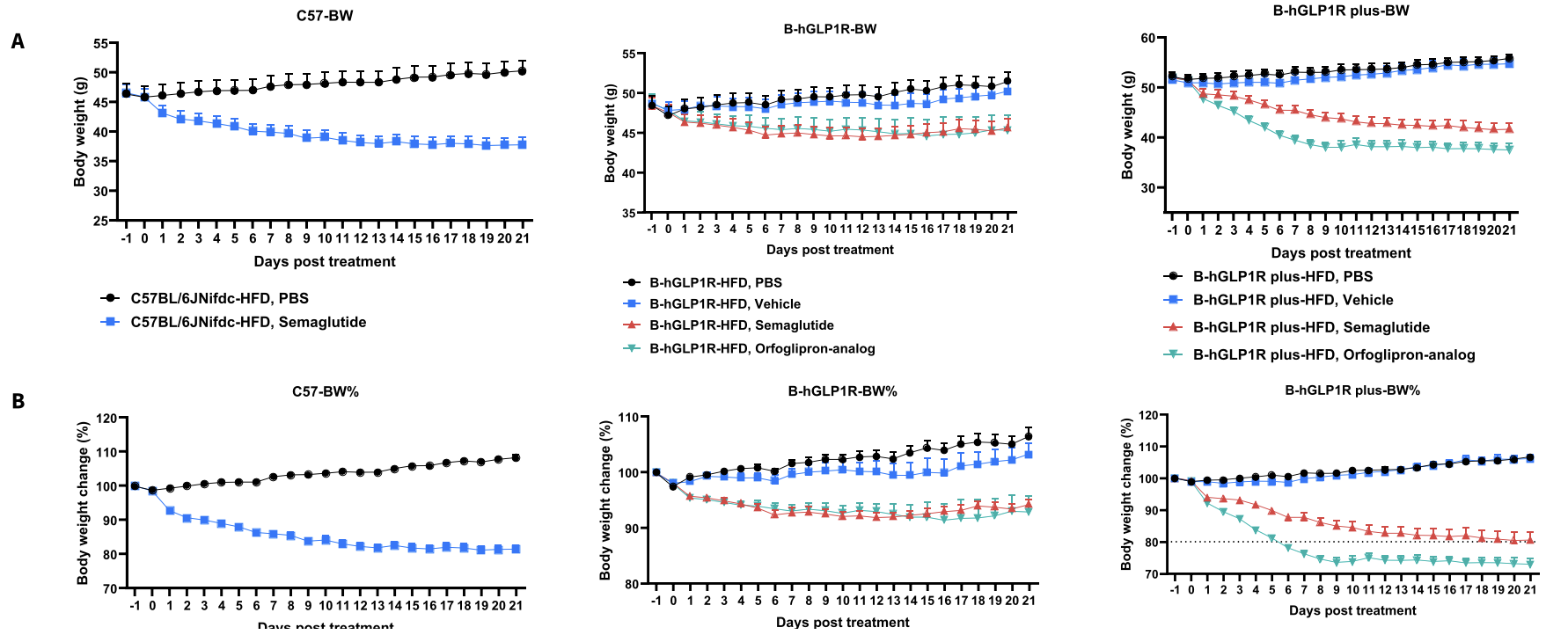
In Vivo Efficacy in HFD-Induced Model. C57BL/6JNifdc, B-hGLP1R mice, and B-hGLP1R mice plus were fed with a high-fat diet (HFD) for 16 weeks to induce obesity. (A-B) Body weight changes after treatment. Values are presented as mean ± SEM.
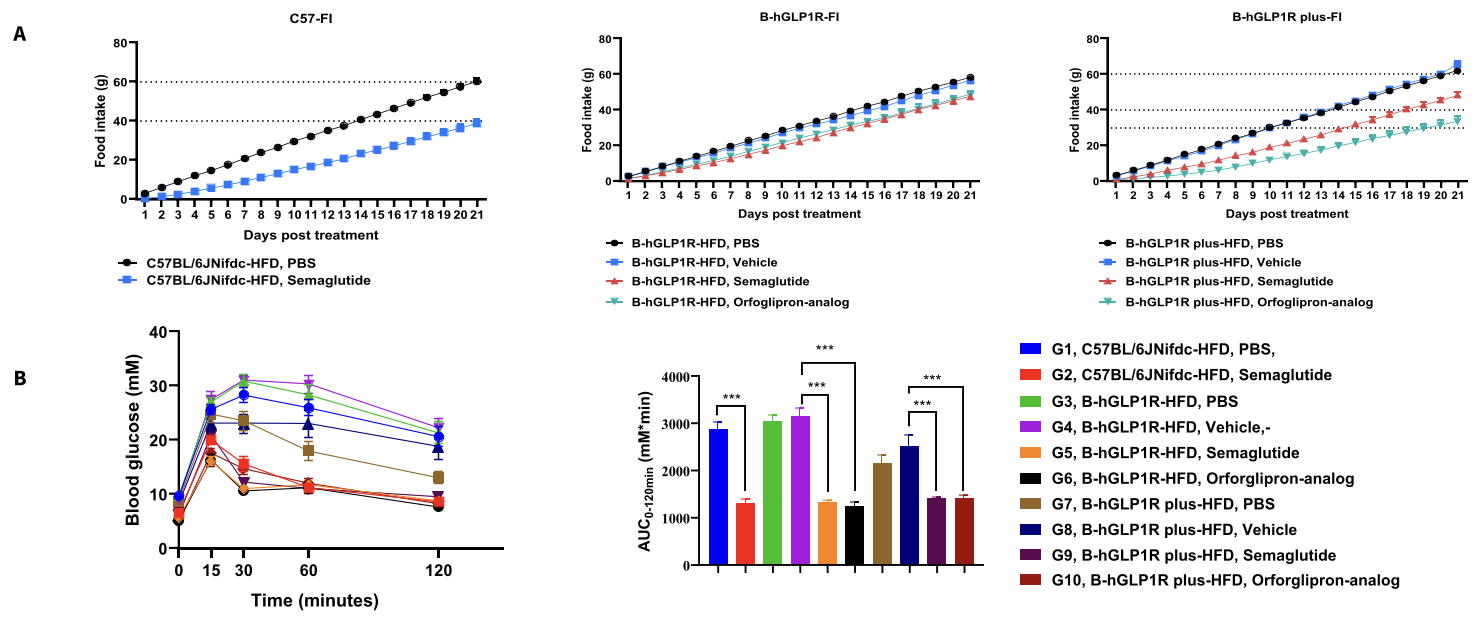
In Vivo Efficacy HFD-Induced Model.C57BL/6JNifdc, B-hGLP1R mice, and B-hGLP1R mice plus were fed with a high-fat diet (HFD) for 16 weeks to induce obesity. (A) Food intake after treatment. (B) Blood glucose and area under the curve (AUC) for the IPGTT. Values are presented as mean ± SEM.