C57BL/6-ll2RBtm2(IL2RB)BcgenIl2RGtm2(IL2RG)BcgenIl15tm1(IL15)BcgenIl15RAtm1(IL15RA)Bcgen/Bcgen • 111866
on this page

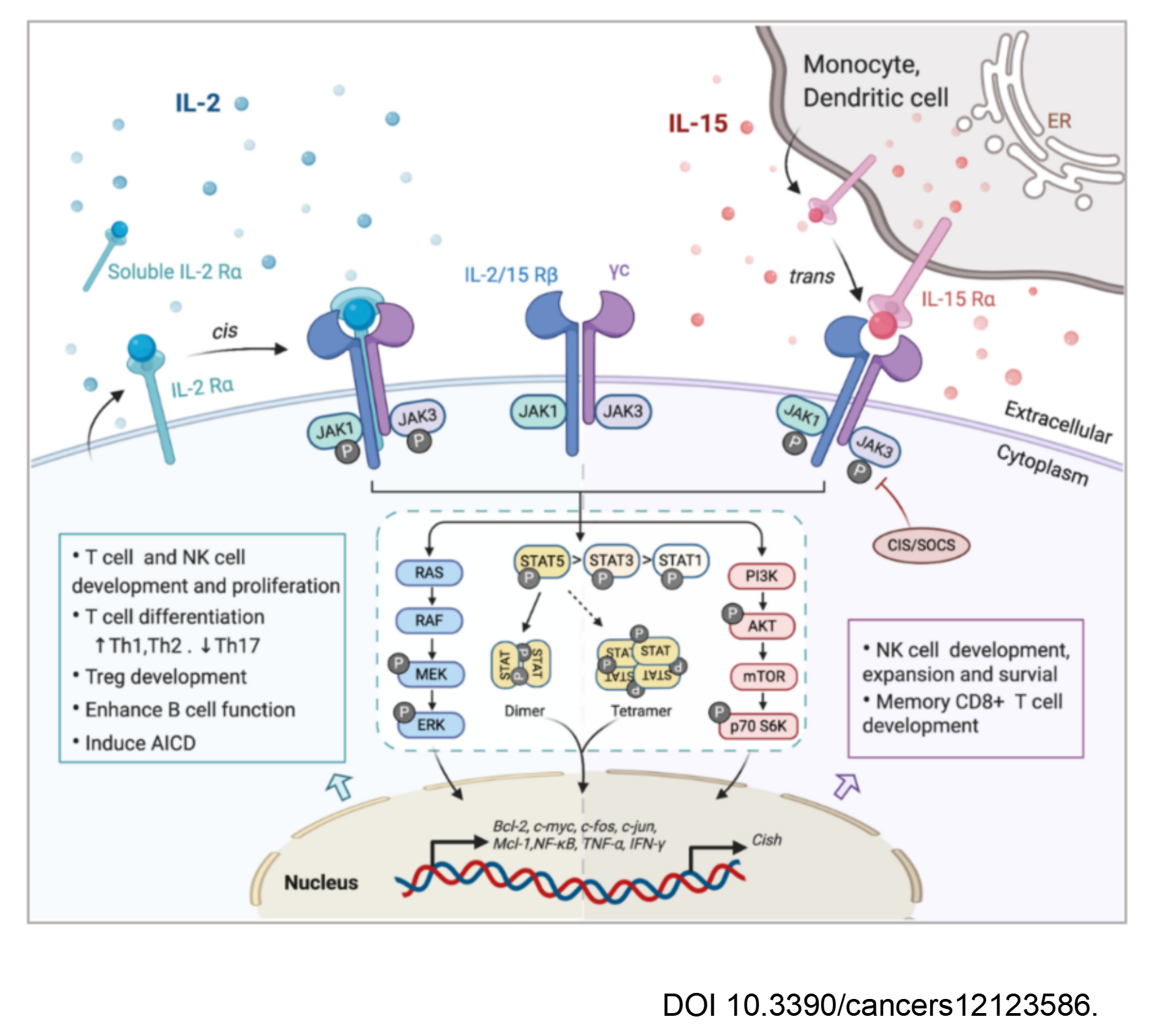
IL2RB/IL2RG/IL15/IL15RA: A multi-component cytokine axis driving NK and T-cell homeostasis. Gene Information: This complex genetic axis comprises IL2RB (22q12), IL2RG (Xq13), IL15 (4q31), and IL15RA (10p15), which collectively encode the receptors, ligand, and alpha-chaperone that orchestrate interleukin-15 biology.
Protein Expression: IL15 and IL15RA are co-expressed on dendritic cells and macrophages, presenting the cytokine in trans to IL2RB/IL2RG heterodimers expressed on mature natural killer (NK) and CD8+ memory T cells.
Signaling Pathway: IL-15/IL15RA complexes bind to endothelial or lymphocytic IL2RB/IL2RG receptors, activating JAK1/JAK3 kinases to phosphorylate STAT3/STAT5, ultimately driving cellular proliferation, survival, and cytotoxicity gene programs.
Therapeutic Inhibition: Blockade of this axis suppresses damaging lymphocytosis in celiac disease and autoimmune disorders, whereas engineering agonists for these components serves to enhance modern anti-tumor adoptive cell immunotherapies.

IL2RB
Exons 2-8 of mouse Il2rb gene that encode extracellular domain were replaced by human counterparts in B-hIL2RB/hIL2RG/hIL15/hIL15RA mice. The genomic region of mouse IL2RB/hIL2RG gene that encodes signal peptide, transmembrane domain and cytoplasmic portion was retained. The promoter, 5’UTR and 3’UTR region of the mouse gene were also retained. The chimeric IL2RB expression was driven by endogenous mouse Il2rb promoter, while mouse Il2rb gene transcription and translation will be disrupted.
IL2RG
Exons 1–8 of the mouse Il2rg gene that encode the entire protein (from ATG to stop codon) were replaced with the corresponding human sequences in B-hIL2RB/hIL2RG/hIL15/hIL15RA mice. The endogenous mouse promoter, 5′ UTR, and 3′ UTR regions were retained, allowing human IL2RG expression to be driven by the native mouse Il2rg promoter, while endogenous mouse Il2rg transcription and translation are abolished.
IL15
Exons 3–8 of the mouse Il15 gene that encode the entire protein (from ATG to stop codon) were replaced with the corresponding human sequences in B-hIL2RB/hIL2RG/hIL15/hIL15RA mice. The endogenous mouse promoter, 5′ UTR, and 3′ UTR regions were retained, allowing human IL15 expression to be driven by the native mouse Il15 promoter, while endogenous mouse Il15 transcription and translation are abolished.
IL15RA
Exons 2-6 of mouse IL15RA gene that encode extracellular domain were replaced by human counterparts in B-hIL2RB/hIL2RG/hIL15/hIL15RA mice. The genomic region of mouse Il15ra gene that encodes signal peptide, transmembrane domain and cytoplasmic portion was retained. The promoter, 5’UTR and 3’UTR region of the mouse gene were also retained. The chimeric IL15RA expression was driven by endogenous mouse Il15ra promoter, while mouse Il15ra gene transcription and translation will be disrupted. B-hIL2RB/hIL2RG/hIL15/hIL15RA mice (111866) were obtained by mating B-hIL2RB/hIL2RG mice (111850) with B-hIL15/hIL15RA mice (121217).

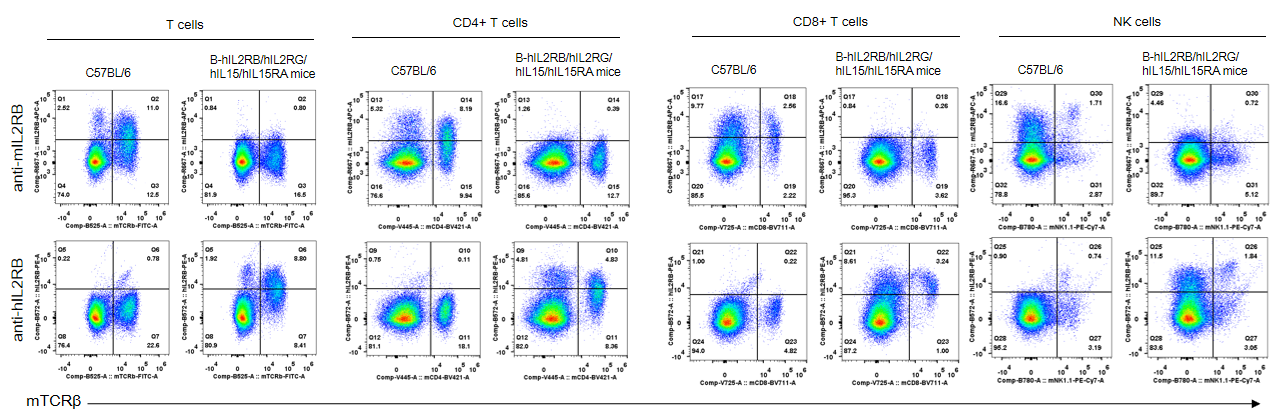
Strain specific IL2RB expression analysis in wild-type C57BL/6 mice and homozygous humanized B-hIL2RB/hIL2RG/hIL15/hIL15RA mice by flow cytometry. Splenocytes were collected from wild-type C57BL/6 mice and homozygous B-hIL2RB/hIL2RG/hIL15/hIL15RA mice stimulated with anti-mouse CD3ε antibody (7.5 μg, i.p.) for 24 hours. Protein expression was analyzed with anti-mouse IL2RB antibody (Biolegend, 105911) and anti-human IL2RB antibody (Biolegend, 339005) by flow cytometry.
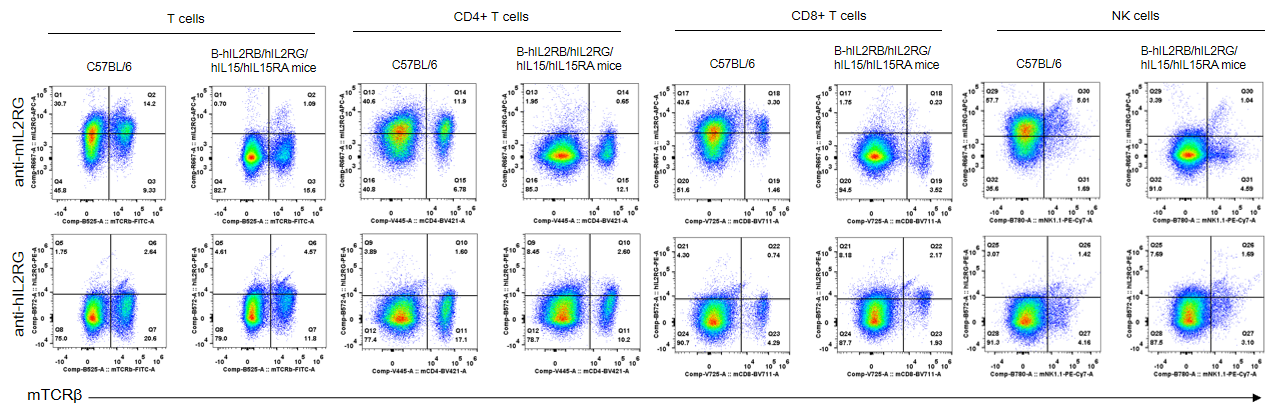
Strain specific IL2RG expression analysis in wild-type C57BL/6 mice and homozygous humanized B-hIL2RB/hIL2RG/hIL15/hIL15RA mice by flow cytometry. Splenocytes were collected from wild-type C57BL/6 mice and homozygous B-hIL2RB/hIL2RG/hIL15/hIL15RA mice stimulated with anti-mouse CD3ε antibody (7.5 μg, i.p.) for 24 hours. Protein expression was analyzed with anti-mouse IL2RG antibody (Biolegend, 132307) and anti-human IL2RG antibody (Biolegend, 338605) by flow cytometry.
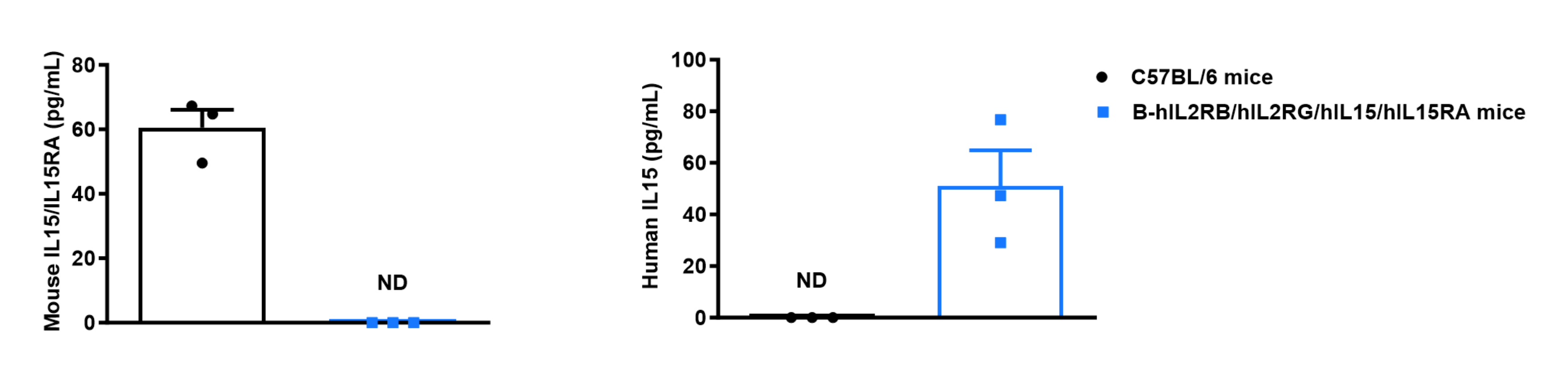
Strain specific IL15 expression analysis in wild-type C57BL/6 mice and homozygous humanized B-hIL2RB/hIL2RG/hIL15/hIL15RA mice by ELISA. Serum was collected from wild-type C57BL/6 mice and homozygous B-hIL2RB/hIL2RG/hIL15/hIL15RA mice (female, 8-week-old, n = 3) stimulated with acetamido phenol for 24 hours. Expression level of mouse and human IL15 were analyzed by ELISA (anti-mouse IL15/IL15RA kit: Invitrogen, BMS6023; anti-human IL15 kit: RD, D1500). Values are expressed as mean ± SEM. ND: not detectable.
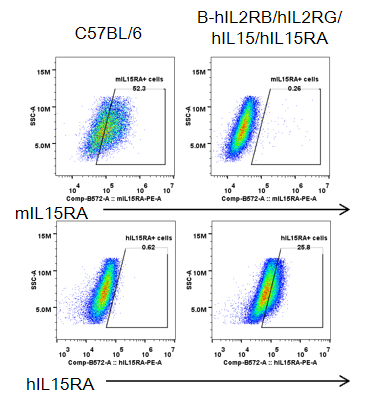
Strain specific IL15RA expression analysis in wild-type C57BL/6 mice and homozygous humanized B-hIL2RB/hIL2RG/hIL15/hIL15RA mice by flow cytometry. Bone marrow derived dendritic cells (BMDCs) were produced by culturing the bone marrow from wild-type C57BL/6 mice and homozygous B-hIL2RB/hIL2RG/hIL15/hIL15RA mice , which were stimulated with LPS in vitro. Protein expression was analyzed with anti-mouse IL15RA antibody (BD, 568235) and anti-human IL15RA antibody (Biolegend, 330207) by flow cytometry.

Phosphorylation of STAT5 analysis in splenocytes of wild-type C57BL/6 mice and homozygous B-hIL2RB/hIL2RG/hIL15/hIL15RA mice by flow cytometry. Splenocytes were generated from wild-type C57BL/6 mice and homozygous B-hIL2RB/hIL2RG/hIL15/hIL15RA mice, and stimulated with mouse IL2 or human IL2. Then cells were analyzed by flow cytometry with anti-pSTAT5 antibodies.

Phosphorylation of STAT5 analysis in splenocytes of wild-type C57BL/6 mice and homozygous B-hIL2RB/hIL2RG/hIL15/hIL15RA mice by flow cytometry. Splenocytes were generated from wild-type C57BL/6 mice and homozygous B-hIL2RB/hIL2RG/hIL15/hIL15RA mice, and stimulated with mouse or human IL15/IL15RA complex. Then cells were analyzed by flow cytometry with anti-pSTAT5 antibodies.
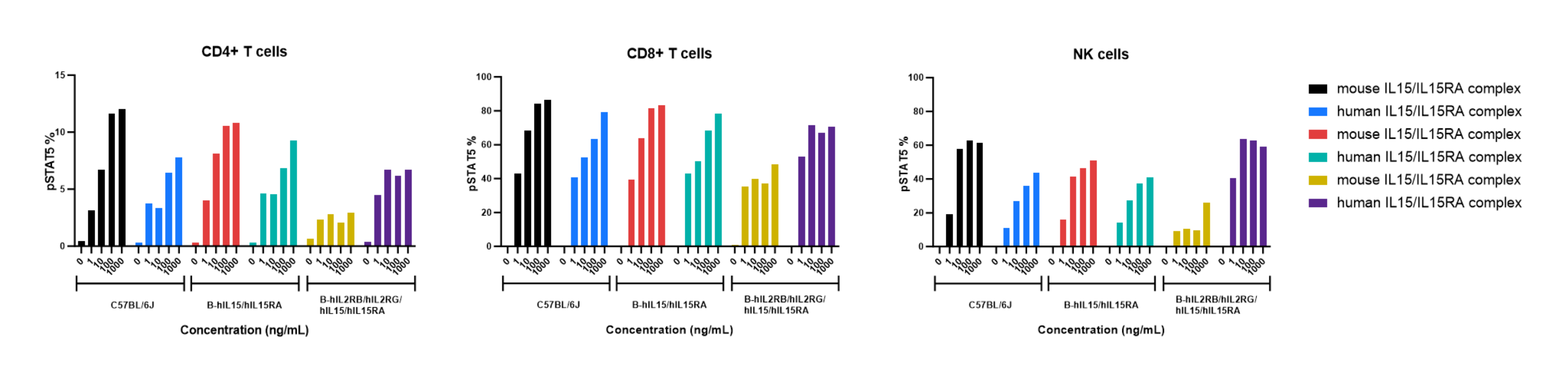
Intracellular phosphorylation of STAT5 induction by human and mouse IL15/hIL15RA in wild-type C57BL/6 mice, homozygous B-hIL15/hIL15RA mice and homozygous B-hIL2RB/hIL2RG/hIL15/hIL15RA mice. Splenocytes were harvested from wild-type C57BL/6JNifdc mice, homozygous B-hIL15/hIL15RA mice and homozygous B-hIL2RB/hIL2RG/hIL15/hIL15RA mice , and stimulated with mouse or human IL15/IL15RA complex. Then cells were analyzed by flow cytometry with anti-pSTAT5 antibodies.
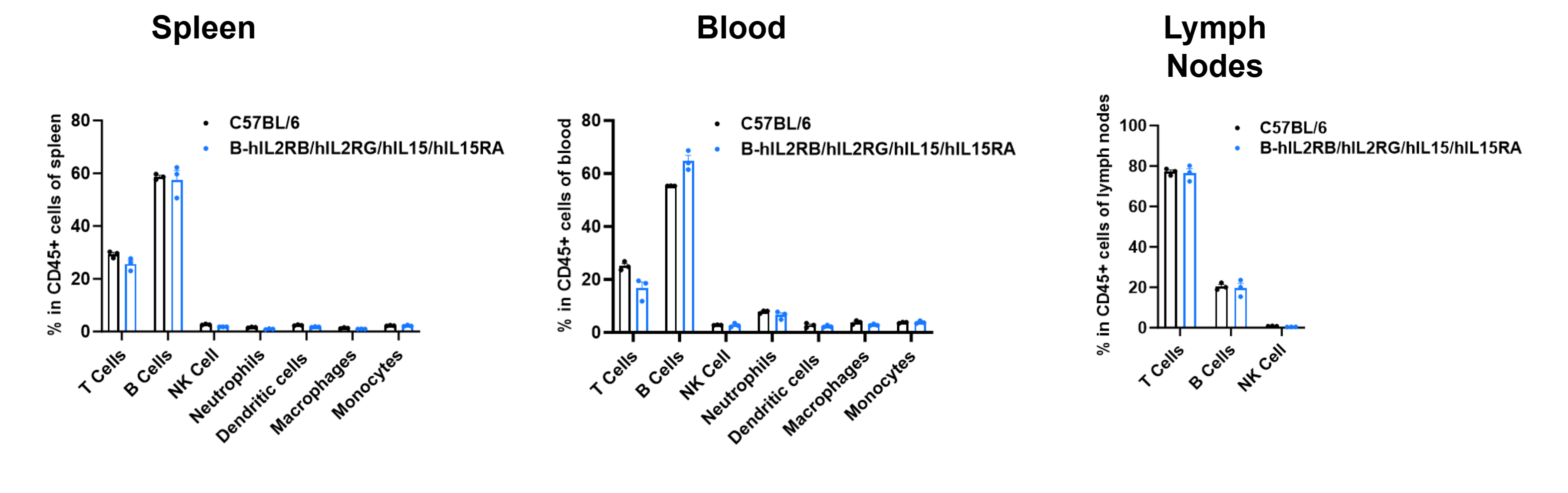
Analysis of leukocyte subpopulations by flow cytometry in immune organs and blood. Splenocytes, peripheral blood, and lymph nodes were isolated from C57BL/6 mice and homozygous B-hIL2RB/hIL2RG/hIL15/hIL15RA mice (female, 7-week-old, n = 3). Single live cells were gated on the CD45⁺ population and analyzed by flow cytometry as indicated. Values are expressed as mean ± SEM.
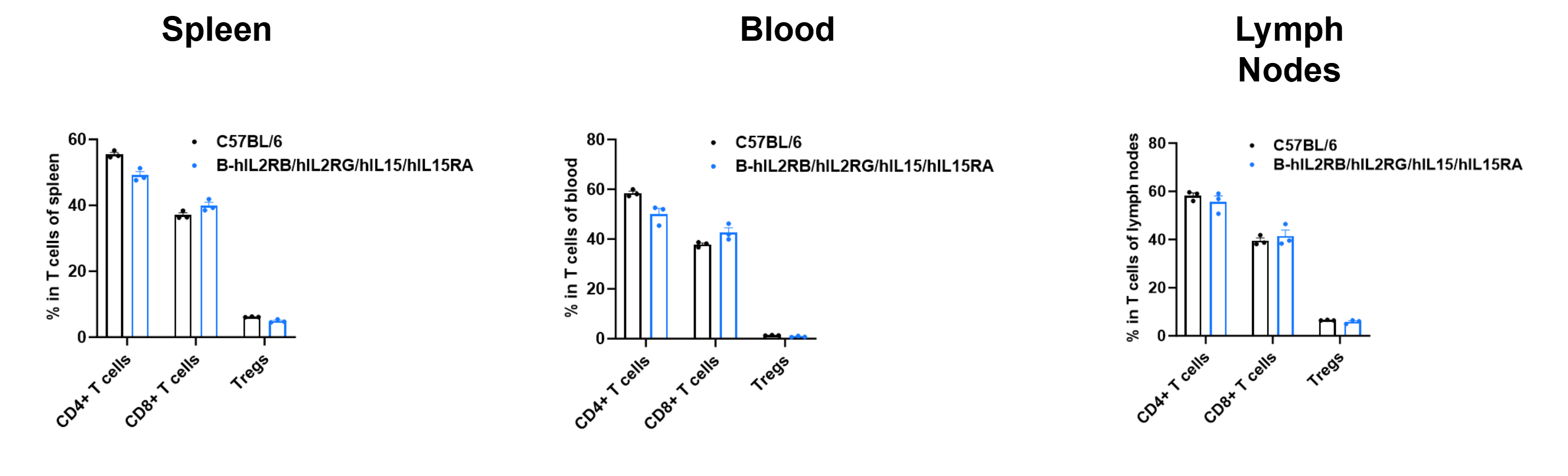
Analysis of T-cell subpopulations by flow cytometry in immune organs and blood. Splenocytes, peripheral blood, and lymph nodes were isolated from C57BL/6 mice and homozygous B-hIL2RB/hIL2RG/hIL15/hIL15RA mice (female, 7-week-old, n = 3). Single live cells were gated on the CD3⁺ T-cell population and analyzed by flow cytometry as indicated. Values are expressed as mean ± SEM.

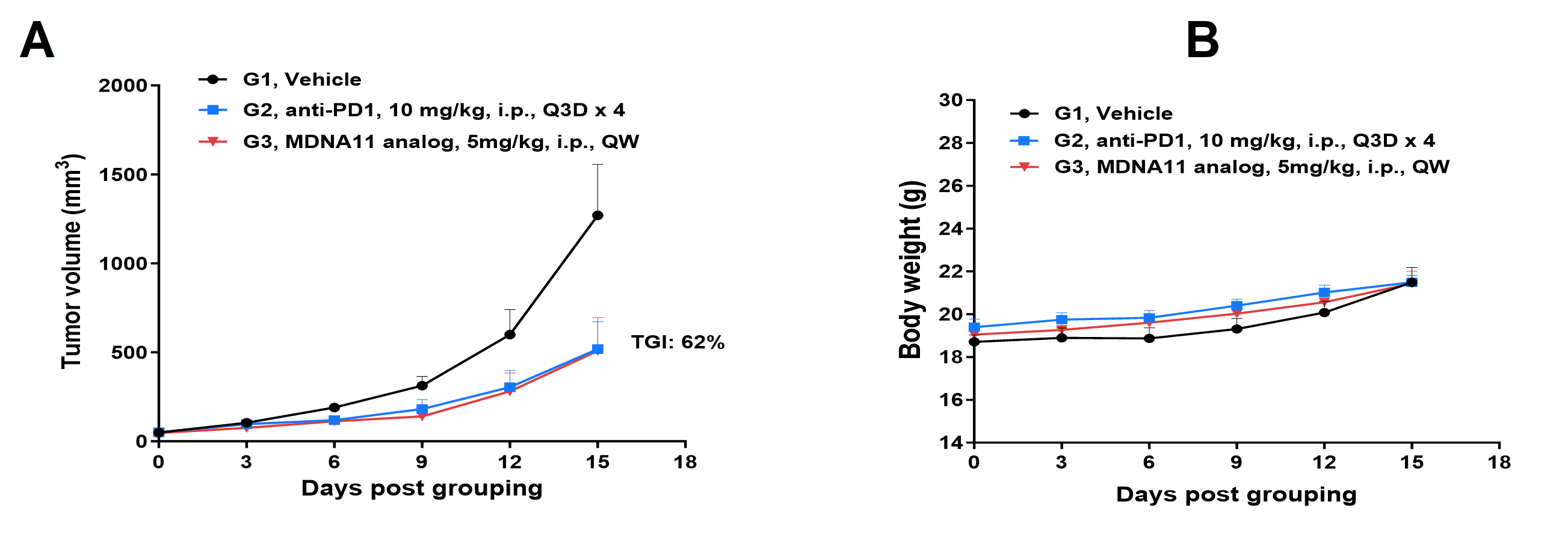
Antitumor activity of a long-acting IL-2 superkine MDNA11 analog in B-hIL2RB/hIL2RG/hIL15/hIL15RA mice. (A) Tumor growth curves. (B) Body weight changes during treatment. Values are expressed as mean ± SEM.
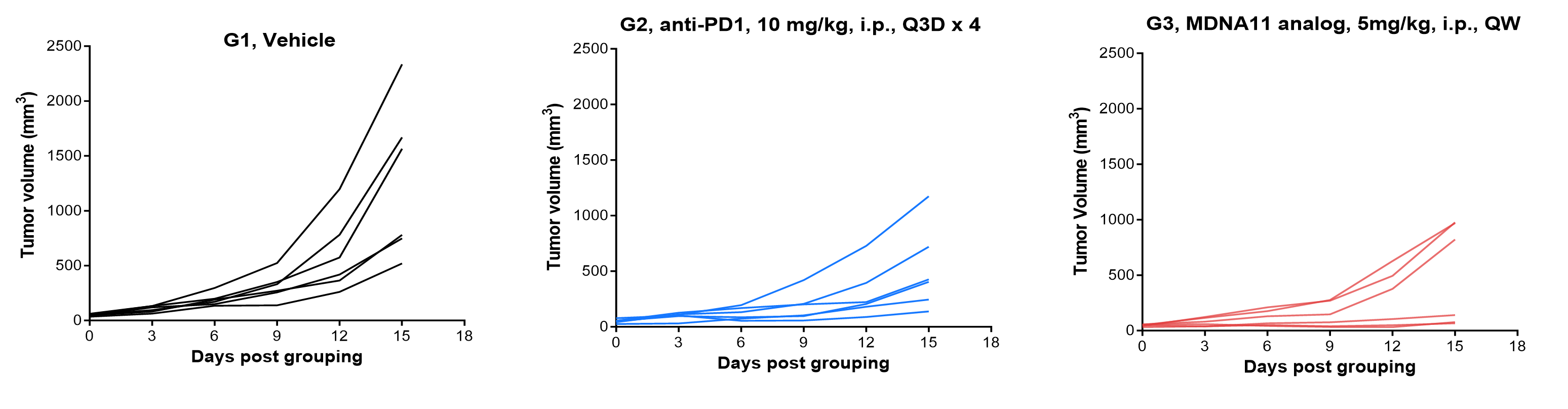
Antitumor activity of a long-acting IL-2 superkine MDNA11 analog in B-hIL2RB/hIL2RG/hIL15/hIL15RA mice. MC38 cells were subcutaneously implanted into homozygous B-hIL2RB/hIL2RG/hIL15/hIL15RA mice (female, 6-7 weeks old, n=6).
*The experiment is verified by the cooperation partner. The drugs used here all belong to clients.
The MDNA11 analog does not bind to human IL2RA but exhibits a higher affinity for binding to human IL2RB.
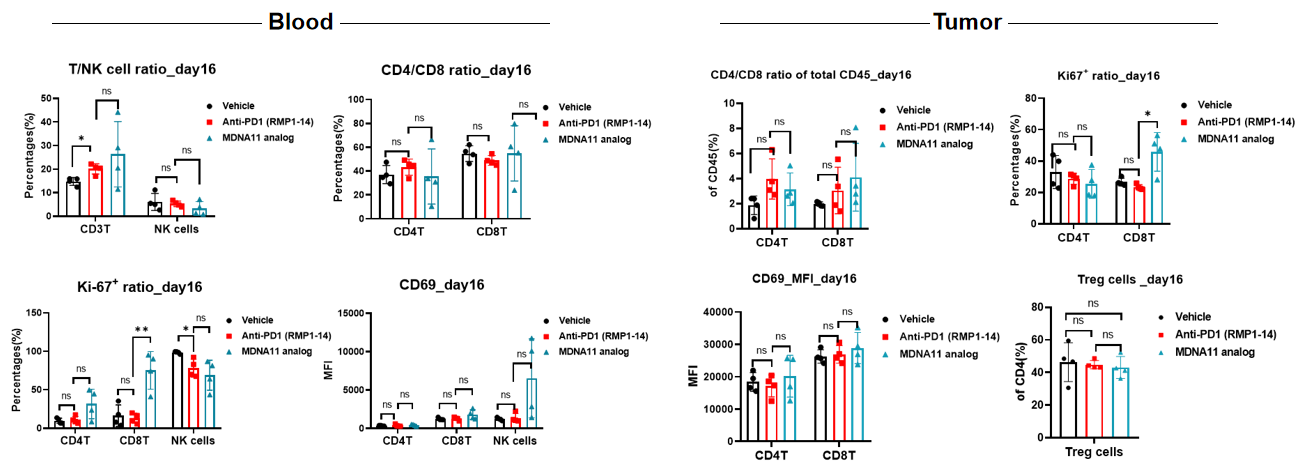
Antitumor activity of a long-acting IL-2 superkine MDNA11 analog in B-hIL2RB/hIL2RG/hIL15/hIL15RA mice. MC38 cells were subcutaneously implanted into homozygous B-hIL2RB/hIL2RG/hIL15/hIL15RA mice (female, 6-7 weeks old, n=6). At the endpoint of the experiment, blood and tumor samples were collected and assessed for the activation and proliferation of T and NK cells by flow cytometry.