Description
IL10/IL10R: A key anti-inflammatory signaling pathway in the immune system
- Gene Information: Interleukin 10 receptor subunit alpha (IL10RA) is a protein-coding gene located on chromosome 11q23.3. Upon IL10 binding, IL10RA forms a heterotetrameric complex with IL10RB, restraining immune activation and shapes inflammatory responses.
- Protein Expression: IL10RA is mainly expressed in various immune cells, while being barely expressed in non-immune cells.
- Signaling Pathway: IL-10 signals through a heterotetramer comprising IL-10RA and IL-10RB, leading to JAK1/STAT3-dependent transcriptional upregulation of anti-inflammatory factors. This in turn inhibits both the production of pro-inflammatory cytokines (e.g., TNF-α, IL-6) and the antigen-presenting activity of macrophages and monocytes.
- Therapeutic Inhibition: IL10RA is a potential therapeutic target for inflammatory and autoimmune diseases. Blocking IL-10/IL10RA signaling may enhance antitumor immunity by relieving immunosuppressive mechanisms in the tumor microenvironment, while modulating this pathway may provide therapeutic benefits in chronic inflammatory disorders.
IL2RG: A key regulator of lymphocyte development and cytokine signaling
- Gene Information: Interleukin 2 receptor subunit gamma (IL2RG), also known as the common gamma chain (γc), is a protein-coding gene located on the X chromosome (Xq13.1). It encodes a shared receptor subunit essential for signaling by multiple interleukins.
- Protein Expression: IL2RG is predominantly expressed on T cells, B cells, NK cells, and other immune cells, where it plays a critical role in lymphocyte development, survival, proliferation, and immune homeostasis.
- Signaling Pathway: IL2RG is a shared component of the receptors for IL-2, IL-4, IL-7, IL-9, IL-15, and IL-21. Cytokine binding activates downstream JAK1/JAK3–STAT signaling pathways, regulating immune cell development, proliferation, and differentiation.
- Therapeutic Inhibition: IL2RG is a key target in immunodeficiency research and immune cell engineering. Loss-of-function mutations cause X-linked severe combined immunodeficiency (X-SCID), while modulation of common γ-chain cytokine signaling provides opportunities for developing therapies targeting immune deficiencies, autoimmune diseases, and cancer immunotherapy.
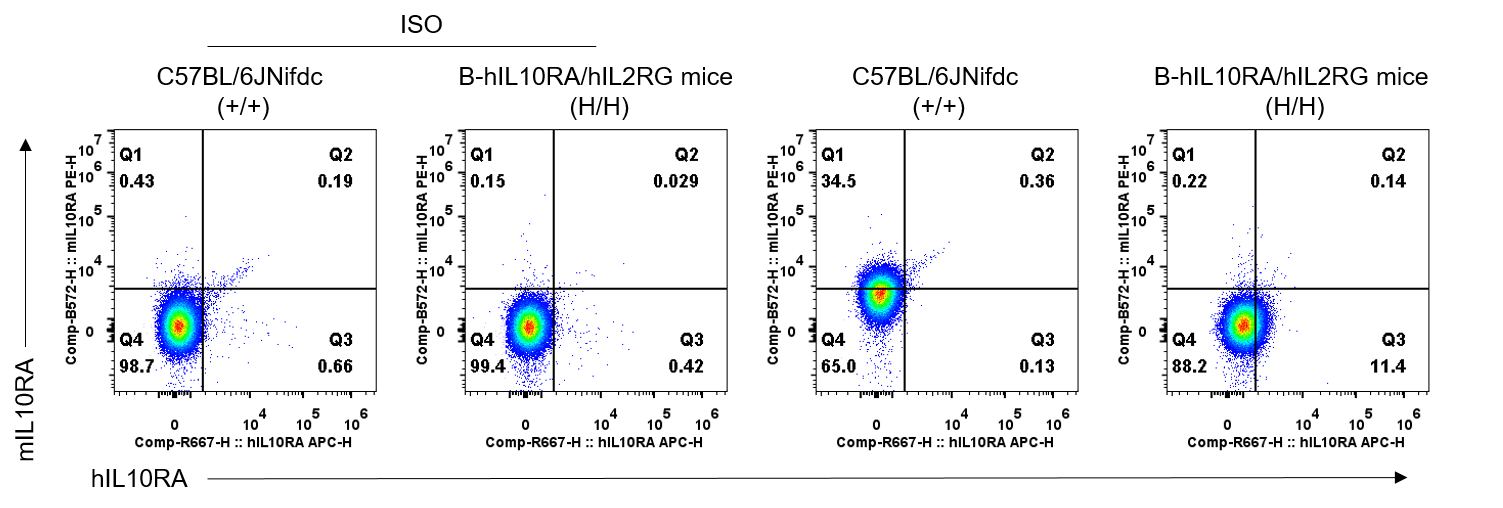
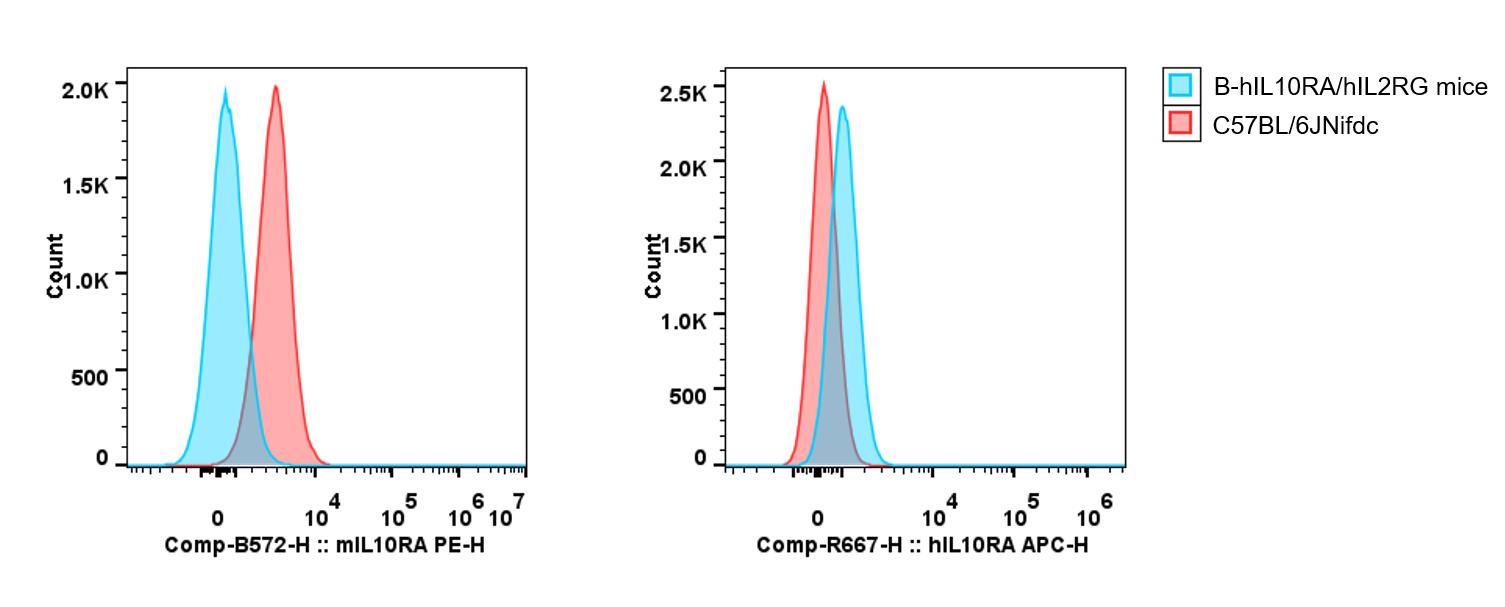
IL10RA Protein Expression in Peritoneal Macrophages of IL10RA/IL2RG Humanized Mice
- Mouse IL10RA was detected in wild-type C57BL/6 mice.
- Human IL10RA was detected in homozygous IL10RA/IL2RG humanized mice.
Mouse and human IL10RA expression analysis in peritoneal macrophages of IL10RA/IL2RG humanized mice. Peritoneal macrophages were collected from C57BL/6JNifdc mice (+/+) (Female, 6-week-old, n=1) and B-hIL10RA/hIL2RG mice (H/H) (Female, 6-week-old, n=1). Protein expression was analyzed with anti-IL10RA antibody (Biolegend, 308811; Biolegend, 112705) by flow cytometry.
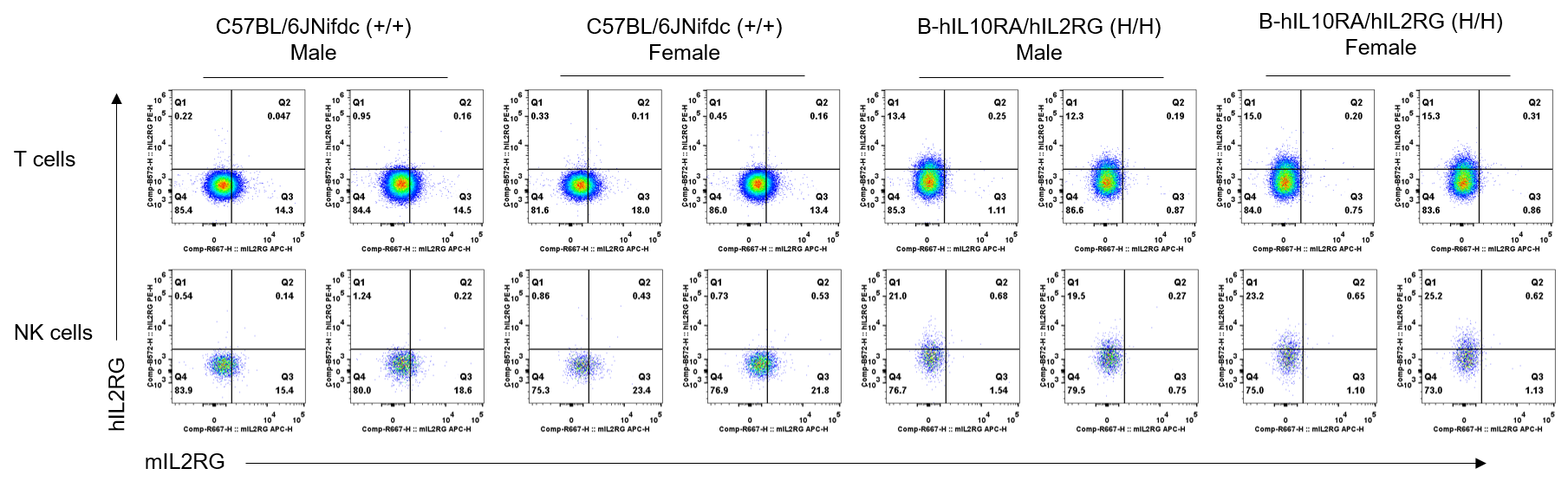
IL2RG Protein Expression in Spleen of IL10RA/IL2RG Humanized Mice
- Mouse IL2RG was detected in wild-type C57BL/6 mice. Human IL2RG was detected in homozygous IL10RA/IL2RG humanized mice.
Mouse and human IL2RG expression analysis in spleen of IL10RA/IL2RG humanized mice. Spleen T cells and NK cells were collected from C57BL/6JNifdc mice (+/+) (Female, 9-week-old, n=2; Male, 9-week-old, n=2) and B-hIL10RA/hIL2RG mice (H/H) (Female, 9-week-old, n=2; Male, 9-week-old, n=2). Protein expression was analyzed with anti-IL2RG antibody (Biolegend, 132308; Biolegend, 338606) by flow cytometry.
* When publishing results obtained using this animal model, please acknowledge the source as follows: The animal model [B-hIL10RA/hIL2RG mice] (Cat# 111870) was purchased from Biocytogen.