
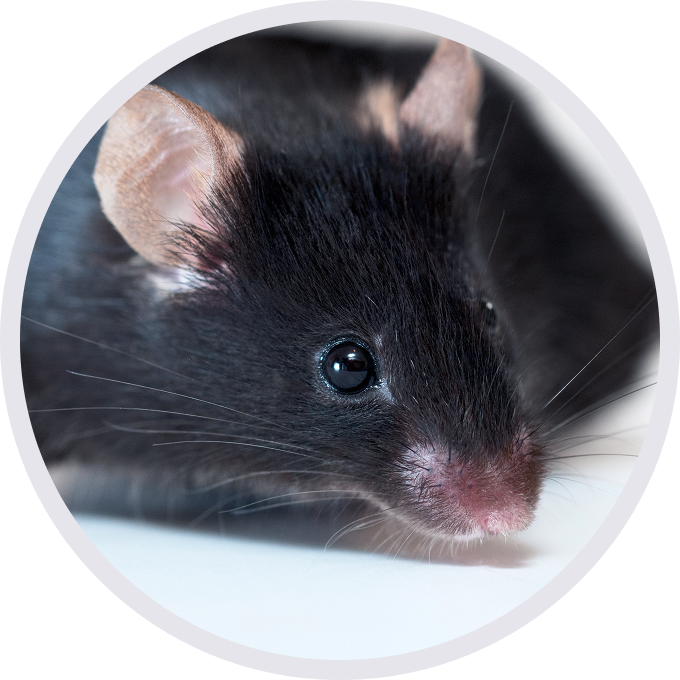

The neonatal Fc receptor (FcRn) plays a critical role in IgG recycling and prolonging antibody half-life. Dysregulation of FcRn is linked to autoimmune diseases such as systemic lupus erythematosus, rheumatoid arthritis, and myasthenia gravis.
In FcRn humanized mice, the murine Fcgrt gene is replaced by its human counterpart (FCGRT), ensuring that antibodies interact with human FcRn rather than murine FcRn. These mice accurately reflect human antibody pharmacokinetics (PK), enabling more predictive antibody half-life studies, drug efficacy testing, and antibody engineering validation.
Key Advantages
Validation
Applications

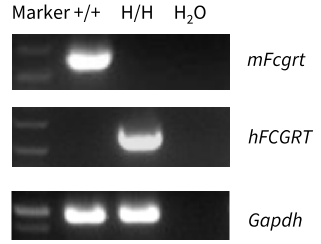
Strain-specific FcRn expression was evaluated by RT-PCR in wild-type C57BL/6 mice and homozygous FcRn humanized mice. Kidney tissues were isolated from wild-type C57BL/6 mice (+/+) and homozygous B-hFcRn mice (H/H). Primers were designed to detect mouse and human Fcgrt.
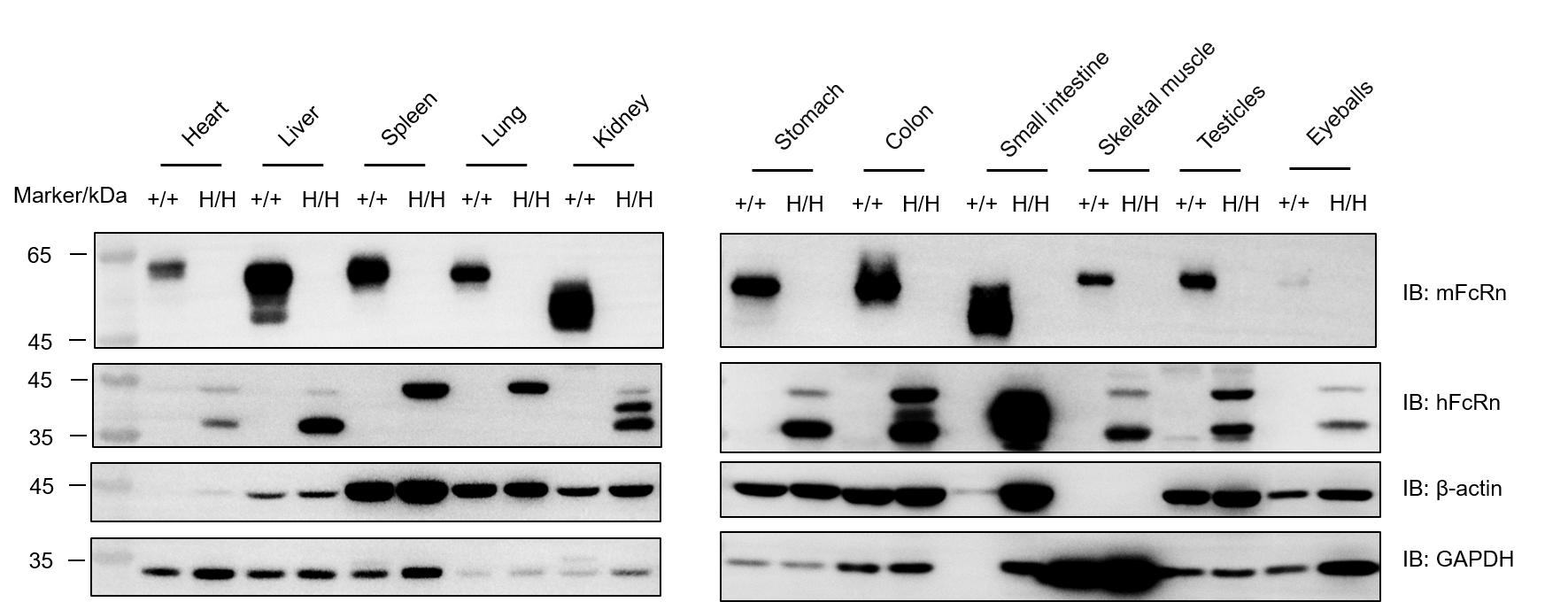
Western blot analysis of FcRn protein expression in homozygous FcRn humanized mice. Various tissue lysates were collected from wild-type C57BL/6N mice (+/+), homozygous B-hFcRn mice (H/H), and then analyzed by western blot with species-specific anti-FcRn antibody (mFcRn: R&D, AF6775; hFcRn: Novus Biologicals, NBP1-89128). 40 μg of total protein was loaded for Western blot analysis.
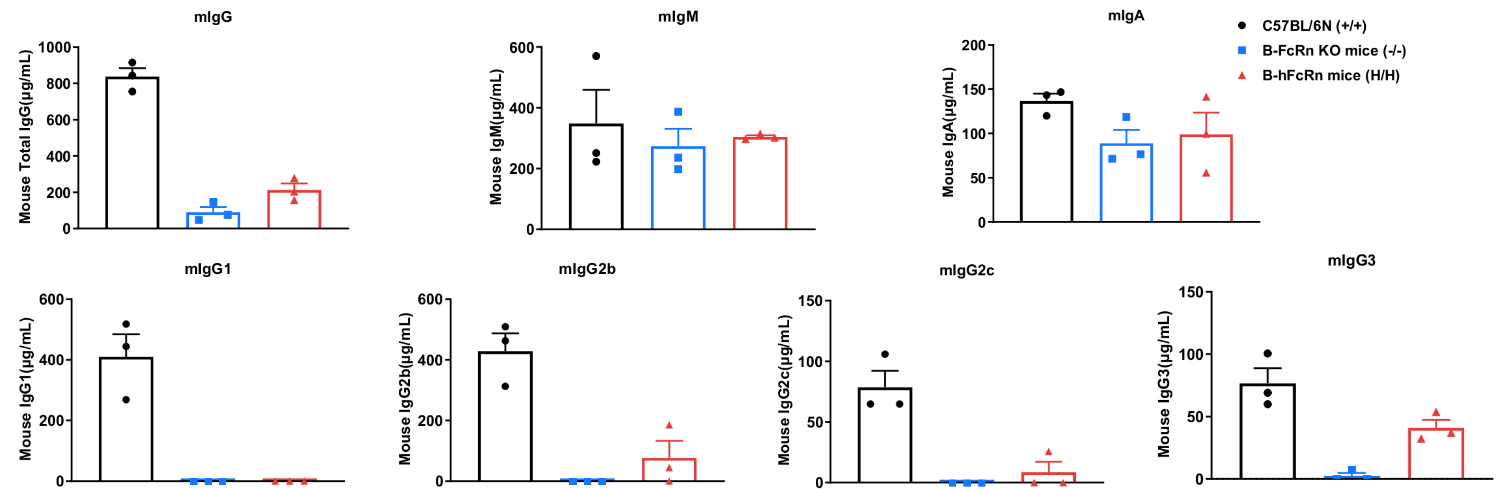
Strain-specific immunoglobulin expression analysis by ELISA. Serum was collected from wild-type C57BL/6N mice (+/+), homozygous B-FcRn KO mice (-/-) and homozygous B-hFcRn mice (H/H) (female, 11-week-old, n=3). Expression levels of mouse immunoglobulins were analyzed by ELISA (Southern Biotech C57BL/6 Mouse Immunoglobulin Panel, 5300-01B). Values are expressed as mean ± SEM.
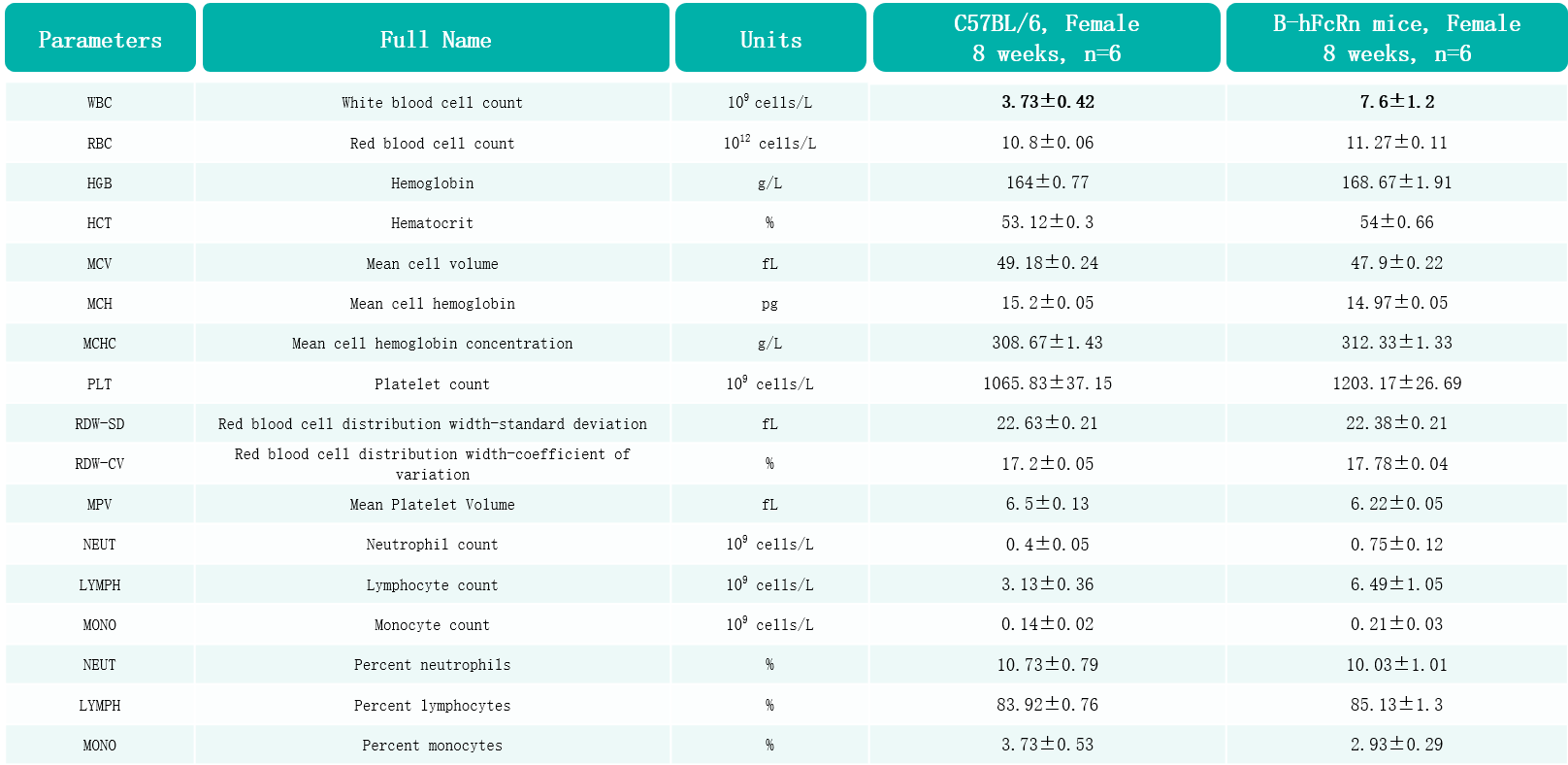
Complete blood count (CBC) of FcRn humanized mice. Values are expressed as mean ± SD.
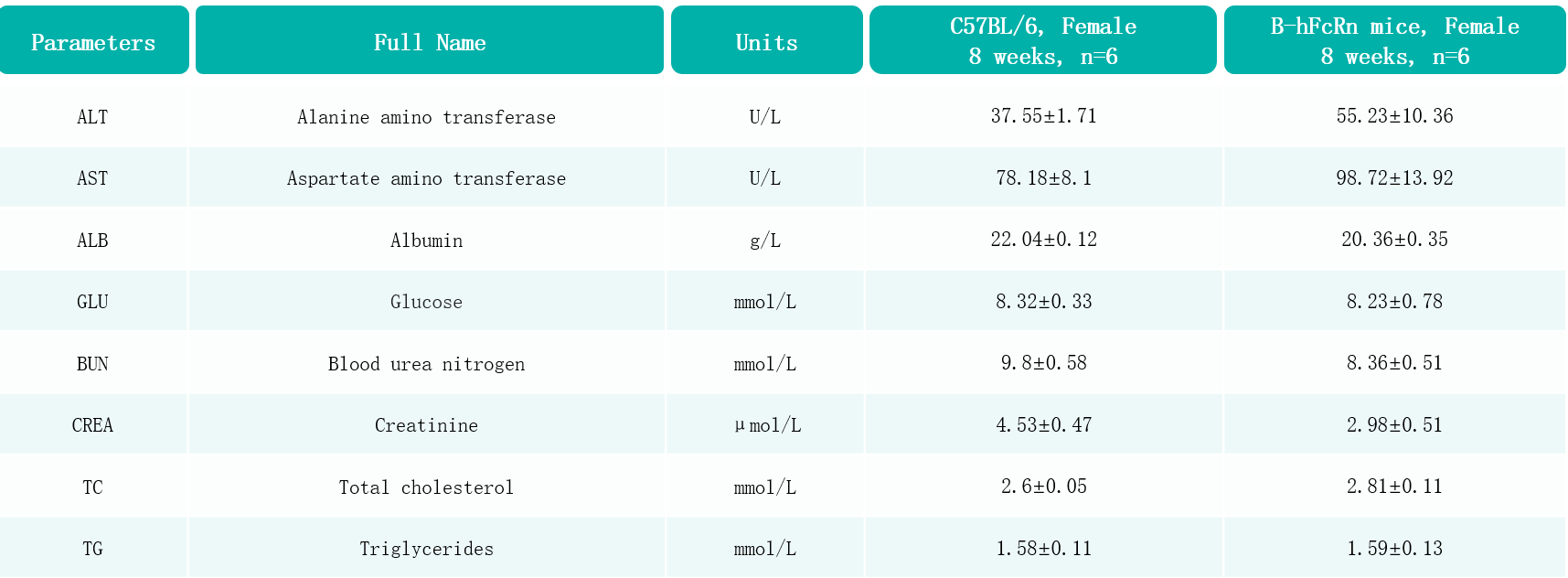
Blood biochemical parameters of FcRn humanized mice are shown. Values are expressed as mean ± SD.
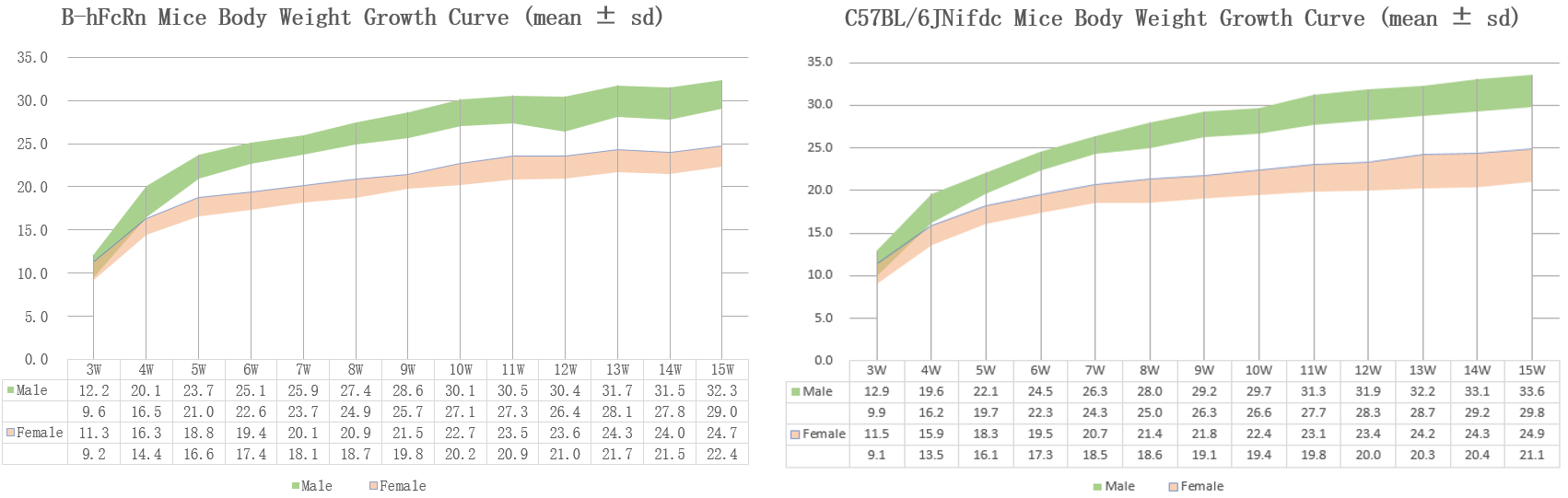
Growth curve of FcRn humanized mice.Three-week-old mice were grouped by sex (15 males and 15 females). Body weight was measured weekly for 13 weeks on the same day each week. The minimum and maximum body weights shown in the table were calculated from the mean ± SD.

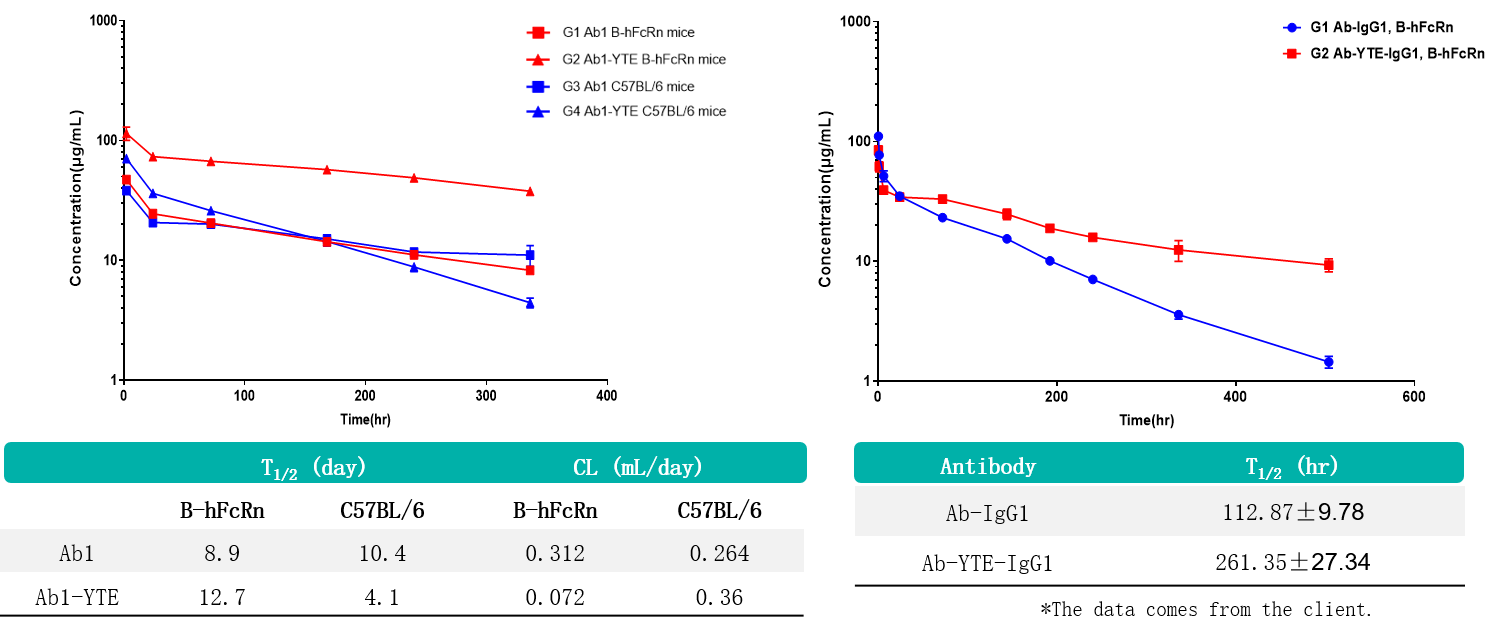
The serum pharmacokinetic (PK) profiles of Ab1 and Ab1-YTE. The effect of the YTE mutation in prolonging antibody half-life was observed only in FcRn humanized mice (B-hFcRn) but not in wild-type controls. Values are expressed as mean ± SEM.
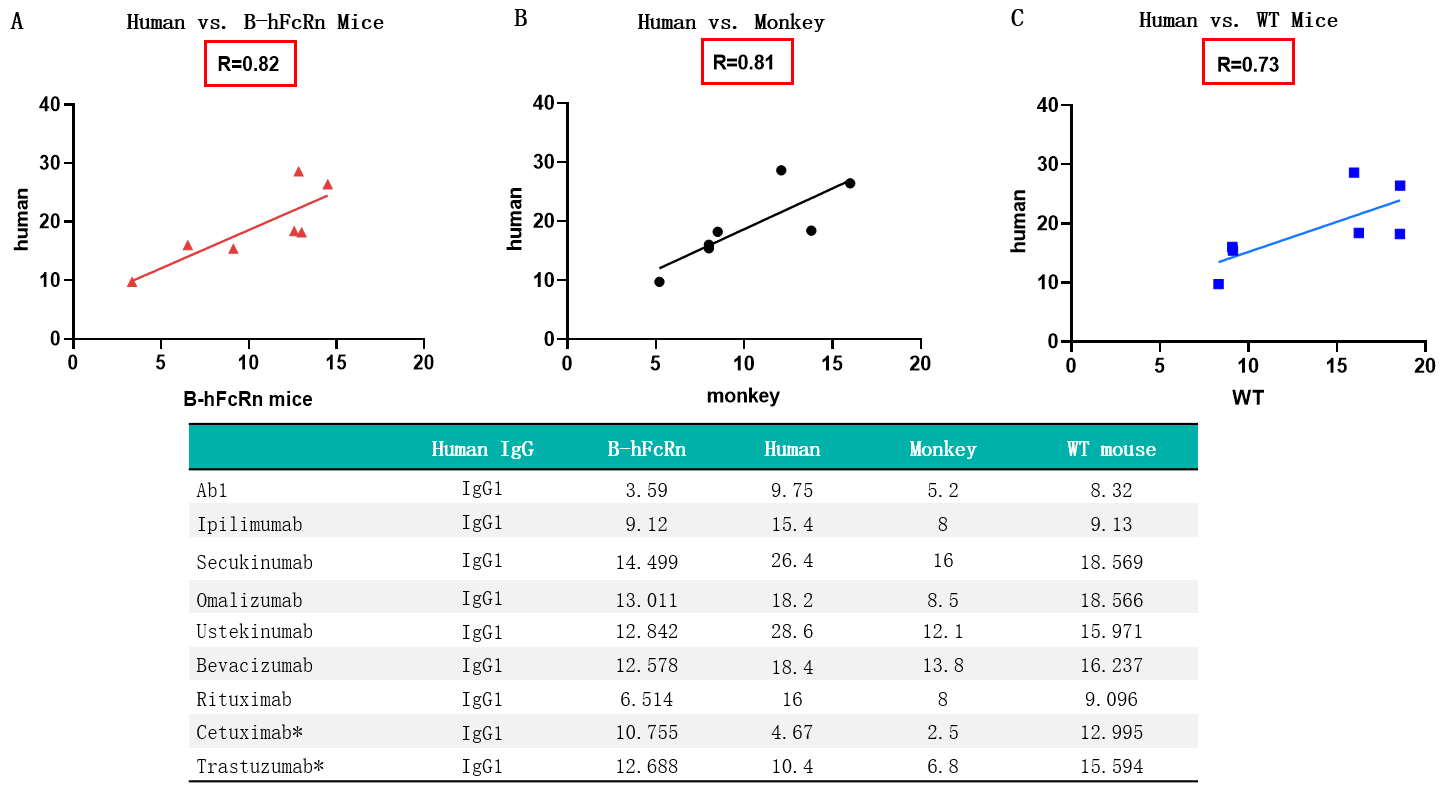
Appendix:Table 1. Half-lives (day) of Abs in human, monkey, B-hFcRn and WT mice
Data Sources: The half-lives data for human and monkey are from literature, while the data for B-hFcRn and WT mouse are sourced from Biocytogen.
* The presence of target-mediated drug disposition (TMDD) was not included in the statistical analysis.
The drug effectively blocks the protective effect of human FcRn on IgG, leading to a reduction in IgG levels.
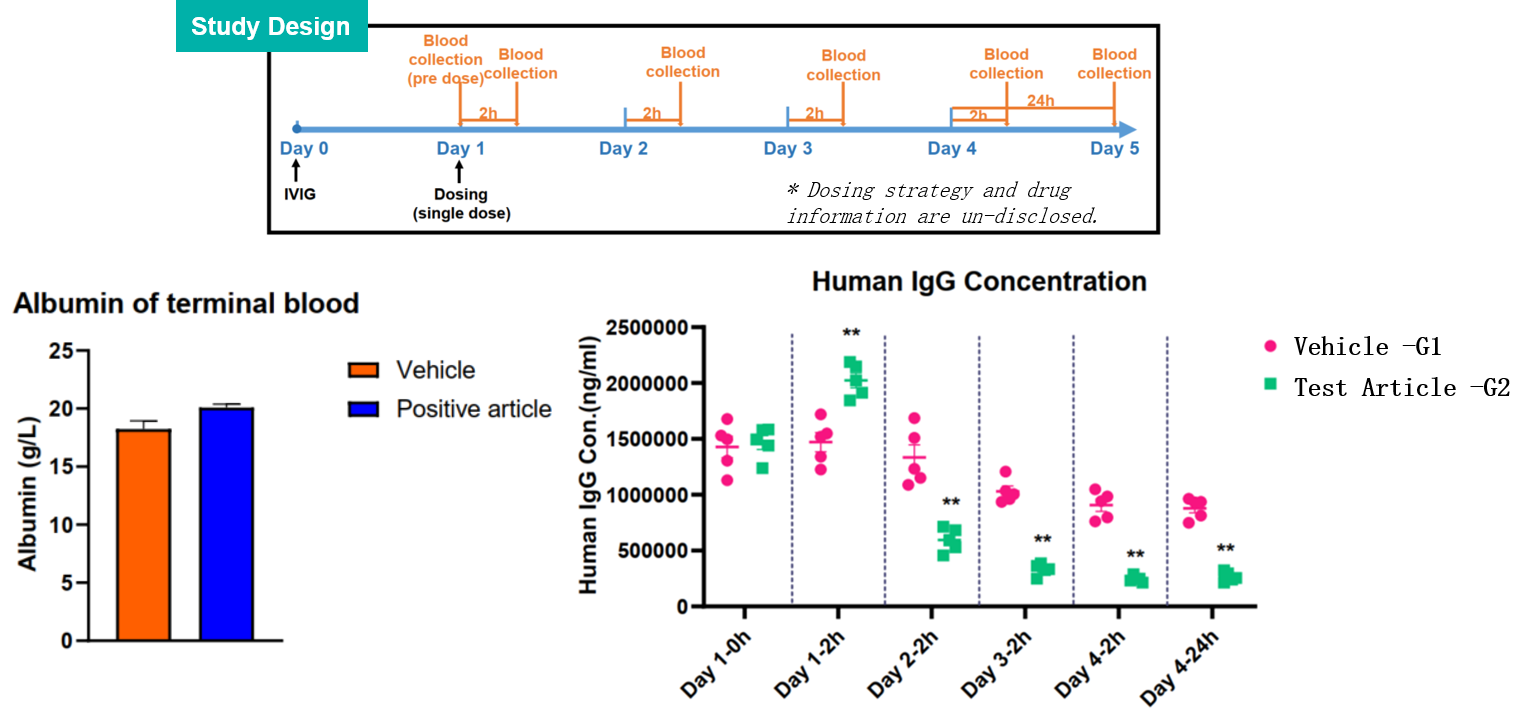
Statistical analysis was conducted using one-way ANOVA, with p-values less than 0.05 considered statistically significant (p < 0.05*, p < 0.01**).
Note: This experiment was performed by the client using B-hFcRn mice, and all other materials were provided by the client.

Q1: What are FcRn humanized mice?
FcRn humanized mice (B-hFcRn) are genetically engineered to replace the murine Fcgrt gene with the human FCGRT gene, enabling expression of human neonatal Fc receptor (FcRn).
Q2: Why are FcRn humanized mice important for antibody drug development?
FcRn regulates IgG and albumin recycling, directly influencing antibody half-life. This model allows accurate preclinical testing of therapeutic antibodies, Fc-engineered variants, and FcRn antagonists.
Q3: Can FcRn humanized mice be used for antibody PK studies?
Yes. FcRn humanized mice reproduce human IgG pharmacokinetics, enabling evaluation of clearance, biodistribution, and half-life extension strategies.
Q4: How do FcRn humanized mice differ from wild-type mice?
Unlike wild-type mice, which recycle IgG via murine FcRn, FcRn humanized mice recycle human IgG and albumin via human FcRn, providing translationally relevant results for clinical antibody studies.
Q5: What diseases can be studied using FcRn humanized mice?
They are particularly valuable for autoimmune diseases involving pathogenic IgG, such as myasthenia gravis, lupus, and pemphigus vulgaris, as well as for metabolic and immunotherapy studies.