


Angiotensin II receptor, type 1a (AGTR1): A component of renin angiotensin receptor (RAS).
Gene Information: AGTR1 is a protein-coding gene located on chromosome 3q24. It encodes angiotensin II type 1 receptor (AT1R), a seven-transmembrane G protein-coupled receptor (GPCR) that mediates angiotensin II signaling.
Protein Expression: AT1R is highly expressed in adipocytes and contributes to angiotensin II signaling in metabolic and cardiovascular regulation.
Signaling Pathway: Angiotensin II binding activates AT1R, primarily engaging Gq/11–PLCβ signaling and downstream Ca²⁺ mobilization and PKC activation. These responses promote vasoconstriction, aldosterone secretion, and sodium retention. Excessive AT1R signaling contributes to hypertension, cardiovascular remodeling, and kidney injury.
Therapeutic Targeting: AGTR1 is a clinically validated therapeutic target for hypertension and selected cardiovascular and renal conditions. Angiotensin II receptor blockers (ARBs), including losartan and valsartan, inhibit AT1R signaling and are widely used in clinical practice.

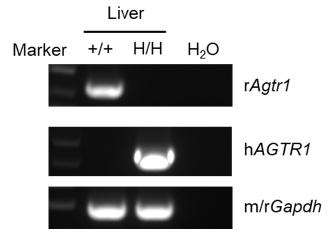
Strain specific analysis of AGTR1 mRNA expression in wild-type SD rats and AGTR1 humanized rats by RT-PCR. Liver RNA were isolated from wild-type SD rats (+/+) and homozygous B-hAGTR1 rats (H/H), then cDNA libraries were synthesized by reverse transcription, followed by RT-PCR with rat or human AGTR1 primers. Rat Agtr1 mRNA was only detectable in wild-type SD rats. Human AGTR1 mRNA was exclusively detectable in homozygous B-hAGTR1 rats but not in wild-type SD rats.
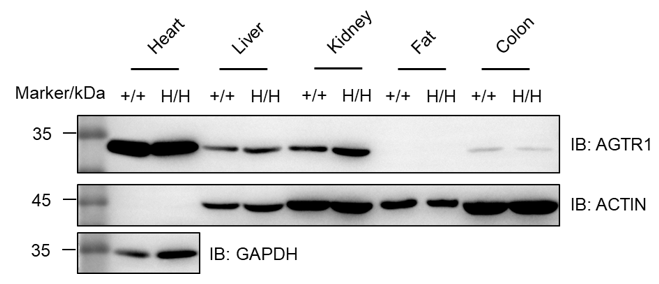
Strain specific AGTR1 expression analysis in wild-type SD rats and homozygous AGTR1 humanized rats by western blot. Various tissue lysates were collected from wild-type SD rats (+/+) and homozygous B-hAGTR1 rats (H/H), then analyzed by western blot with cross reactive anti-AGTR1 antibody (Abcam, ab124734). 40 μg total protein was loaded for western blotting analysis. AGTR1 was detected in heart, liver and kidney of both wild-type rats and homozygous B-hAGTR1 rats, but weakly detected in colon.