you may also like
RENSUPER BIOLOGICS™ AUTOIMMUNE DISEASE SERIES | PART 3
Asthma is a heterogeneous inflammatory disease driven by interconnected epithelial, immune, and tissue pathways. Despite advances in inhaled therapies and biologics, many patients with severe asthma continue to experience exacerbations, persistent symptoms, corticosteroid exposure, and high treatment burden (Global Initiative for Asthma 2025; Brusselle et al. 2022).
For drug developers, the key challenge is determining where—and how broadly—to intervene across the inflammatory cascade.
Approved biologics have transformed care for selected patients and validated intervention at multiple levels of the cascade. Dupilumab and tezepelumab have validated both downstream IL-4Rα blockade and upstream TSLP inhibition in severe asthma (Castro et al. 2018; Menzies-Gow et al. 2021; U.S. Food and Drug Administration 2025).
Important development priorities remain:
Type 2 (T2) inflammation is a major driver of many patients, especially those with severe asthma. Upstream epithelial alarmins such as TSLP and IL-25 activate ILC2 and Th2 responses, while downstream IL-4, IL-5, and IL-13 signaling promotes IgE production, eosinophilic inflammation, mucus hypersecretion, airway hyperresponsiveness, and remodeling (Fahy 2015; Roan et al. 2019; Licari et al. 2025).
However, T2 inflammation varies across patients and over time. Multiple nodes can remain active simultaneously, enabling residual or compensatory signaling after a single target is blocked.
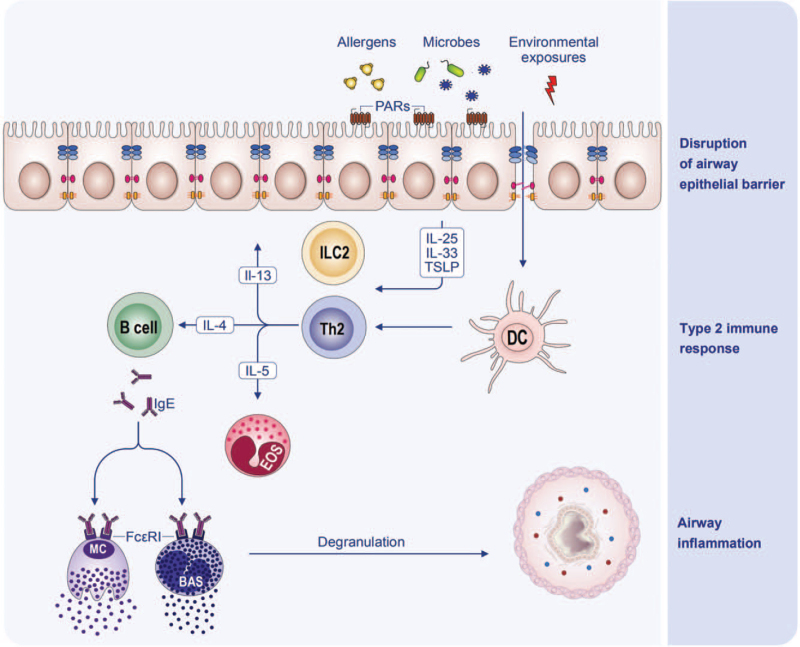
Type 2 Airway Inflammation in Asthma. (Dong., et al. 2022)
The T2 inflammatory cascade presents complementary intervention points. Upstream blockade can limit broad immune activation, while downstream targeting can directly suppress established tissue-level disease mechanisms.
A portfolio spanning both levels creates opportunities for differentiated monotherapies, multispecific antibodies, and rational combination strategies designed to deliver deeper and more durable asthma control.
► IL-25: An Emerging First-in-Class Opportunity
IL-25 acts as an upstream epithelial "alarmin" that initiates asthma by activating ILC2s and Th2 cells, contributing to airway inflammation and remodeling.
► TSLP: A Clinically Validated Upstream Switch
TSLP acts as a master upstream regulator that initiates and amplifies Type 2 inflammation by activating both innate and adaptive immune responses.
► IL-13: Directly Addressing Mucus, Hyperresponsiveness, and Remodeling
IL-13 is a key effector cytokine that directly drives airway hyperresponsiveness, mucus overproduction, and tissue remodeling in asthma.
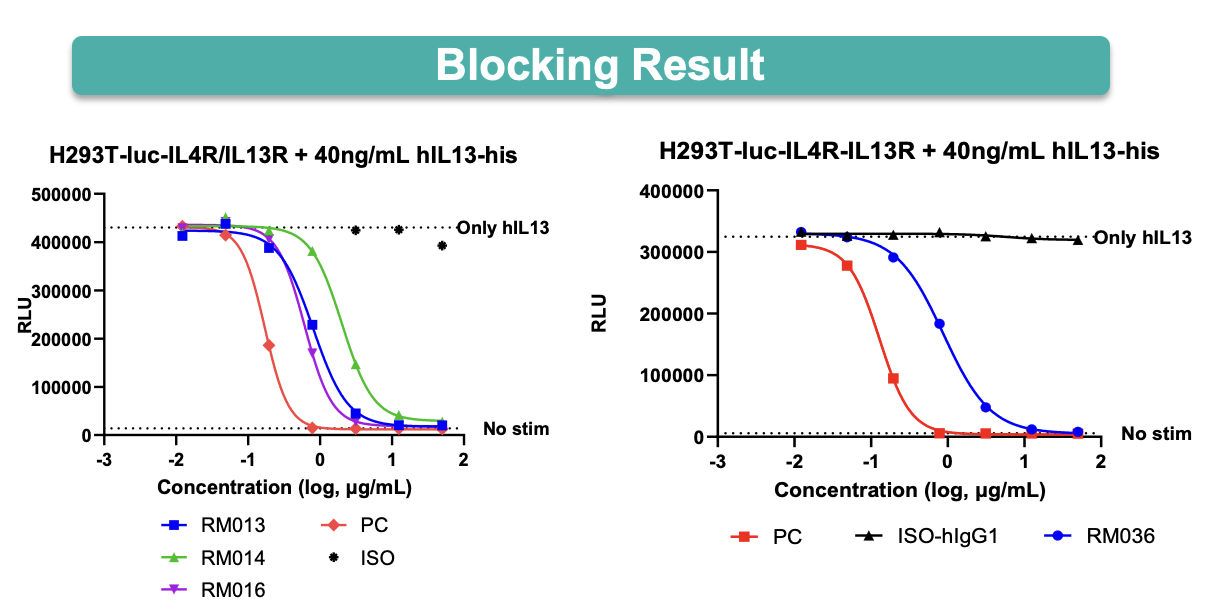
All tested RM compounds (IL-13 mAb candidates, RM013-RM036) demonstrate complete, dose-dependent blocking of human IL-13 signaling, showing functional potency in the low-nanomolar range.
► IL-4Rα: A Shared Gateway for Dual-Pathway Inhibition
IL-4Rα serves as a critical shared receptor subunit for both IL-4 and IL-13, acting as a central gateway that mediates type 2 inflammatory signaling, providing an opportunity to simultaneously inhibit both ends.
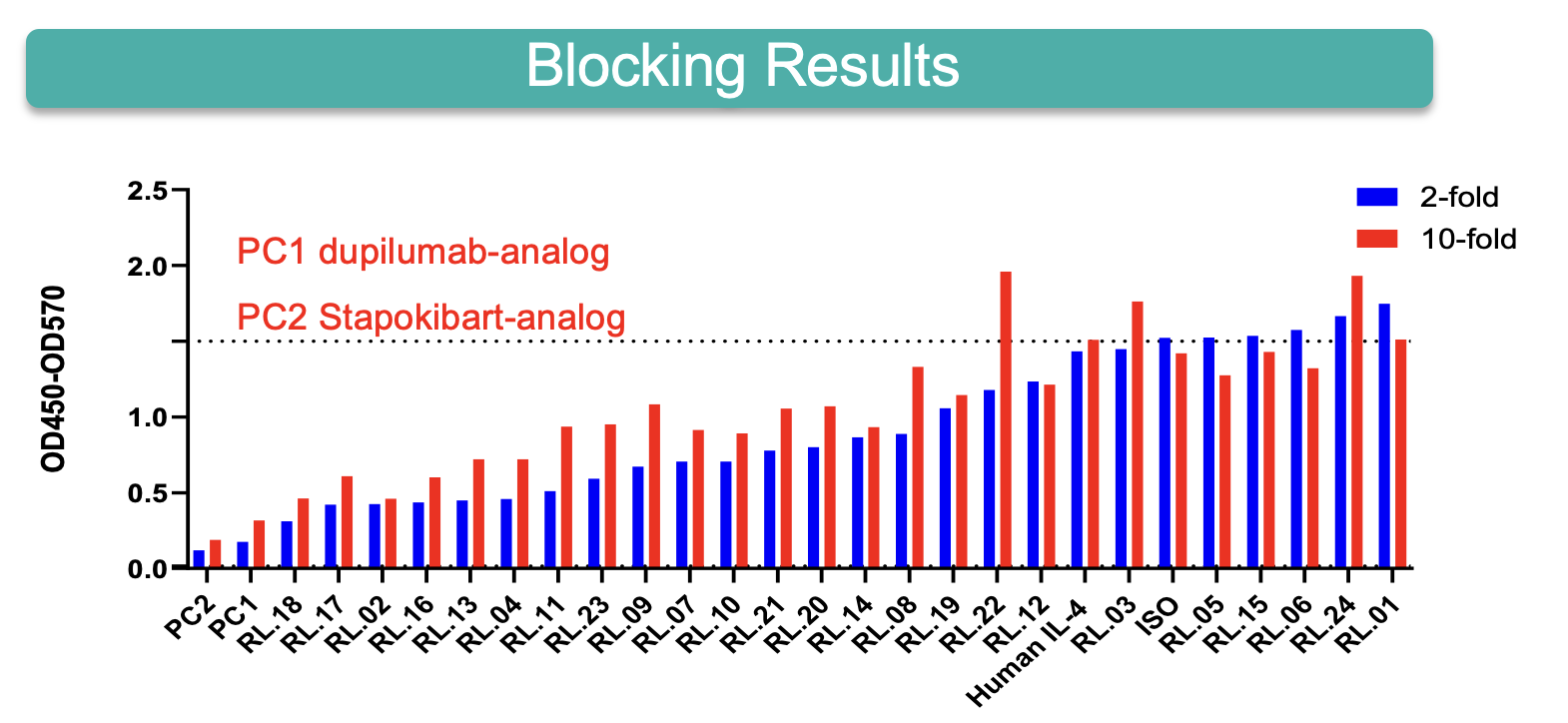
All tested RL compounds (IL-4Rα mAb candidates) demonstrate superior blocking activity over positive control analogs (PC, dupilumab and stapokibart).
► Biocytogen IL-4Rα x TSLPR Bispecific Antibody:
By simultaneously targeting TSLP (an upstream initiator of type 2 inflammation) and IL-4Rα (a key downstream mediator), this bsAb is designed to achieve broader and more durable immune modulation than benchmark single-target approaches.
Key Highlights:
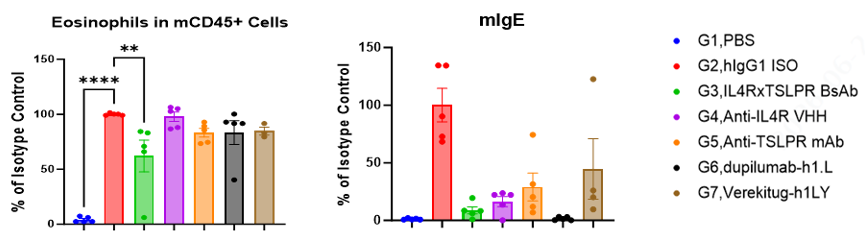
The IL4RxTSLPR bsAb (G3) demonstrates superior overall efficacy in mouse asthma model. Unlike monotherapies including benchmarks (G6, G7) that only suppress mIgE, the bsAb's dual-action mechanism successfully resolves both the chronic cellular inflammation (eosinophils, left) and the acute allergic drivers (IgE, right), representing a much more potent and durable therapeutic profile.
Biocytogen offers robust, validated asthma mouse models induced by ovalbumin (OVA), house dust mite (HDM), TSLP, or Alternaria to represent diverse asthma phenotypes. A broad portfolio of target-humanized models—including IL-4/IL-4Rα and TSLP/TSLPR mice—enables precise in vivo evaluation of human-targeted therapies for eosinophilic asthma, allergic asthma, and Type 2 inflammation.
> Explore asthma model protocols, validation data and functional readouts
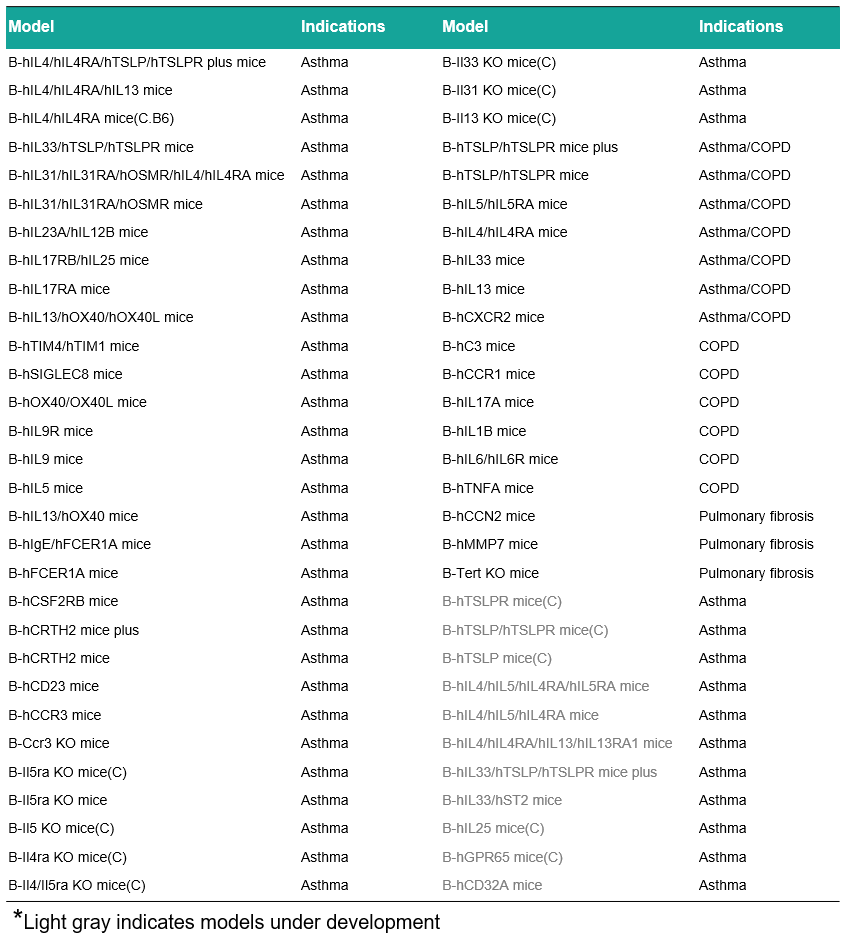
Respiratory-Related Mouse Models at Biocytogen (Partial List):
Biocytogen integrates fully human antibody discovery, flexible molecular formats, and translational in vivo evaluation across the Type 2 inflammatory cascade. The RenSuper Biologics™ portfolio and RenMice® platforms support IL-25, TSLP, IL-13, and IL-4Rα programs, including differentiated multi-pathway strategies.
A broad portfolio of target-humanized mouse models enables evaluation of human-targeted therapies. Reliable, validated OVA-, HDM-, TSLP-, and Alternaria-induced asthma models provide disease-relevant efficacy and functional readouts.
The next generation of asthma biologics will emerge from connecting differentiated molecules with clinically relevant translational evidence. Partner with Biocytogen to advance your asthma and Type 2 inflammation program from target discovery through preclinical validation.
Type 2 inflammation is an immune response driven by Th2 cells, ILC2s, and cytokines such as IL-4, IL-5, and IL-13. In asthma, it promotes eosinophilic inflammation, IgE production, mucus hypersecretion, airway hyperresponsiveness, and exacerbations. Its underlying drivers and severity can vary among patients and over time.
TSLP and IL-25 are epithelial alarmins released early in response to allergens, viruses, pollutants, and other airway stressors. Blocking these upstream targets may suppress multiple downstream Type 2 inflammatory pathways before they amplify. TSLP is clinically validated in severe asthma, while IL-25 offers emerging first-in-class potential.
IL-13 blockade selectively inhibits an effector cytokine associated with mucus hypersecretion, airway hyperresponsiveness, and remodeling. IL-4Rα blockade suppresses signaling from both IL-4 and IL-13 because their receptor complexes share this subunit. The optimal strategy depends on the required pathway coverage, patient biology, and therapeutic format.
Patients differ in endotype, biomarkers, comorbidities, and dominant inflammatory drivers. Some experience incomplete response, ongoing exacerbations, steroid dependence, residual mucus or remodeling, or burdensome dosing. Biological redundancy and changing disease mechanisms also create opportunities for more durable, convenient, and multi-pathway therapies.
Biocytogen provides fully human mAbs, heavy-chain-only antibodies, and VHH-based building blocks generated using RenMice® platforms. Its portfolio includes antibodies targeting IL-25, TSLP, IL-13, and IL-4Rα, with cross-reactive candidates, benchmarked functional data, and flexible formats supporting lead selection, translational development, multispecific engineering, co-development, and licensing.
Biocytogen offers validated OVA-, HDM-, TSLP-, and Alternaria-induced asthma mouse models, plus a broad portfolio of target-humanized models covering Type 2 inflammation pathways such as IL-4/IL-4Rα and TSLP/TSLPR. Inflammatory, histopathological, and airway-function readouts support reliable efficacy evaluation and translational asthma drug development.
► Additional Resources: