

BAFF: BAFF Promotes B-Cell Survival, Maturation, and Humoral Immunity.
Gene Information: BAFF (TNFSF13B) encodes B-cell activating factor, a transmembrane and soluble cytokine within the TNF superfamily located on human chromosome 13q14.3 that acts as a central master regulator of B-cell homeostasis.
Protein Expression: Expressed as membrane-bound and cleaved soluble forms primarily by innate immune cells including monocytes, macrophages, dendritic cells, and neutrophils, with upregulation driven by pro-inflammatory cytokines such as IFN-γ.
Signaling Pathway: Binding to its receptors BAFF-R, TACI, or BCMA triggers non-canonical NF-κB and PI3K/Akt activation, downregulating pro-apoptotic proteins to promote B-cell survival, maturation, and immunoglobulin class-switch recombination.
Therapeutic Inhibition: Targeting BAFF with neutralizing monoclonal antibodies or decoy receptors depletes autoreactive B cells and suppresses pathogenic autoantibody production, providing a cornerstone therapy for systemic lupus erythematosus and autoimmune diseases.

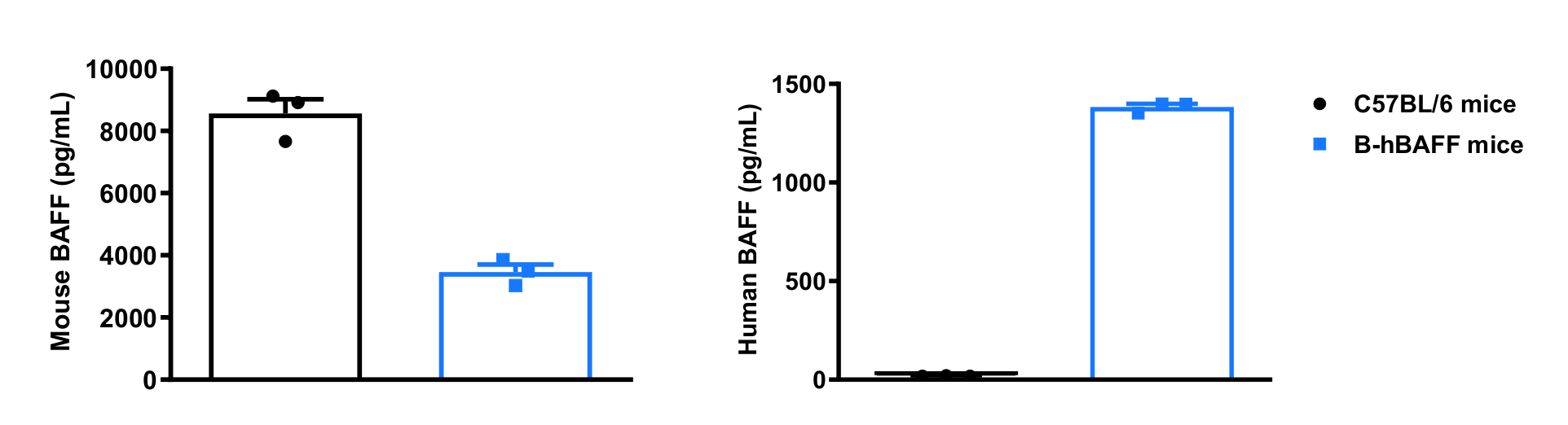
Strain specific BAFF expression analysis in wild-type C57BL/6 mice and heterozygous BAFF humanized mice by ELISA. Serum was collected from wild-type C57BL/6 mice and heterozygous B-hBAFF mice. Expression level of mouse and human BAFF were analyzed by ELISA (anti-mouse BAFF ELISA kit: R&D, MBLYS0; anti-human BAFF ELISA: R&D, DBLYS0B). Values are expressed as mean ± SEM. ND: not detectable.