
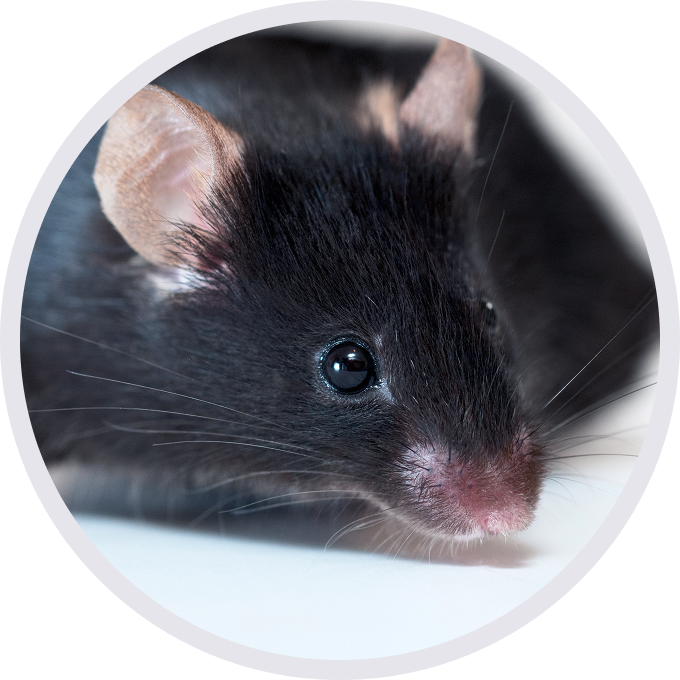

B-hC1S mice
C57BL/6-C1stm1(C1S)Bcgen/Bcgen • 112836

B-hC1S mice

Catalog Number
112836
Strain Name
C57BL/6-C1stm1(C1S)Bcgen/Bcgen
Strain Background
C57BL/6
NCBI gene ID
716 (Human)
Aliases
EDSPD2

on this page

  • Description
  • Phenotypic analysis

Posters

View All

    Publication

      Description

      Complement Component C1s: C1s plays a critical role in initiating downstream classical complement pathway activation

      • Gene Information: The human C1S gene is located on chromosome 12p13.31 and encodes complement component C1s, a serine protease that forms an essential part of the C1 complex together with C1q and C1r.
      • Protein Expression: C1s is predominantly synthesized and secreted by hepatocytes into the bloodstream, where it circulates mainly as an inactive zymogen (pro-C1s) associated with the C1 complex.
      • Signaling Pathway: C1s is activated by C1r following recognition of antigen-antibody immune complexes by C1q. Activated C1s cleaves C4 and C2 to generate the C3 convertase (C4b2a), triggering downstream C3 and C5 activation and ultimately membrane attack complex (MAC) formation.
      • Therapeutic Inhibition: Therapeutic inhibition of C1s selectively blocks classical complement pathway activation while preserving the lectin and alternative pathways. Sutimlimab (Enjaymo), a humanized anti-C1s monoclonal antibody, has been approved for the treatment of cold agglutinin disease (CAD). C1s inhibition is also being investigated as a therapeutic strategy for antibody-mediated and immune complex-associated diseases.
      C1S mRNA Expression in C1S Humanized Mice by RT-PCR

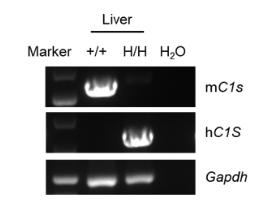
      Strain specific analysis of C1S mRNA expression in wild-type C57BL/6JNifdc mice and C1S humanized mice by RT-PCR. Liver mRNA were isolated from wild-type C57BL/6JNifdc mice (+/+) and homozygous B-hC1S mice (H/H), then cDNA libraries were synthesized by reverse transcription, followed by PCR with mouse C1s mRNA and human C1S primers. Mouse C1s mRNA was detectable only in wild-type mice. Human C1S mRNA was detectable only in homozygous B-hC1S mice but not in wild-type mice.
      C1S Protein Expression in the Serum of C1S Humanized Mice by ELISA

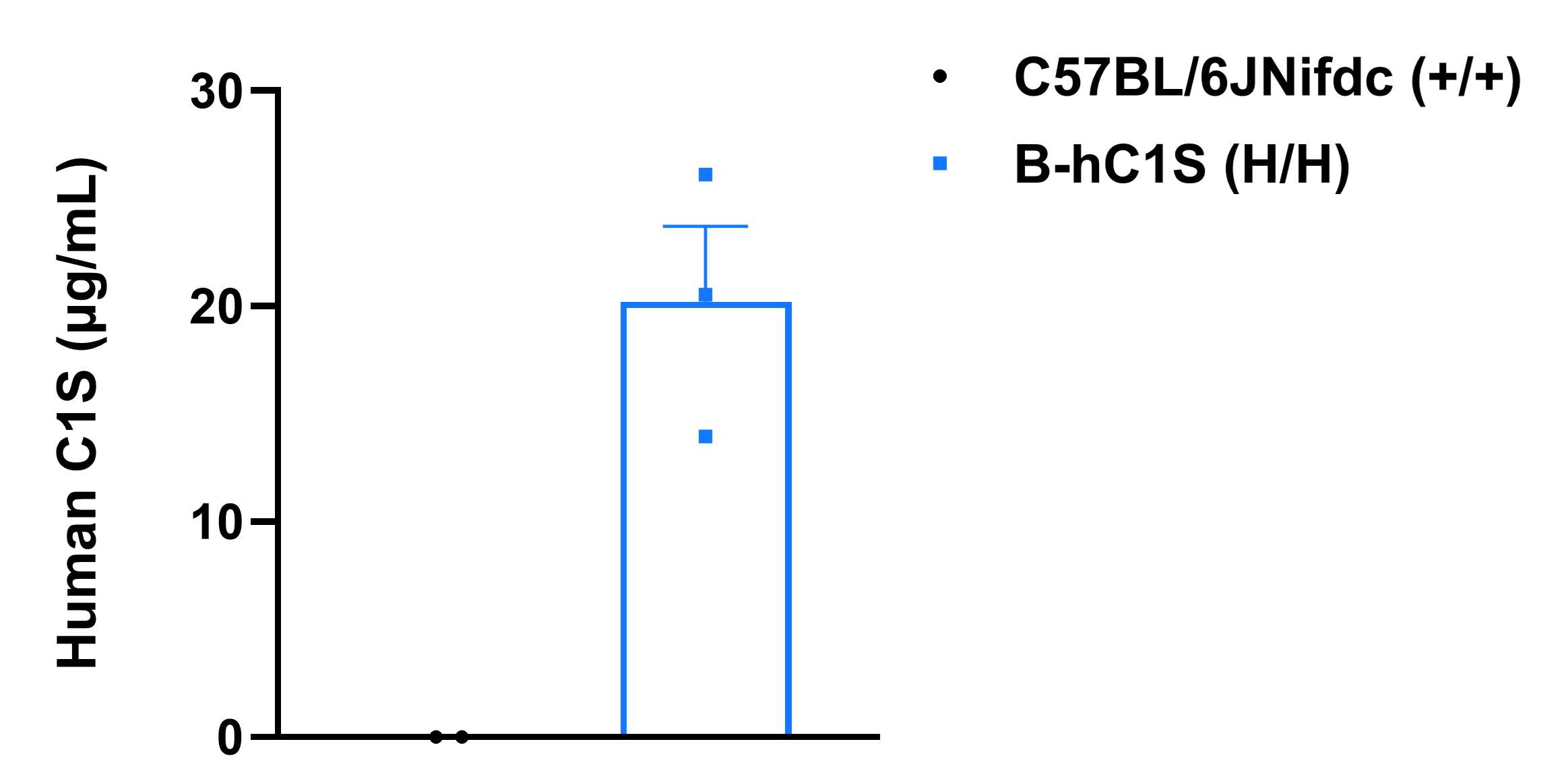
      Strain specific C1S expression analysis in wild-type C57BL/6JNifdc mice and homozygous C1S humanized mice by ELISA. Serum was collected from wild-type C57BL/6JNifdc mice (+/+) and homozygous B-hC1S mice (H/H) (female, 6-week-old, n=3). Protein expression level of C1S was analyzed by ELISA (Thermo, EH57RB). Human C1S was exclusively detectable in homozygous B-hC1S mice
      Functional Activity of the Classical Complement Pathway in C1S Humanized Mice

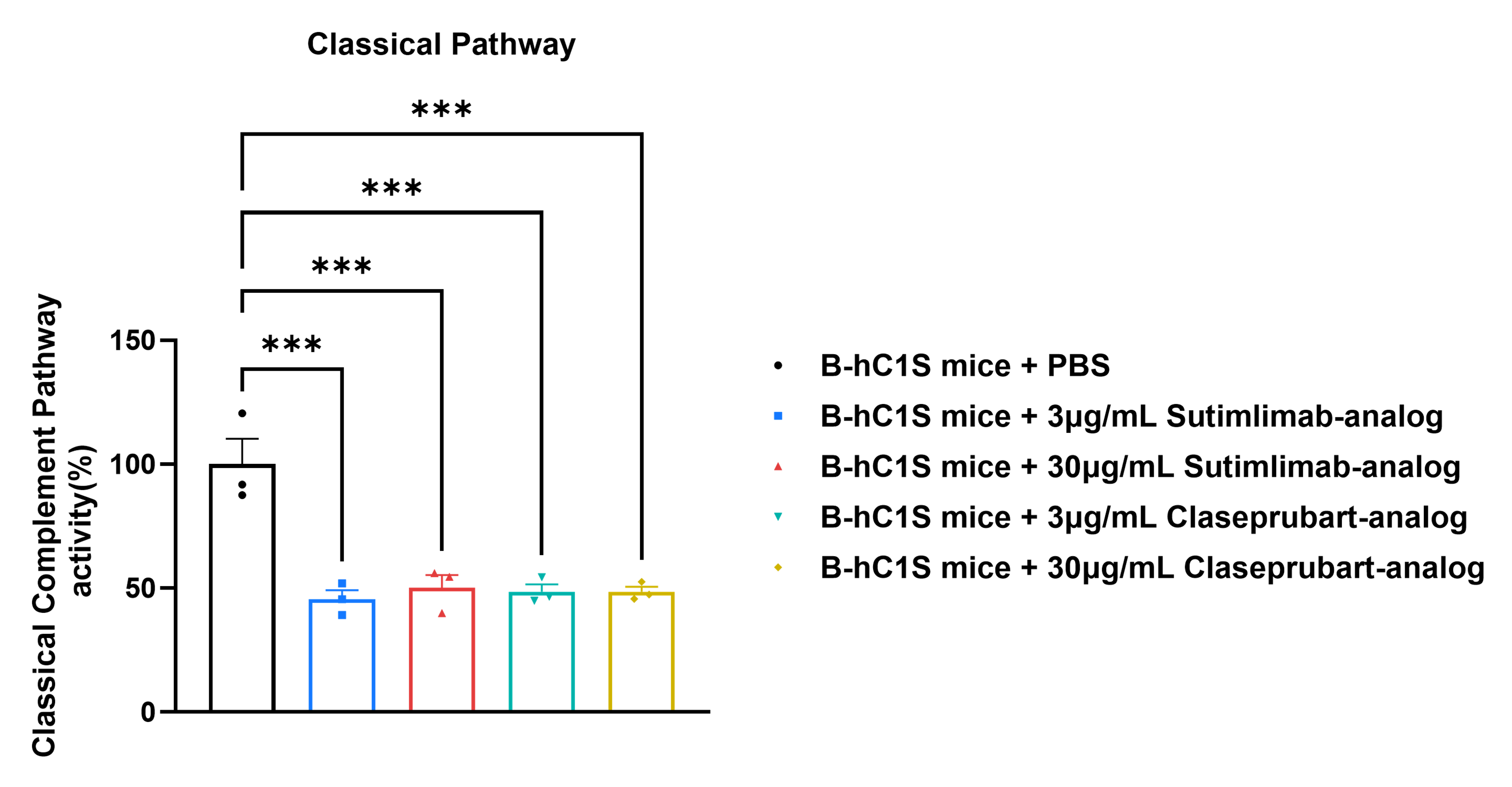
      Functional activity of the classical pathway of homozygous C1S humanized mice. Serum was collected from homozygous B-hC1S mice (H/H) (male, n=3, 7-week-old) and the functional activity was evaluated with the complement kit. Sutimlimab-analog (BIVV009) and Claseprubart-analog (DNTH103) are inhibitors targeting C1s. The activity was normalized to the PBS group. Significance was determined by one-way ANOVA, *P<0.05, **P<0.01, ***P<0.001.

      * When publishing results obtained using this animal model, please acknowledge the source as follows: The animal model [B-hC1S mice] (Cat# 112836) was purchased from Biocytogen.