

CACNG1: A potential target for muscle delivery.

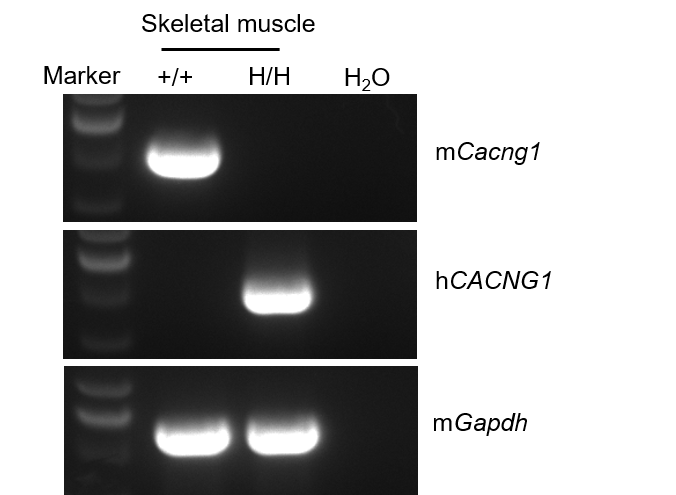
Strain specific analysis of CACNG1 mRNA expression in wild-type C57BL/6JNifdc mice and B-hCACNG1 mice by RT-PCR. Skeletal muscle RNA were isolated from wild-type C57BL/6JNifdc mice (+/+) and homozygous B-hCACNG1 mice (H/H), then cDNA libraries were synthesized by reverse transcription, followed by PCR with mouse or human CACNG1 primers. Mouse Cacng1 mRNA was only detectable in wild-type mice. Human CACNG1 mRNA was exclusively detectable in homozygous B-hCACNG1 mice but not in wild-type mice, and the sequences were confirmed via Sanger Sequencing.

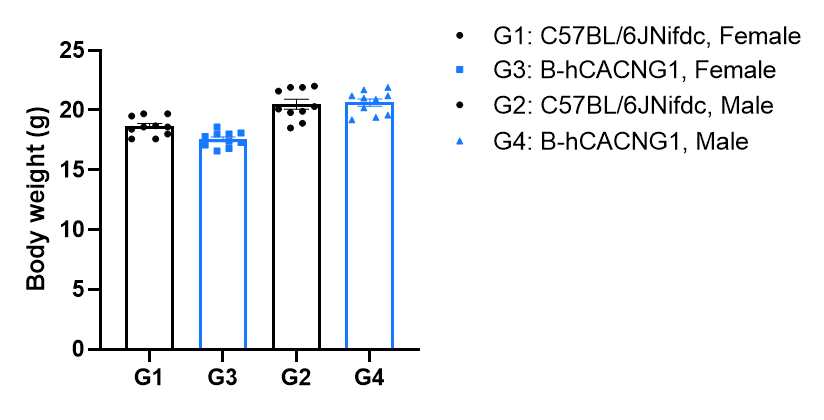
Body weight of wild-type C57BL/6JNifdc and homozygous CACNG1 humanized mice. Body weights were recorded for 6-week-old wild-type C57BL/6JNifdc mice and homozygous B-hCACNG1 mice (n=10 per sex). Values are expressed as mean ± SEM.
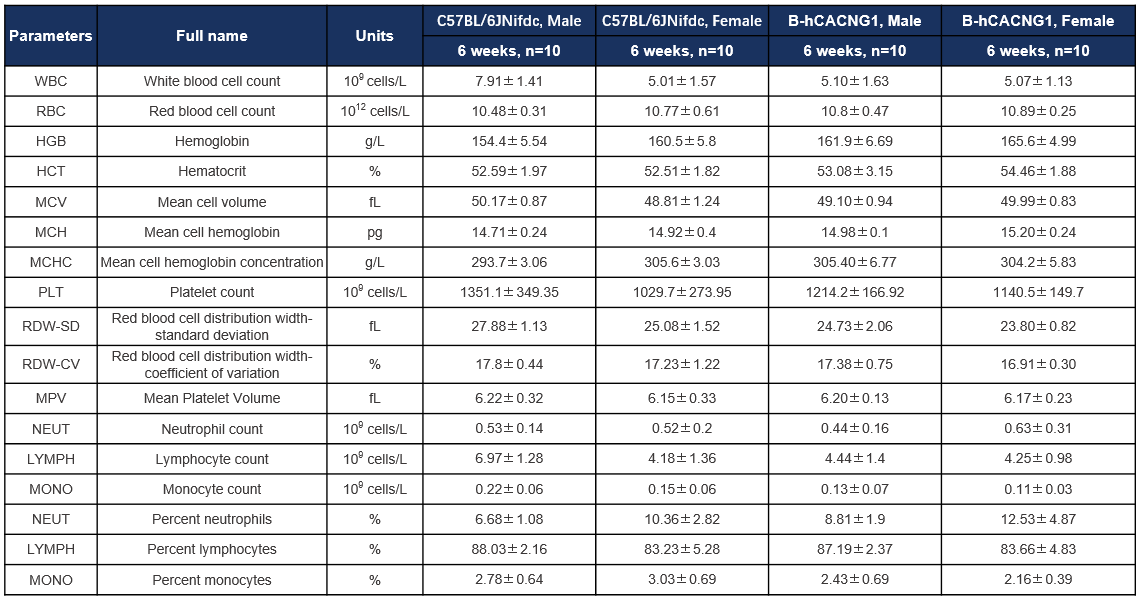
Complete blood count (CBC) of CACNG1 humanized mice. Values are expressed as mean ± SD.
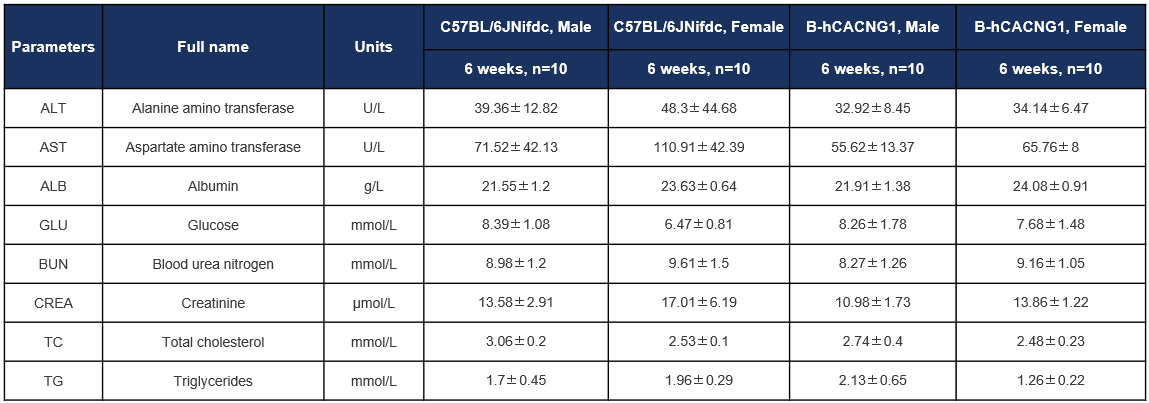
Biochemical test of CACNG1 humanized mice. Values are expressed as mean ± SD.
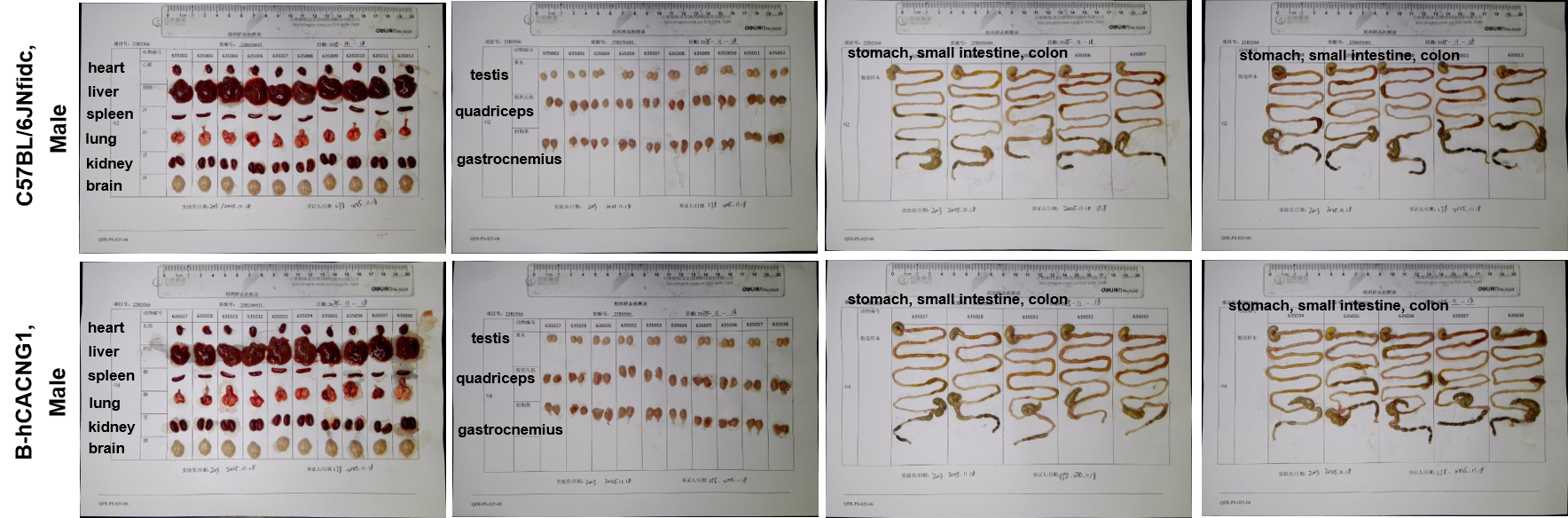
The organs of male CACNG1 humanized mice (6-week-old, n=10).
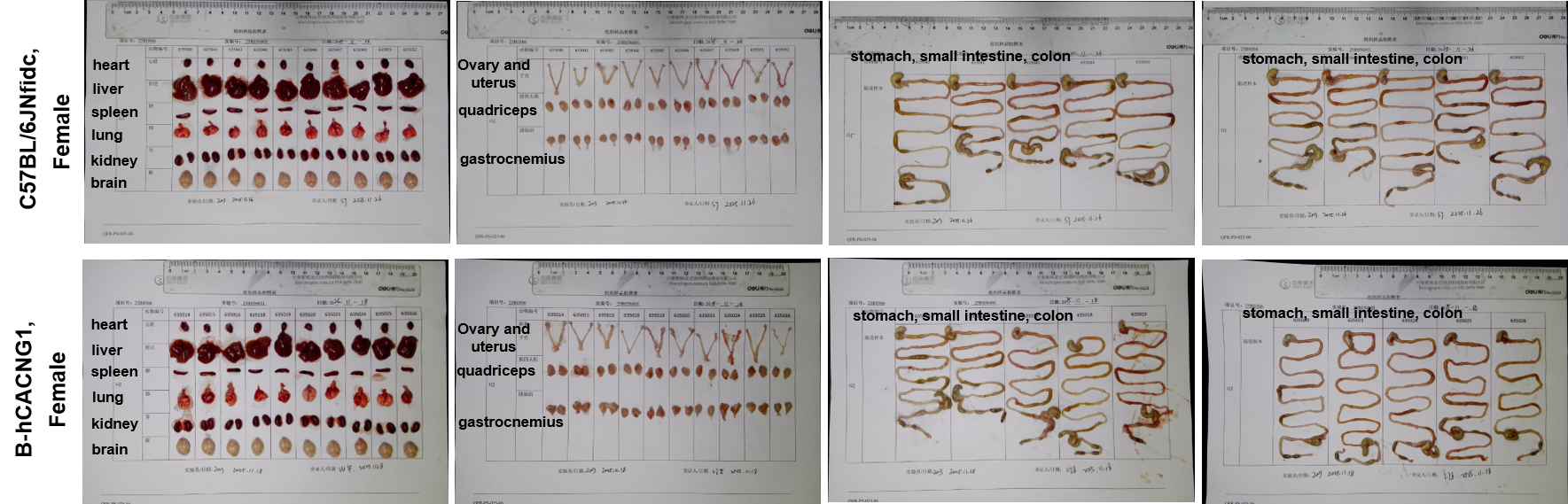
The organs of female CACNG1 humanized mice (6-week-old, n=10).
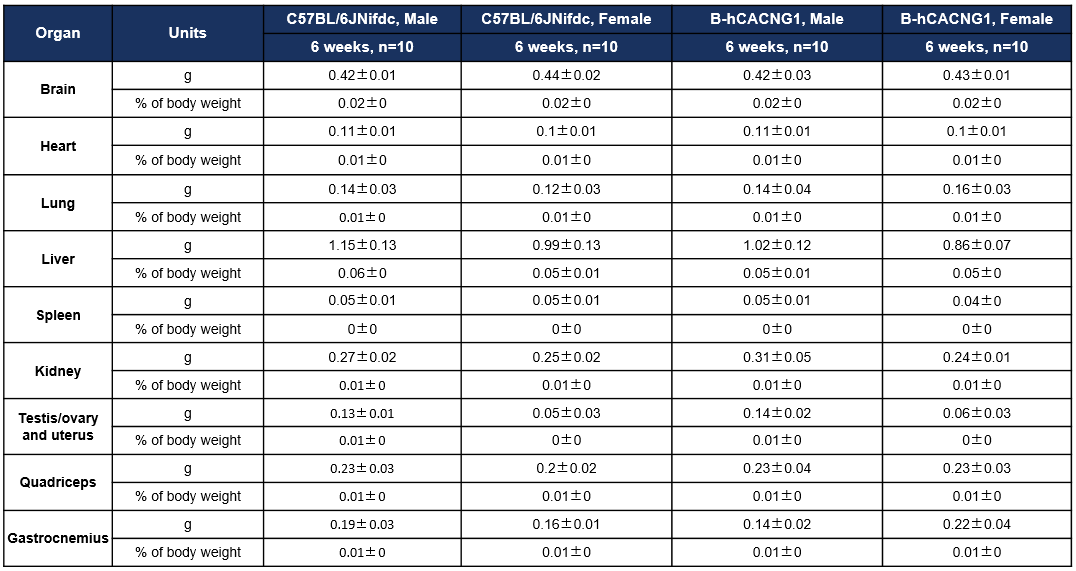
Average weight of the main organs of CACNG1 humanized mice. Values are expressed as mean ± SD.
% of body weight means the ratio of organ weight to body weight.
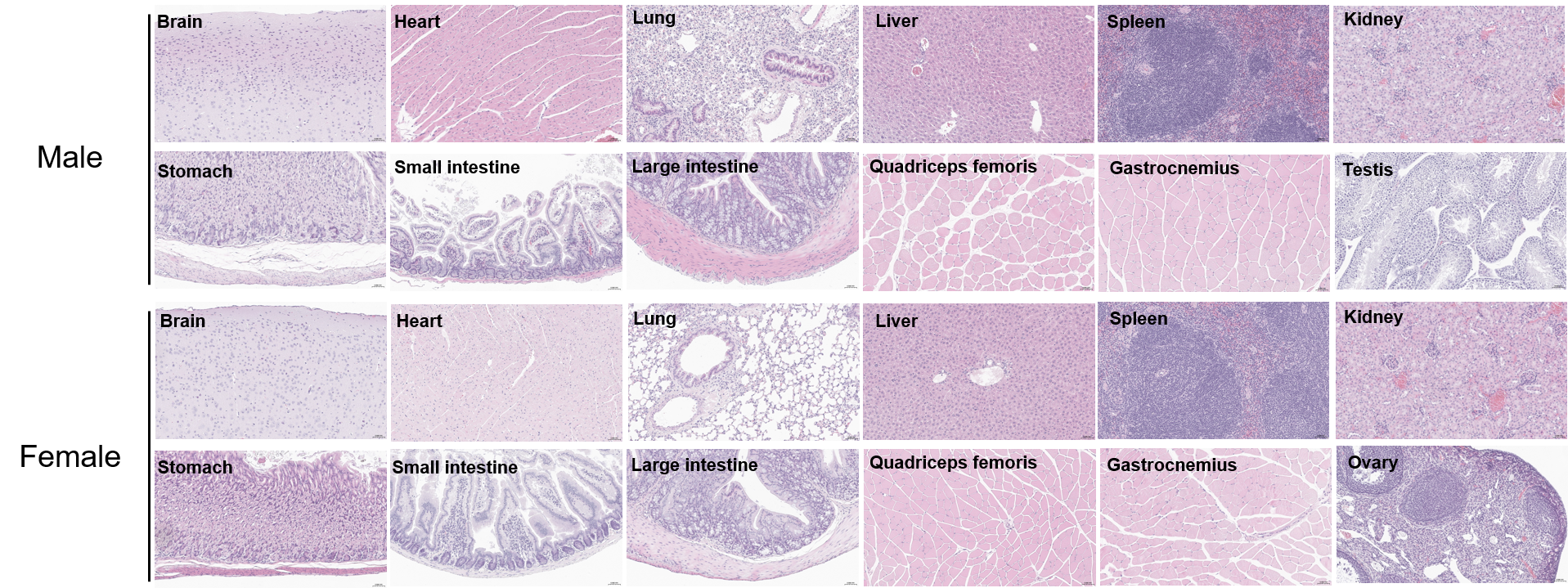
Histopathological analysis of organs in CACNG1 humanized mice. The main organs of B-hCACNG1 mice were isolated at 6 weeks of age and analyzed with H&E staining (male, n=10; female, n=10). Results showed that no obvious abnormalities were found in all of the organs (brain, heart, lung, liver, spleen, stomach, small intestine, large intestine, quadriceps femoris, gastrocnemius, kidney, ovary and testis). Scale bar: 50 μm.