


Key Advantages
Validation
Applications

CD5A

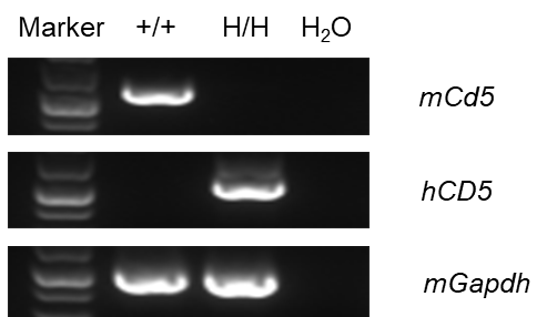
Strain-specific analysis of mouse and human CD5 mRNA expression in wild-type C57BL/6N mice and CD5 humanized mice by RT-PCR. Total RNA was isolated from thymus tissues of wild-type C57BL/6N mice (+/+) and homozygous CD5 humanized mice (H/H). cDNA was synthesized by reverse transcription, followed by PCR amplification using mouse- or human-specific CD5 primers.
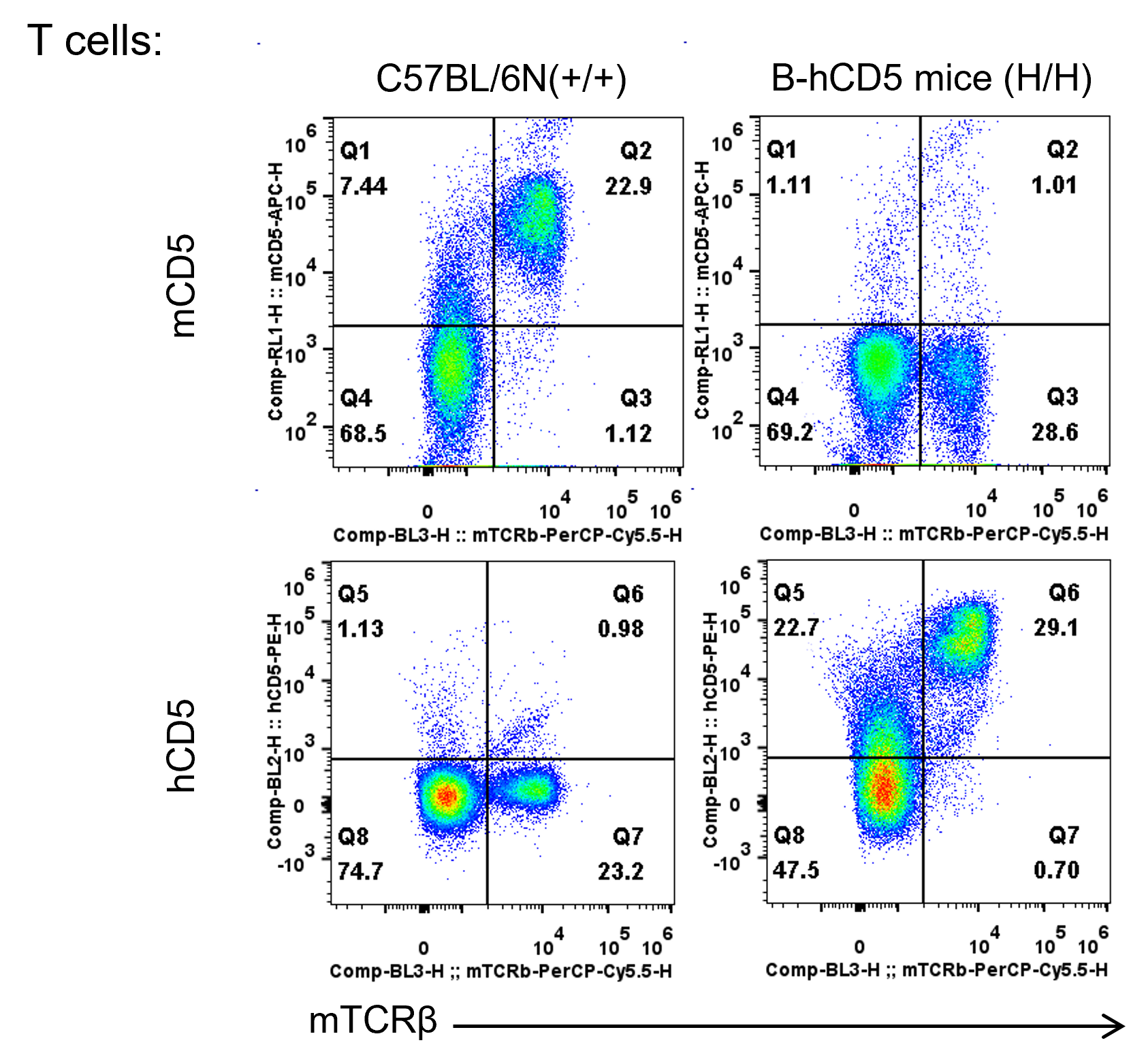
Strain-specific analysis of mouse and human CD5 protein expression in wild-type C57BL/6N mice and CD5 humanized mice by flow cytometry. Splenocytes were collected from wild-type C57BL/6N mice (+/+) and homozygous CD5 humanized mice (H/H). Mouse and human CD5 protein expression was analyzed by flow cytometry using species-specific anti-mouse CD5 (BioLegend, 100625) and anti-human CD5 (BioLegend, 300607) antibodies.
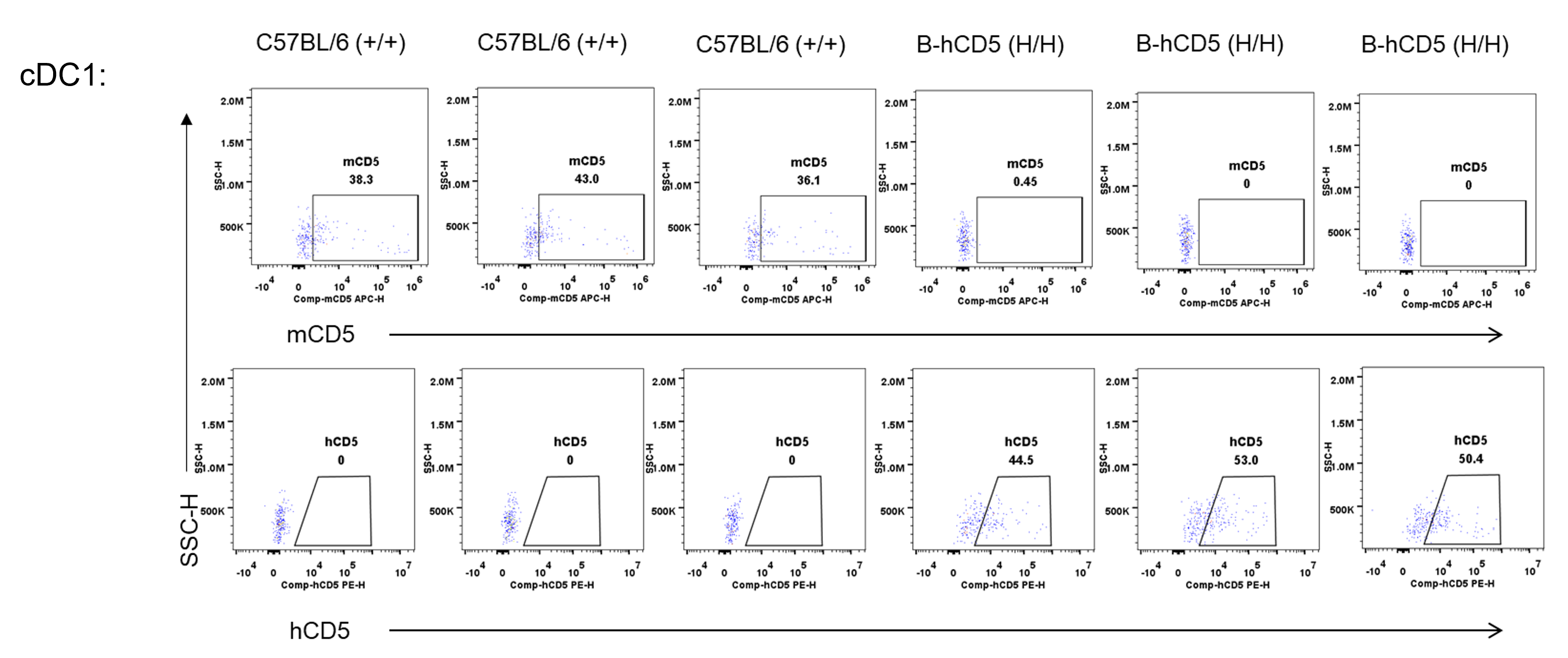
Strain-specific analysis of mouse and human CD5 protein expression in wild-type C57BL/6 mice and CD5 humanized mice by flow cytometry. Spleens were collected from wild-type C57BL/6 mice (+/+) and homozygous CD5 humanized mice (H/H). Splenocytes were analyzed by flow cytometry using species-specific anti-CD5 antibodies. Mouse CD5 was detected in wild-type C57BL/6 mice, whereas human CD5 was detected exclusively in homozygous CD5 humanized mice.
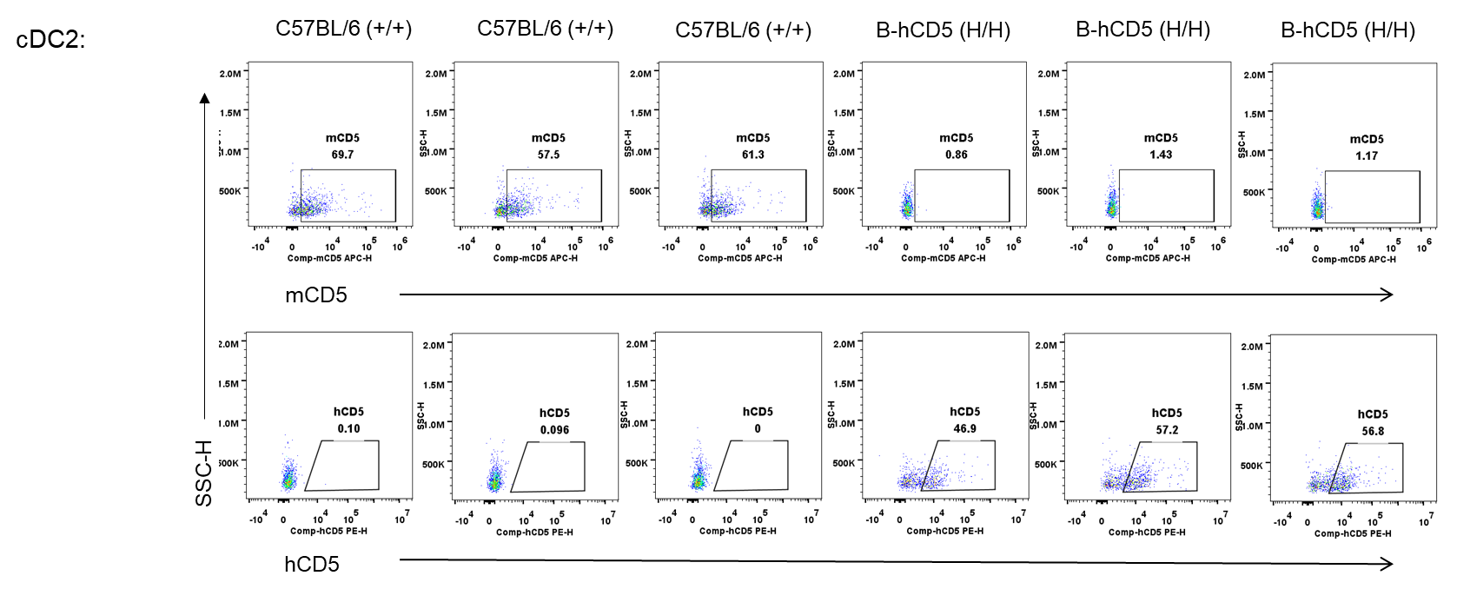
Strain-specific analysis of mouse and human CD5 protein expression in wild-type C57BL/6 mice and CD5 humanized mice by flow cytometry. Spleens were collected from wild-type C57BL/6 mice (+/+) and homozygous CD5 humanized mice (H/H). Splenocytes were analyzed by flow cytometry using species-specific anti-CD5 antibodies.
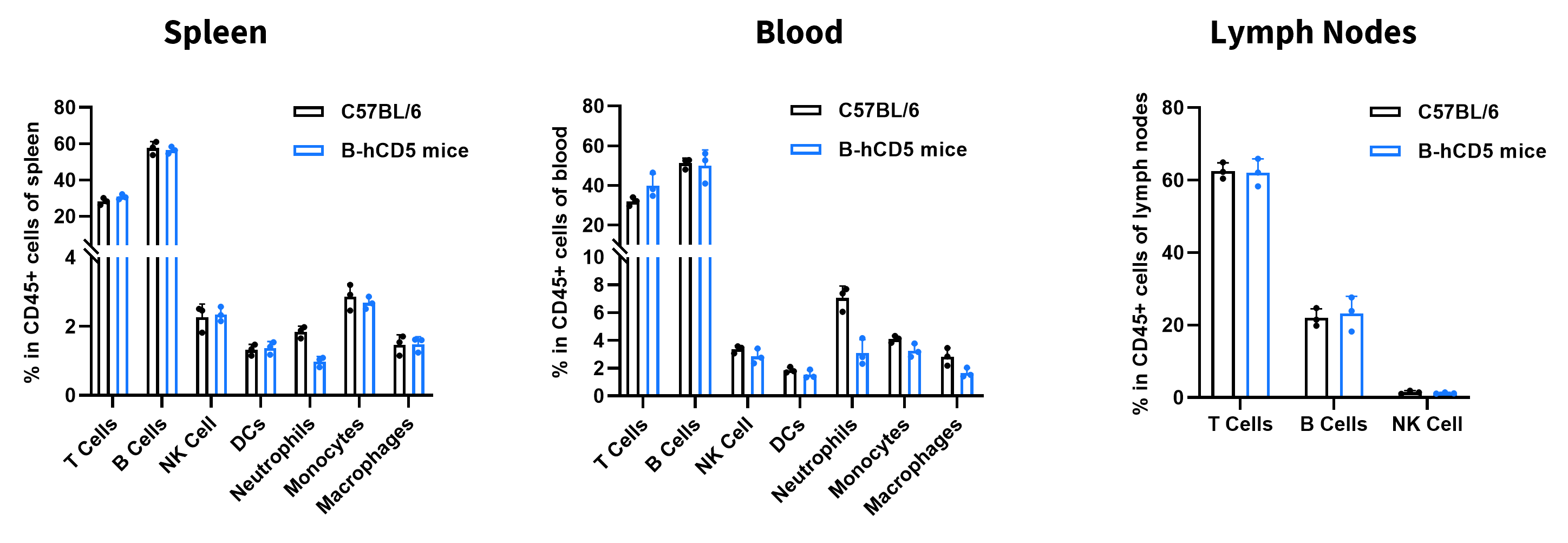
Flow cytometry analysis of leukocyte subpopulations in immune organs and peripheral blood of CD5 humanized mice. Splenocytes, peripheral blood, and lymph nodes were isolated from female wild-type C57BL/6 mice and CD5 humanized mice (8 weeks old, n = 3). Single live cells were gated on the CD45⁺ population and analyzed by flow cytometry as indicated. Values are expressed as mean ± SEM.
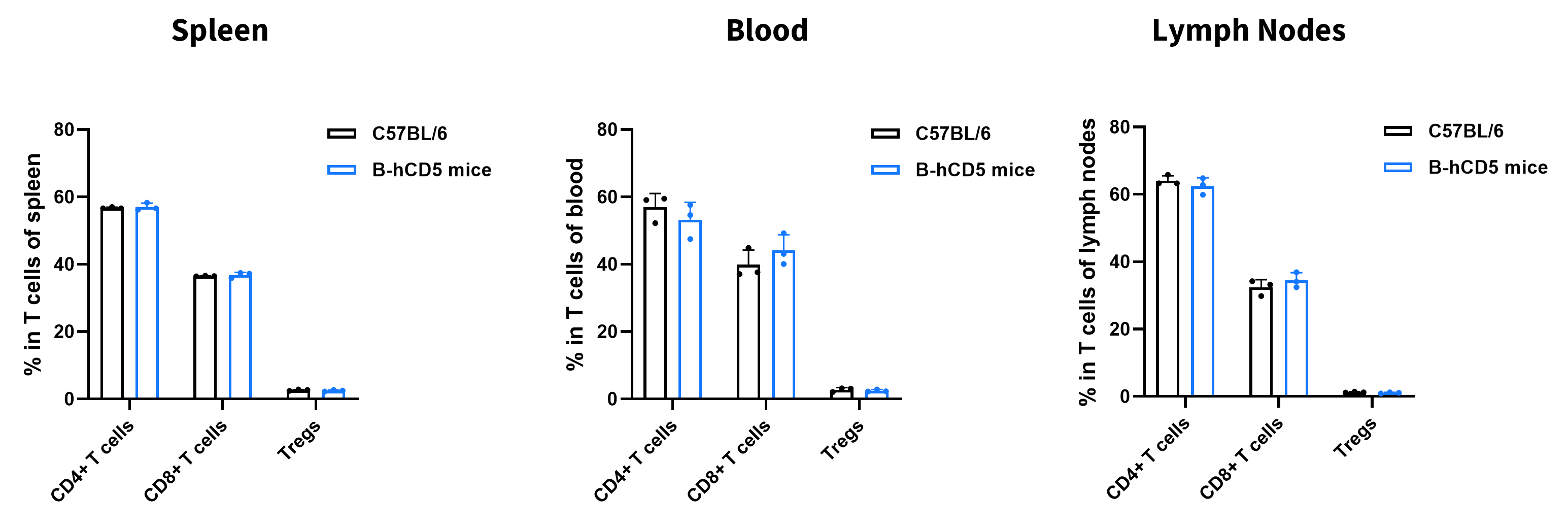
Flow cytometry analysis of T-cell subpopulations in immune organs and peripheral blood of CD5 humanized mice. Splenocytes, peripheral blood, and lymph nodes were isolated from female wild-type C57BL/6 mice and CD5 humanized mice (8 weeks old, n = 3). Single live cells were gated on the T-cell population and analyzed by flow cytometry as indicated. Values are expressed as mean ± SEM.
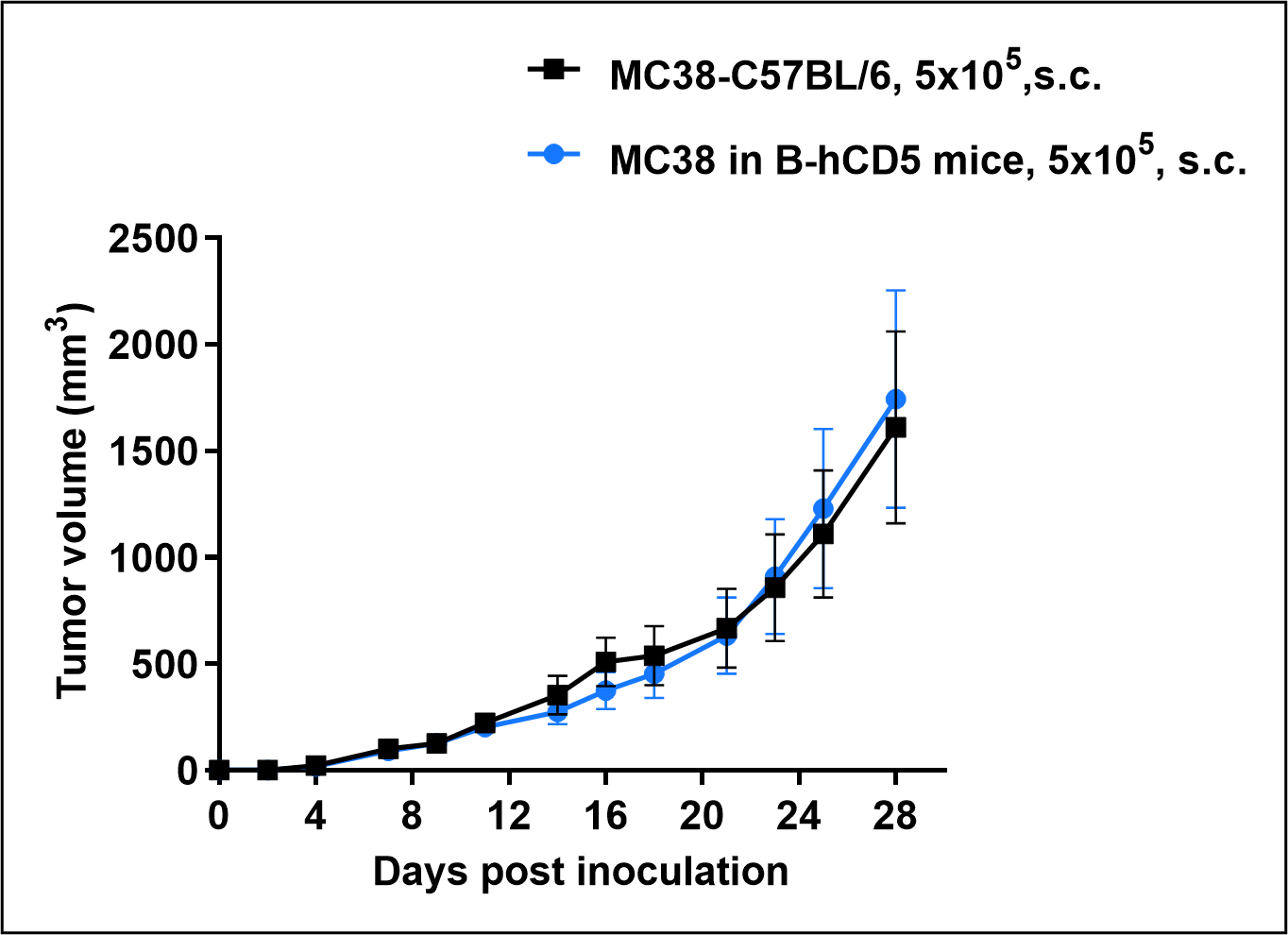
Subcutaneous MC38 homograft tumor growth in CD5 humanized mice. MC38 mouse colon carcinoma cells (5 × 10⁵) were subcutaneously implanted into wild-type C57BL/6 mice and CD5 humanized mice (female, 11 weeks old, n = 6). Tumor volumes were measured twice weekly and calculated using the formula: V = 0.5 × long diameter × (short diameter)². Tumor volumes are expressed in mm³, and data are presented as mean ± SEM. MC38 cells successfully established subcutaneous tumors in CD5 humanized mice, demonstrating the suitability of this model for in vivo antitumor efficacy studies.
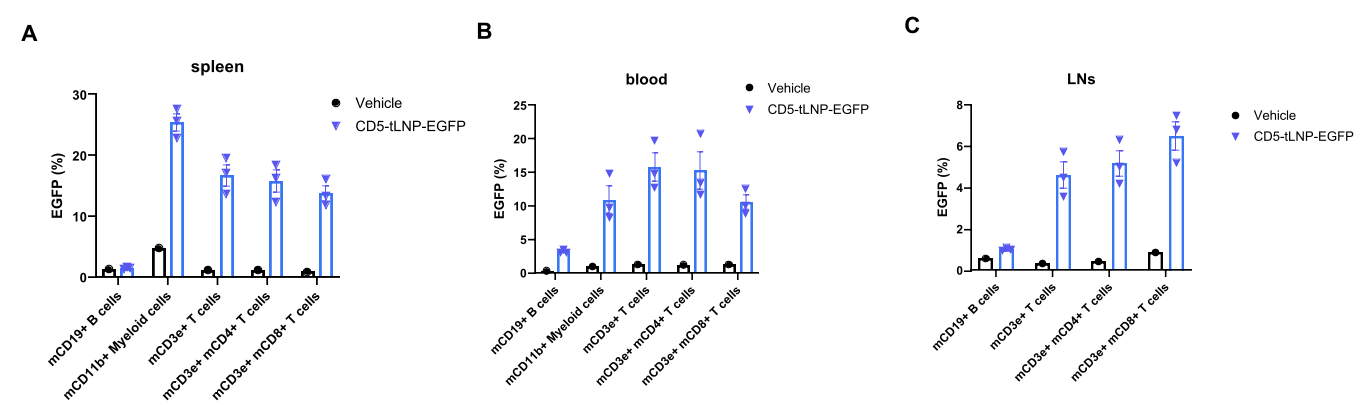
The efficient and specific delivery analysis of CD5-tLNP to CD5+ T cells in spleen of B-hCD5 mice. EGFP and CD5 expression in mCD19+ B cells , mCD11b+ myeloid cells, mCD3+ T cells,, mCD3+ mCD4+ T cells, and mCD3+ mCD8+ T cells 24 hours after intravenous dosing of 10 μg CD5-tLNP-EGFP (levostar) in B-hCD5 mice (n=3).
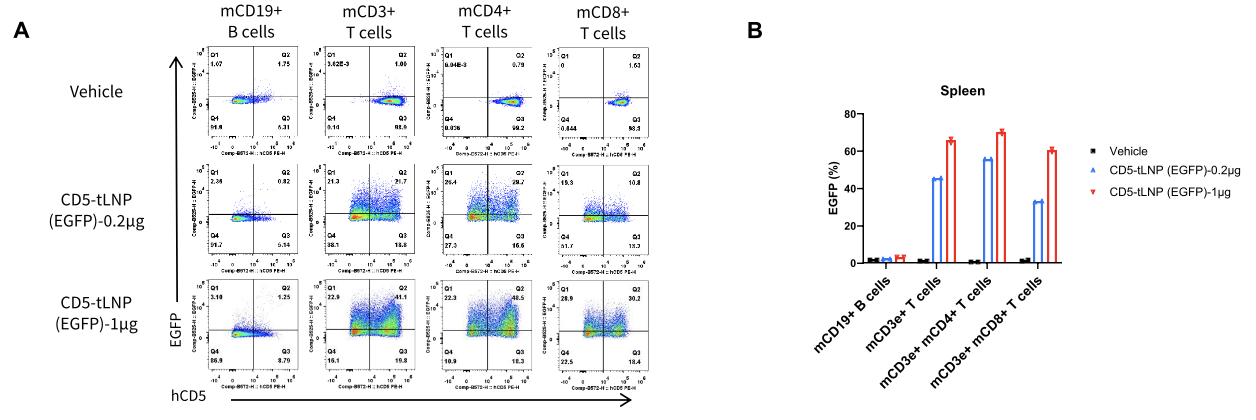
The efficient and specific delivery analysis of CD5-tLNP to CD5+ T cells in spleen of B-hCD5 mice. EGFP and CD5 expression in mCD19+ B cells , mCD11b+ myeloid cells, mCD3+ T cells,, mCD3+ mCD4+ T cells, and mCD3+ mCD8+ T cells 24 hours after intravenous dosing of CD5-tLNP-EGFP (levostar) in B-hCD5 mice (n=2). (A) Flow Cytometry. (B) Statistical Graph.
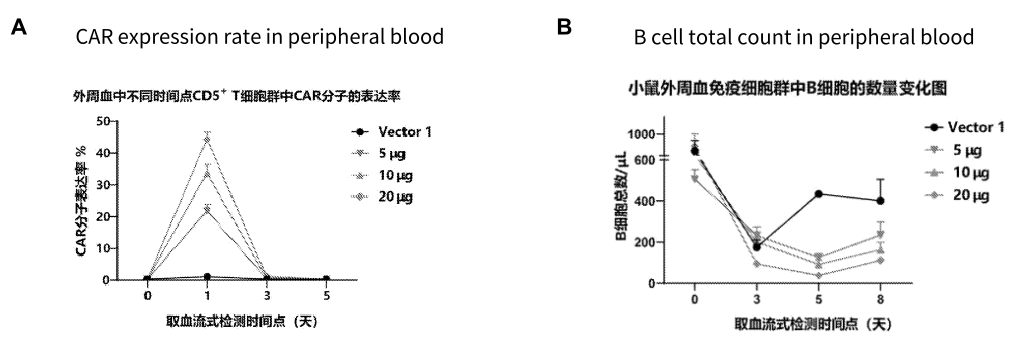
Evaluation of B cell depletion efficacy of CD5‑tLNP (mCD19 CAR) in B-hCD5 mice. B-hCD5 mice (n=3/group) were were injected via tail vein with different masses of CD5-tLNP encapsulating mCD19 CAR mRNAs. The Vector 1 group was injected with empty LNPs (not encapsulating RNA). On days 0, 1, 3, and 5, the expression efficiency of CAR in CD5⁺ T cells in peripheral blood (A) was measured; on days 0, 3, 5, and 8, changes in B cell counts (B) were assessed.
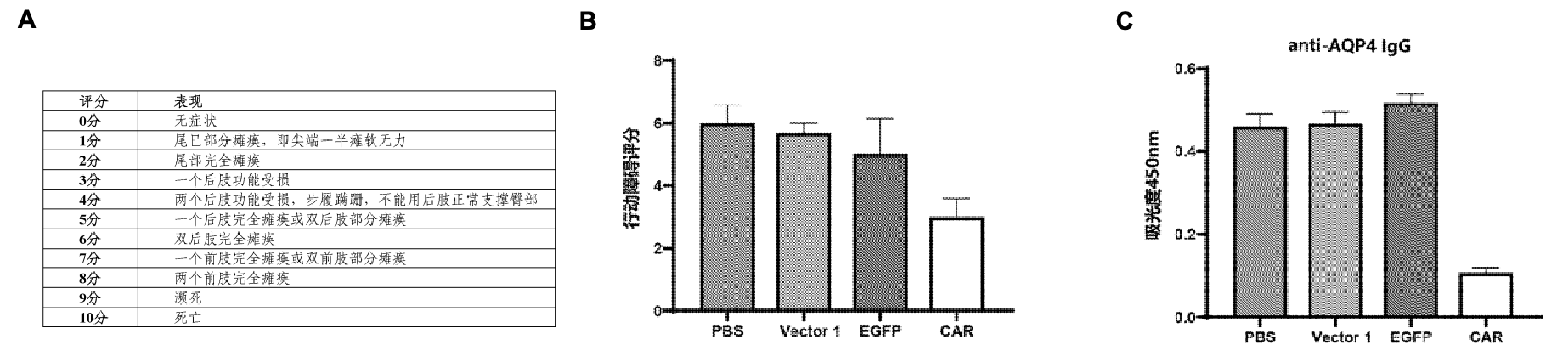
Efficacy Evaluation of CD5‑tLNP (mCD19 CAR) in NMOSD mouse model of Humanized B-hCD5 mice . Humanized B-hCD5 mice (n=5/group) were induced with NMOSD by MOG 35-55 and AQP4201-220, which were injected tail vein injection of corresponding CD5-tLNP formulations about one week after model induction. (A) Scoring criteria for NMOSD mice. (B) The statistical charts of motor impairment scores in NMOSD mice one week after treatment with different CD5-TLNPs. (C) The statistical charts of serum anti-AQP4 IgG antibodies in NMOSD mice one week after treatment with different CD5-TLNPs.