


CD79B: CD79B Transduces B-Cell Receptor Signals for B-Cell Activation.
Gene Information: CD79B (CD79B) encodes immunoglobulin beta (Igβ), a transmembrane glycoprotein located on human chromosome 17q23.3 that forms an essential heterodimer with CD79A to constitute the B-cell antigen receptor complex.
Protein Expression: Expressed specifically on B lymphocytes from early pre-B cell stages through mature peripheral B cells, CD79B is downregulated during terminal differentiation into plasma cells, making it a reliable lineage marker.
Signaling Pathway: Antigen ligation induces CD79B ITAM phosphorylation by Src family kinases, recruiting Syk kinase to activate downstream PI3K/Akt, and NF-κB pathways, driving B-cell survival, proliferation, and activation.
Therapeutic Inhibition: Targeting CD79B with antibody-drug conjugates (ADCs) or bispecific antibodies induces rapid BCR complex endocytosis and cytotoxic cell killing, serving as a validated therapeutic approach for B-cell lymphomas and leukemias.

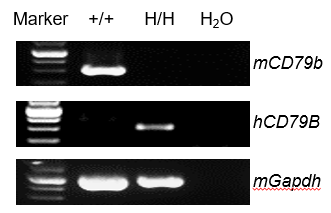
Species specific analysis of CD79B gene expression in wild-type C57BL/6N mice and homozygous CD79B humanized mice by RT-PCR. Spleen RNA was were isolated from wild-type C57BL/6N mice (+/+) and homozygous B-hCD79B mice (H/H), and then cDNA libraries were synthesized by reverse transcription, followed by PCR with mouse Cd79b primers and human CD79B primers.
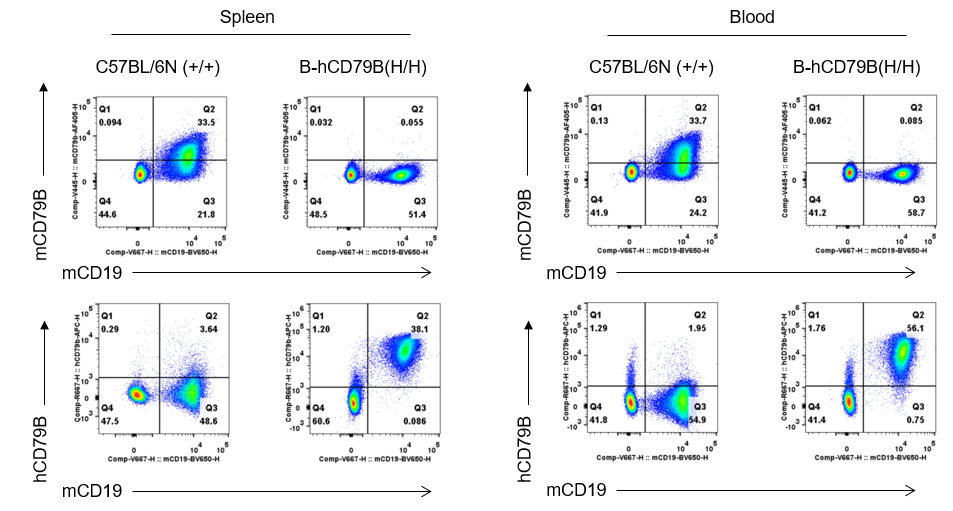
Strain specific CD79B expression analysis in wild-type C57BL/6N mice and homozygous CD79B humanized mice by flow cytometry. Splenocytes and blood were collected from wild-type C57BL/6N mice and homozygous B-hCD79B mice. Protein expression was analyzed with anti-mouse CD79B antibody (R&D, FAB6814V) and anti-human CD79B antibody (Biolegend, 341406) by flow cytometry.