

BAFF/BAFFR: BAFF and BAFFR Co-Regulate B-Cell Survival and Homeostasis.
Gene Information: BAFF and BAFFR (TNFSF13B on chromosome 13q14.3 and TNFRSF13C on chromosome 22q13.2) encode a critical ligand-receptor pair that fundamentally governs B-lymphocyte survival, differentiation, and humoral immune balance.
Protein Expression: BAFF is expressed by myeloid cells, including monocytes and dendritic cells, while its primary receptor BAFFR is constitutively expressed across transitional and mature B-cell subsets prior to plasma cell differentiation.
Signaling Pathway: Binding of ligand BAFF to receptor BAFFR triggers receptor trimerization, activating non-canonical NF-κB and PI3K/Akt signaling cascades to upregulate anti-apoptotic proteins and sustain B-cell metabolic survival and maturation.
Therapeutic Inhibition: Targeting the BAFF/BAFFR signaling axis neutralizes ligand interactions or depletes receptor-bearing cells, offering targeted therapeutic approaches for autoimmune conditions like systemic lupus erythematosus and B-cell lymphoproliferative disorders.

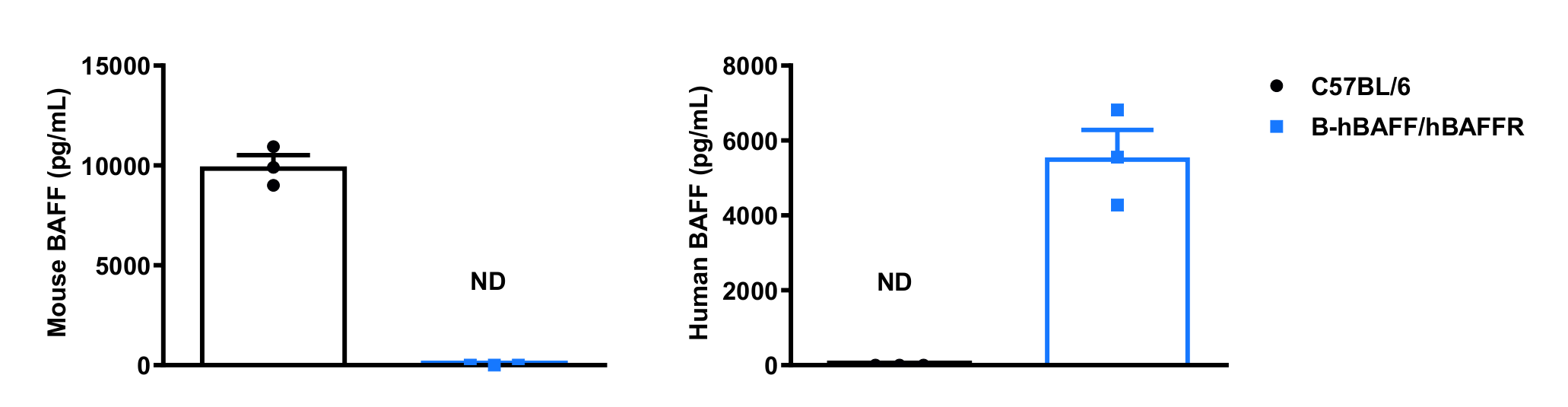
Strain specific BAFF expression analysis in wild-type C57BL/6 mice and homozygous BAFF/BAFFR humanized mice by ELISA. Serum was collected from wild-type C57BL/6 mice and homozygous B-hBAFF/hBAFFR. Expression level of mouse and human BAFF were analyzed by ELISA (anti-mouse BAFF ELISA kit: R&D, MBLYS0; anti-human BAFF ELISA Kit: R&D, DBLYS0B). Values are expressed as mean ± SEM. ND: not detectable.

Strain specific BAFFR expression analysis in wild-type C57BL/6 mice and homozygous BAFF/BAFFR humanized mice by flow cytometry. Spleen, lymph nodes and blood were collected from wild-type C57BL/6 mice and homozygous B-hBAFF/hBAFFR mice. Protein expression was analyzed with anti-mouse BAFFR antibody (Biolegend, 134105) and anti-human BAFFR antibody (Biolegend, 316905) by flow cytometry.
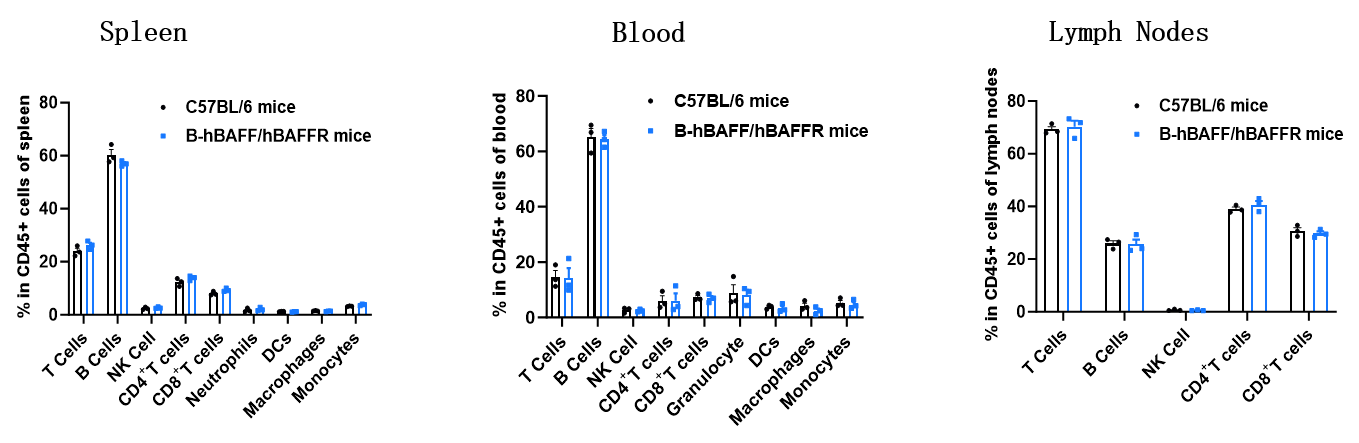
Analysis of leukocyte subpopulations by flow cytometry in immune organs and blood.Splenocytes, peripheral blood, and lymph nodes were isolated from C57BL/6 mice and homozygous B-hBAFF/hBAFFR mice (female, 7-week-old, n = 3). Single live cells were gated on the CD45⁺ population and analyzed by flow cytometry as indicated. Values are expressed as mean ± SEM.

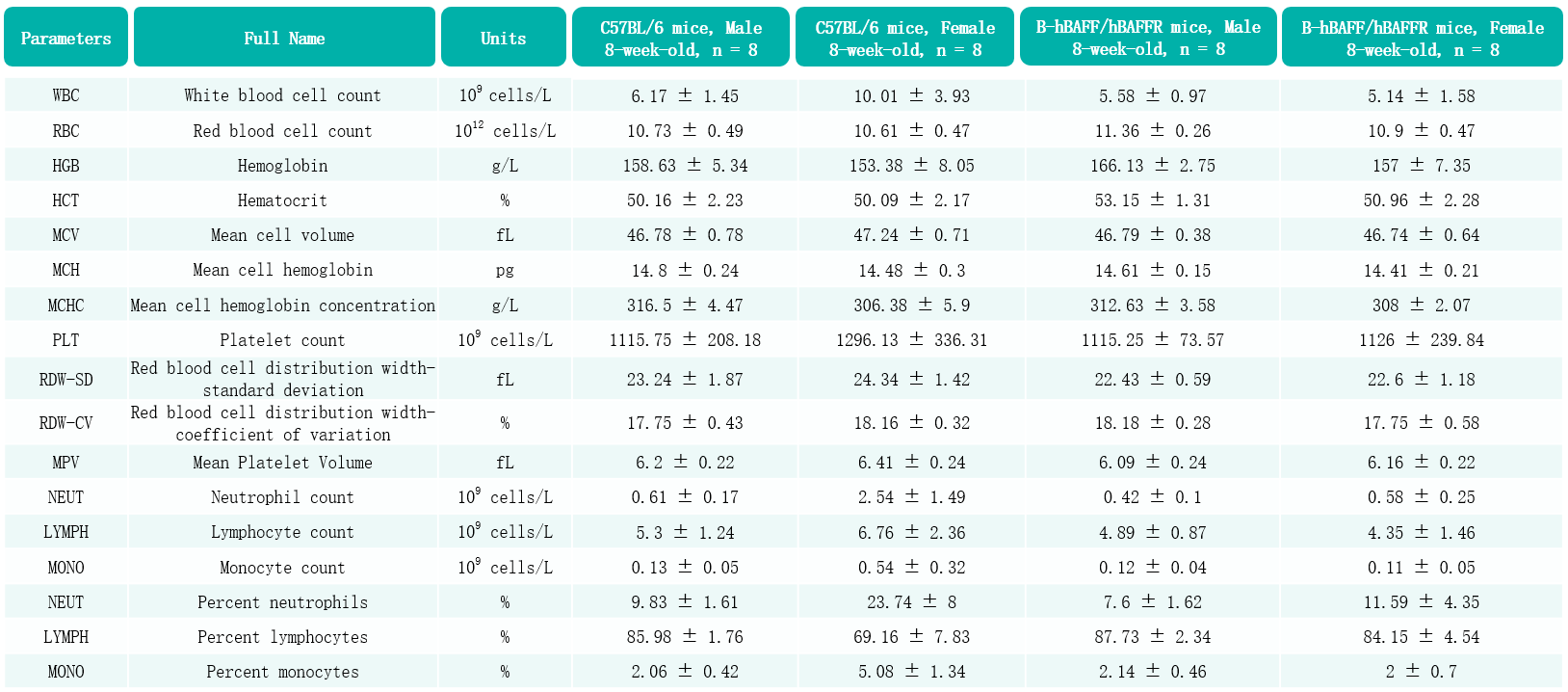
Complete blood count (CBC) of BAFF/BAFFR humanized mice. Values are expressed as mean ± SD.
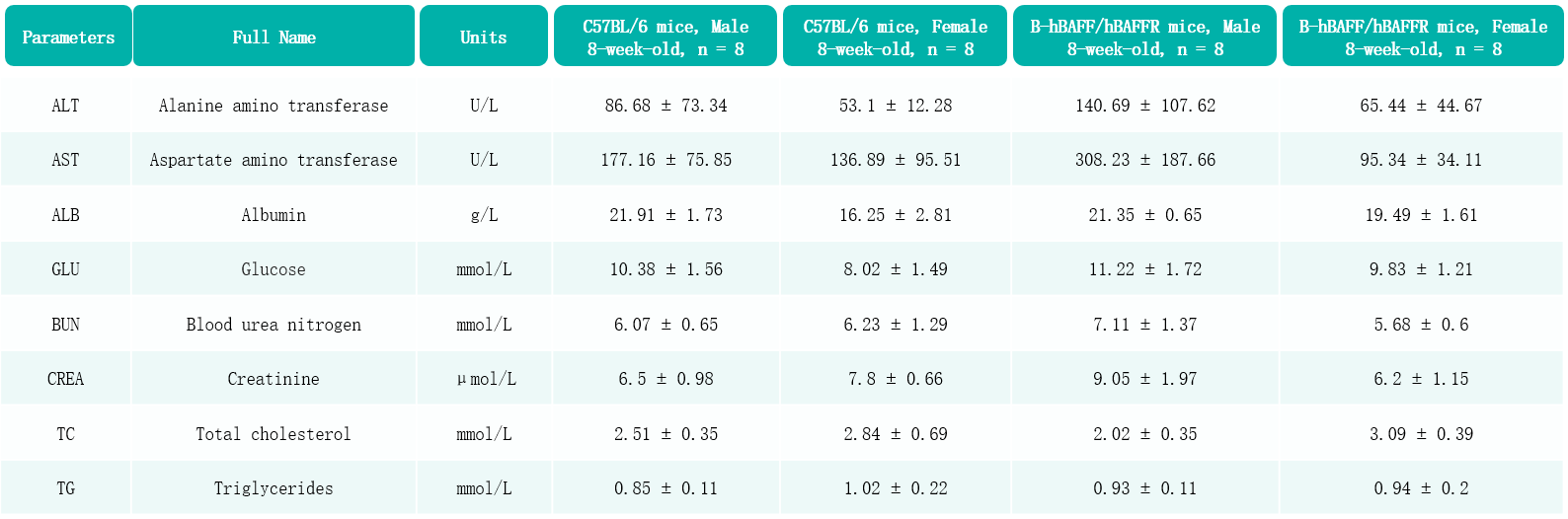
Blood biochemical parameters of BAFF/BAFFR humanized mice are shown. Values are expressed as mean ± SD.