
you may also like
At WCLC 2026 (World Conference on Lung Cancer), the randomized Phase III TAISHAN-302 (Tam-Peli) and ARTEMIS-008 (Ris-Rez) trials demonstrated significant overall survival improvements with B7-H3-directed antibody–drug conjugates (ADCs) versus topotecan in relapsed small-cell lung cancer (SCLC). Substantial unmet treatment needs and growing clinical evidence have made lung cancer a leading indication for B7-H3 ADC development, strengthening confidence in the target and raising the benchmark for new programs (IASLC, 2026a, 2026b).
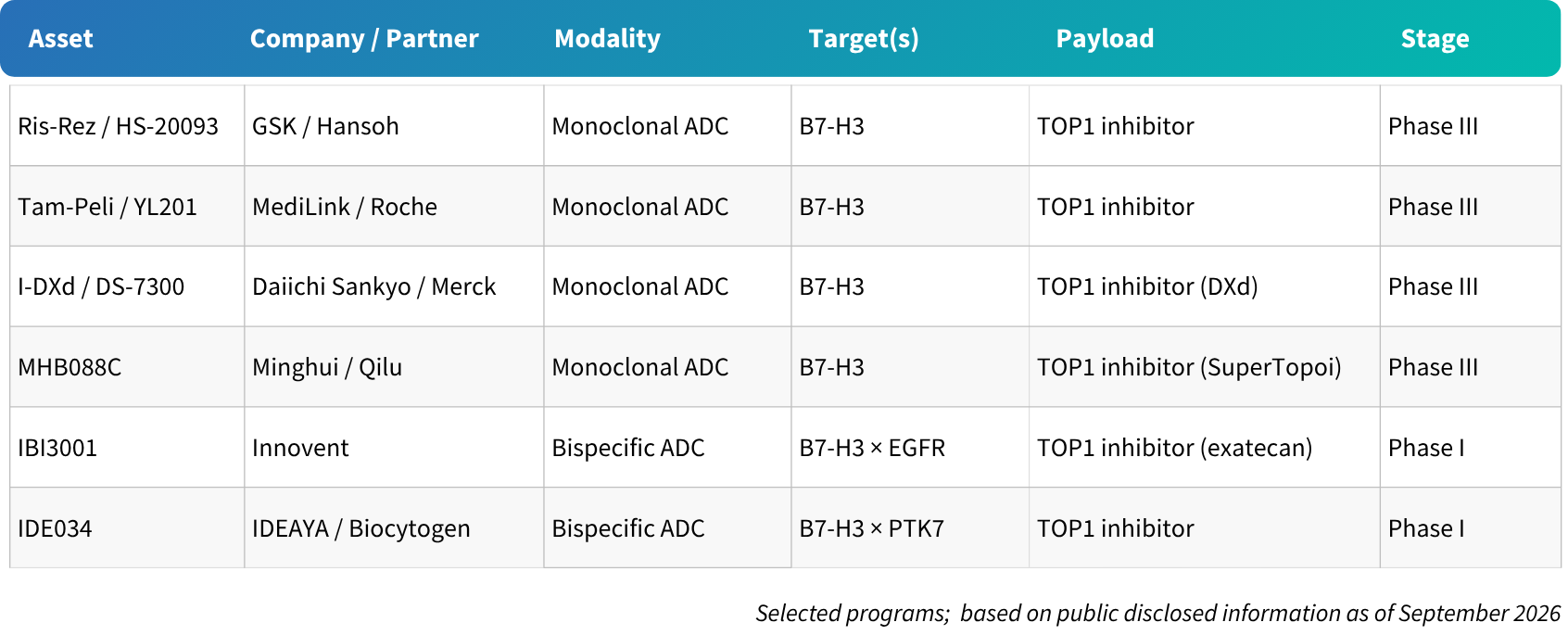
B7-H3 is a cell-surface antigen broadly expressed across solid tumors, and development also extends to prostate, esophageal, and other aggressive cancers. Its broad tumor expression provides a foundation for payload delivery, but efficacy depends on target engagement, internalization, drug exposure, and payload sensitivity. In the Phase I/1b YL201 study, tumor-cell membrane B7-H3 expression levels were not significantly associated with objective response rate (Ma et al., 2025).
For next-generation ADCs, the central design question is what each added component contributes.
Biocytogen is pursuing B7-H3-based bispecific ADCs (BsADCs) to explore four complementary strategies: enhanced binding & uptake, dual-payload delivery, broader tumor recognition and preferential tumor engagement.
For some targets, the location of antibody binding is central to ADC design.
MUC1-directed ADC development requires careful epitope selection. Its membrane-distal MUC1-N region can be shed, creating soluble-antigen decoys that may divert antibody binding from tumor cells. Targeting a membrane-proximal region addresses this delivery challenge (Wu Y, et al. 2024), while adding B7-H3 introduces a second opportunity to strengthen tumor-cell engagement.
BCG041 combines membrane-proximal MUC1 recognition with B7-H3 targeting. The design pairs epitope selection with avidity-driven co-engagement to strengthen binding and uptake in dual-positive tumors.
► Enhanced Binding and Internalization in Lung Cancer Cells:
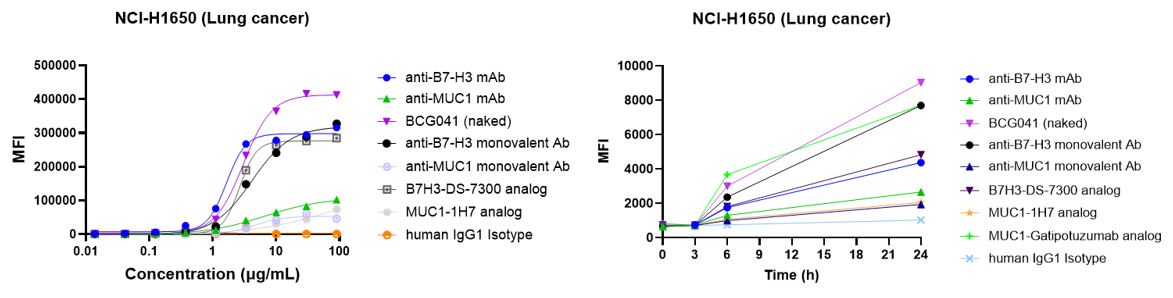
In B7-H3/MUC1 dual-expressing cells, BCG041 (purple) showed stronger binding and internalization than parental and benchmark antibodies.
► Potent Antitumor Activity in a Lung Cancer PDX Model:
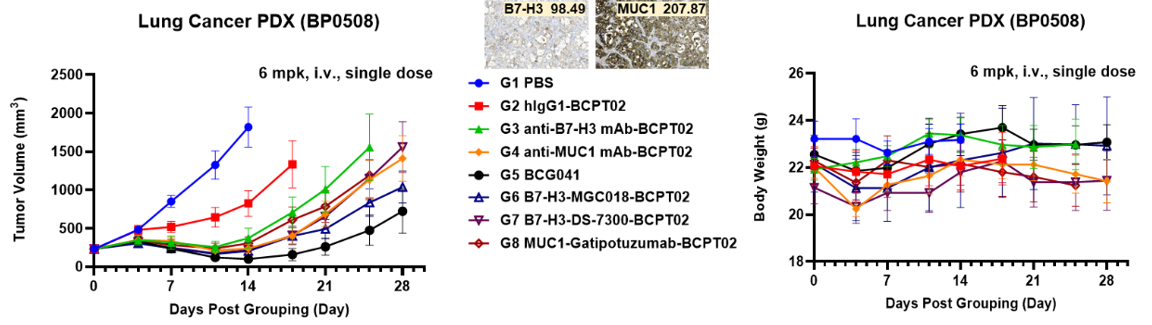
BCG041 (G5, in black) produced marked tumor growth inhibition and outperformed the evaluated single-target and benchmark ADCs in a lung cancer PDX model.
Clinical progress with B7-H3- and ITGB6-directed ADCs supports both targets as payload-delivery opportunities in lung cancer (Peters et al., 2026). Yet a single-target, single-payload approach remains dependent on two conditions: sufficient accessible antigen for tumor-cell engagement and sensitivity to the delivered payload.
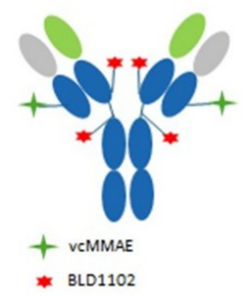
BCG048, a dual payload ITGB6 x B7-H3 BsAD2C, was designed to address variability in both target expression and payload sensitivity. Their co-expression in NSCLC provides a disease-relevant rationale for exploring this combination.
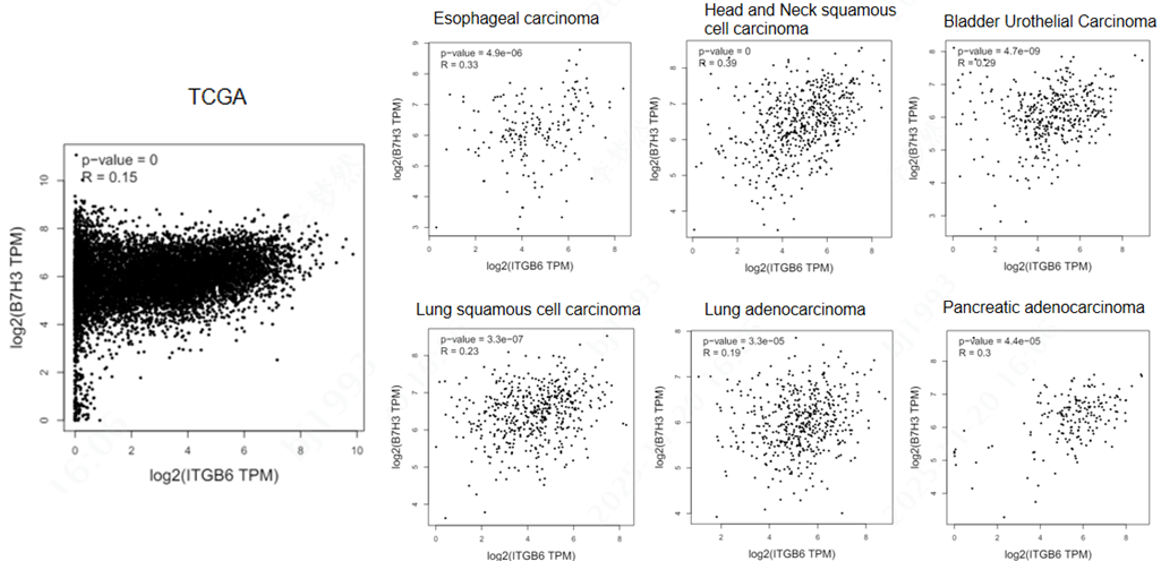
Transcriptomic analysis showed correlated ITGB6 and B7-H3 expression in both LUAD and LUSC, providing a disease-relevant rationale for combining the two targets in NSCLC.
Dual targeting addresses access to tumor cells; dual payloads address what happens after delivery. BCG048 combines the microtubule inhibitor MMAE with Biocytogen’s proprietary topoisomerase I inhibitor BCPT02. These distinct cytotoxic mechanisms are intended to extend activity across populations with differing payload sensitivities and explore ways to mitigate payload-specific resistance.
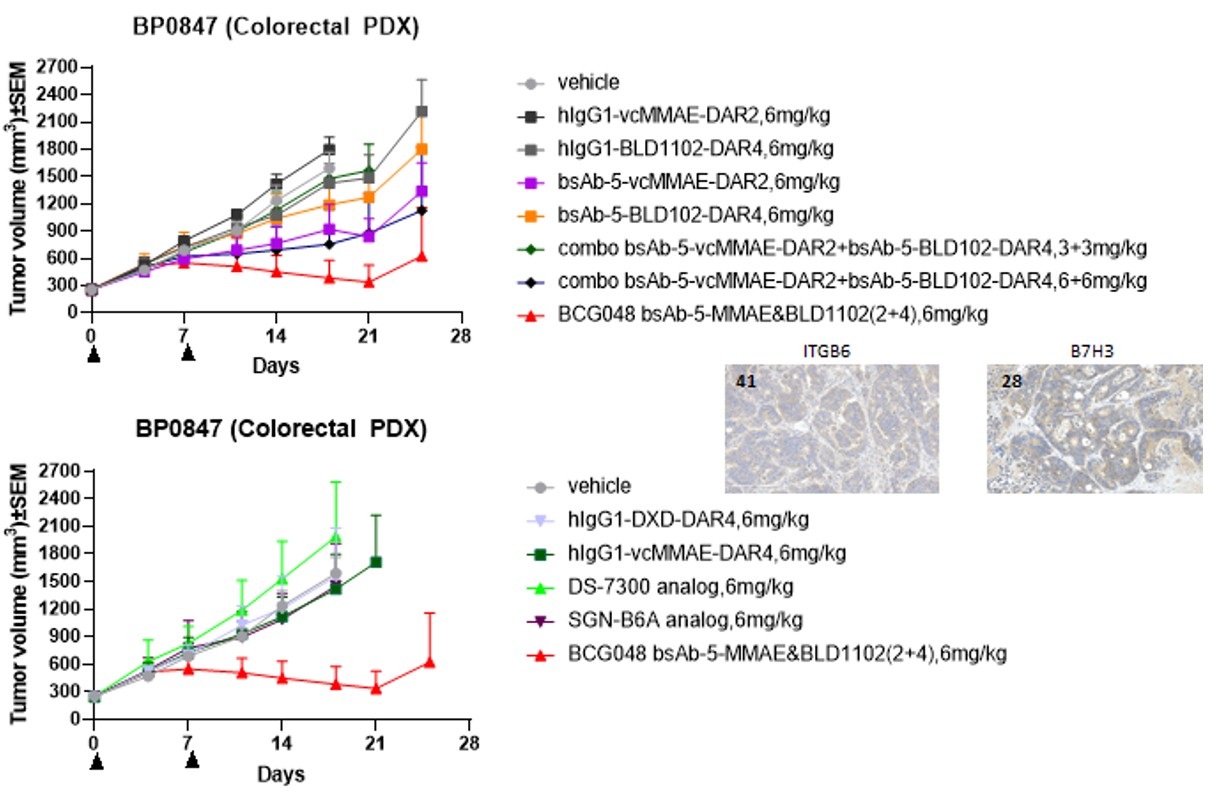
BCG048 (in red) showed superior antitumor efficacy with dual-payload versus single-payload ADCs (top figure) and outperformed benchmark ADCs (bottom figure) in the colorectal PDX models.
This integrated design builds on B7-H3’s ADC potential while adding flexibility at both the recognition and killing stages. Read the blog to learn the design rationale behind BCG048: Here.
DLL3’s therapeutic relevance in SCLC is established by tarlatamab. In a study of 1,050 evaluable SCLC tumors, 85% expressed DLL3 in at least 25% of tumor cells (Rojo et al., 2020). However, variable DLL3 expression may limit engagement and payload delivery to DLL3-low or negative tumor-cell populations.
B7-H3 is also broadly expressed in SCLC (Qiu et al., 2021), providing a rationale for complementary targeting. Pairing the two antigens could extend recognition to B7-H3-positive cells with low or absent DLL3 expression while supporting efficient uptake in dual-positive cells.
BCG025, Biocytogen’s fully human, common light chain DLL3 × B7-H3 BsADC, combines this coverage strategy with efficient internalization across different antigen-expression profiles.
► Enhanced Internalization Across SCLC Cellular Models with Diverse Target Expression:
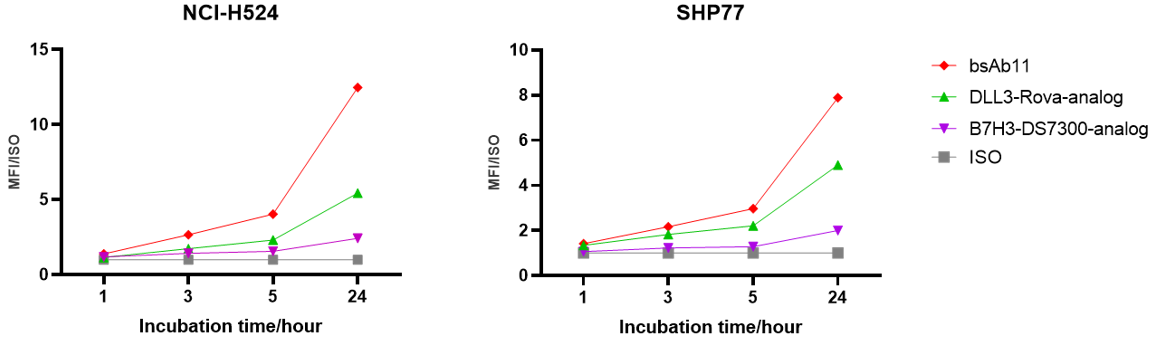
BCG025 (bsAb11, in red) demonstrated strong internalization and greater uptake than the evaluated single-target benchmark analogs.
► Potent Antitumor Activity Across SCLC Models with Different Target Densities:
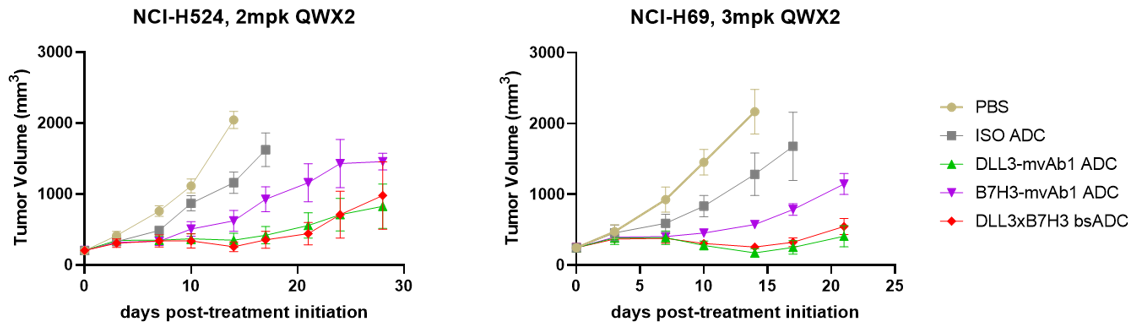
BCG025 (DLL3 x B7H3 bsADC, in red) showed potent antitumor activity across SCLC mouse models, comparable to the evaluated DLL3-directed monovalent ADC (green) and greater than the B7-H3-directed monovalent ADC (purple).
In sum, BCG025 combines enhanced internalization with robust antitumor activity across SCLC models with varying DLL3/B7-H3 expression, supporting a strategy designed for tumor heterogeneity rather than dependence on a single antigen.
EGFR expression in normal epithelial tissues makes selectivity an important consideration for EGFR-directed ADCs. Pairing EGFR with B7-H3 offers a strategy to favor engagement of tumors co-expressing both antigens.
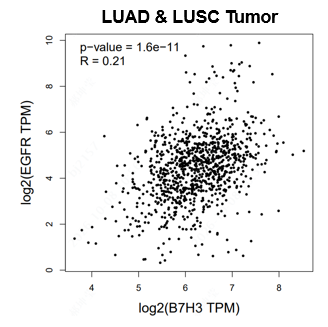
In a cohort of 222 advanced non-small-cell lung cancer (NSCLC) samples, 62.6% showed EGFR/B7-H3 co-expression (Zhi et al., 2025). A separate study reported co-expression in lung squamous cell carcinoma, while examined normal skin tissues expressed EGFR with minimal B7-H3 (Guan et al., 2026). Together, these findings support investigating dual-antigen recognition to distinguish selected tumors from EGFR-positive normal tissues.
Biocytogen’s fully human, common light chain EGFR × B7-H3 BsADC program applies this rationale to preferential tumor engagement.
► EGFR and B7-H3 Co-Expression in NSCLC:
► Strong Binding Across Variable EGFR/B7-H3 Expression Levels:
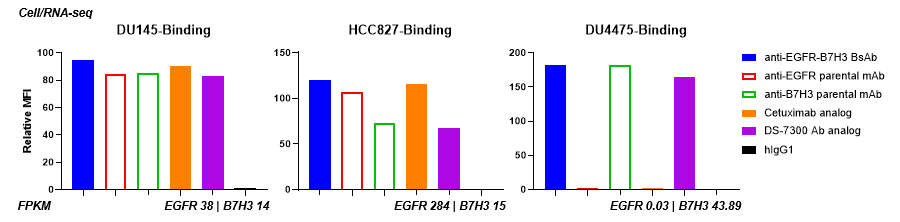
The EGFR × B7-H3 bsAb (blue bars) showed strong cell-surface binding across tumor cells with different EGFR/B7-H3 expression profiles. Binding was comparable to or stronger than the corresponding parental and benchmark antibodies, supporting effective engagement through either antigen and robust recognition of heterogeneous tumor cells.
The emerging clinical benchmark makes the contribution of each design choice increasingly important. Target pairing, epitope selection, molecular architecture, and payload strategy should each address a defined biological challenge.
Biocytogen integrates fully human antibody discovery, common light chain pairing, ADC development, and preclinical evaluation to streamline the development of differentiated B7-H3-based therapeutics.
Contact our team to review data packages and discuss asset evaluation, licensing, and co-development opportunities.
Biocytogen selects target pairs by connecting unmet treatment needs with tumor biology and the intended function of each antigen. Evaluation considers tumor-expression patterns, co-expression, normal-tissue distribution, and whether the second target could improve coverage, selective engagement, or internalization. Candidates are then assessed through binding, internalization, cytotoxicity, developability, and in vivo studies to determine whether the bispecific design provides a functional advantage over relevant single-target controls.
B7-H3 (CD276) is a tumor-associated cell-surface antigen that enables antibody binding and internalization for cytotoxic payload delivery. Its therapeutic potential is supported by randomized Phase III results from TAISHAN-302 and ARTEMIS-008, presented at WCLC 2026, showing significant overall survival improvements versus topotecan in relapsed small-cell lung cancer (SCLC). These findings provide a strong rationale for further B7-H3 ADC development, including bispecific strategies designed to improve tumor engagement and payload delivery.
A second antigen can address specific limitations in tumor recognition or payload delivery through broader coverage, preferential dual-positive binding, or enhanced internalization. Biocytogen’s scientific leadership and antibody engineering expertise translate persistent patient unmet needs and shortcomings of current biologics into targeted design strategies.
Dual-antigen targeting can favor engagement of tumor cells that co-express both targets over cells expressing only one. Biocytogen’s EGFR × B7-H3 bispecific antibody demonstrated stronger binding to dual-positive cells than to EGFR single-positive cells, supporting its design strategy for preferential tumor engagement.
B7-H3 bispecific ADCs can address heterogeneity through complementary antigen recognition and, in dual-payload designs, distinct killing mechanisms. Biocytogen’s BCG025 (DLL3 × B7-H3) demonstrated activity in B7-H3-positive, DLL3-negative models and enhanced internalization in evaluated dual-positive SCLC cells. BCG048 (ITGB6 × B7-H3) combines MMAE and BCPT02 to explore activity across tumor populations with differing antigen expression and payload sensitivities.
Additional Resources:
References: